Choosing between flexible stone veneer and PVC wall panel is not just a styling call—it sets the pace of installation, the stability of joints, and the maintenance load for years. This article walks through how each finish behaves on real walls: what happens under raking light, on columns and tight radii, near glazing and skylights, and in steam-prone areas. You’ll see how substrate prep, adhesive pairing, and edge detailing change outcomes, why UV-stable coatings matter, and where expansion gaps and trims become non-negotiable. The goal is straightforward: give you enough field-tested detail to specify with confidence, avoid callbacks, and protect schedules and budgets without sacrificing the look you need
What is flexible stone veneer and what is PVC wall panel
Flexible stone veneer basics
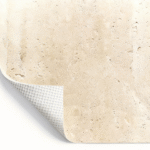
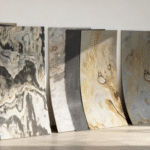
Flexible stone veneer is a thin, flexible stone-finish sheet designed for fast wall upgrades, including curves and columns. Typical thickness is around 2.5mm. Weight is lightweight per m² compared with tiles, which is why it moves easily up stairs and installs without heavy handling gear. The stone look comes from a mineral-rich surface layer built with natural fillers and binders, then stabilized with protective coatings. In factory tests we run bending and peel checks on every batch to keep color, texture depth, and flexibility consistent.
PVC wall panel basics
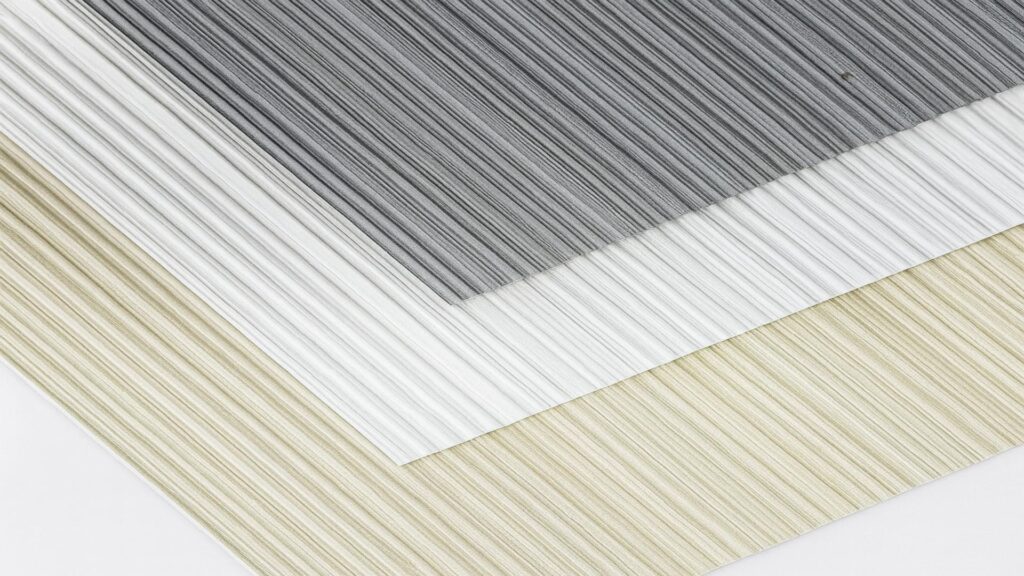
PVC wall panels are rigid or semi-rigid boards made from polyvinyl chloride, often with a hollow or foamed core. The “stone look” is created by a printed film or decorative lamination. They are simple to cut with general tools and lock together with tongue-and-groove or butt joints. Weight varies by thickness; panels are stiff on flats but less forgiving on tight curves. Surface feel depends on the embossing of the film, not on mineral texture.
Flexible stone veneertone veneer durability vs PVC wall panel
Real-world durability shows up in daily wear first, then in light impacts, sun and moisture exposure, and how joints hold through seasonal changes. The notes below combine factory testing (e.g., Taber abrasion, QUV accelerated weathering) with site audits to reflect how finishes age on actual walls.
- Daily wear and abrasion
A mineral surface layer gives flexible stone veneer higher resistance to fine dust scratching and sponge abrasion during routine cleaning. PVC wall panels rely on a printed or laminated film that tends to mark sooner under gritty particles or harsh pads. - Impact and edge behavior
On flat runs both survive small bumps, but geometry matters. Flexible stone veneer flexes on curves and edges without cracking, so knocks dissipate instead of leaving a dent. Rigid PVC can show a local depression that stays visible under side lighting. - UV and color stability
With UV-stable pigments and protective topcoats, flexible stone veneer maintains tone under daylight and skylights. PVC performs well away from sun, but prolonged UV can age the polymer and clear films, increasing risks of yellowing or chalking unless shading or coatings are added. - Moisture and steam
When edges are sealed, substrates primed, and a matched polymer adhesive is used, flexible stone veneer holds bond through steam cycles and intermittent condensation. PVC resists splashes, yet heat-humid corners can stress the film or glue line—especially if expansion allowances were tight. - Thermal movement and joints
Flexible stone veneer’s low thermal expansion helps long seams stay tight across seasons. PVC expands more; installers must leave larger perimeter gaps and use trims to avoid buckling on dark or sun-lit runs. If these details are skipped, joints open and alignment drifts. - Repair and upkeep
Flexible stone veneer allows localized blending and light re-topcoating to recover scuffs without full replacement. With PVC, deeper scratches usually require swapping an entire panel because the decorative layer is shallow.
Installation and maintenance
A sound substrate and the right adhesive decide most outcomes. For flexible stone veneer, work over solid painted plaster, cement skim, gypsum boards, or existing tiles that have been cleaned, de-glossed, and primed where chalking is present. Level hollows and keep surface deviation within about 2 mm under a 2 m straightedge. Trowel a high-tack polymer adhesive for full-surface contact and seal outside corners and cut edges with a compatible sealant. PVC wall panels can be direct-bonded to smooth walls with construction adhesive or fixed to battens/metal frames when the surface is uneven; leave perimeter and fixture clearances for thermal movement and close with trims.
Cutting and shaping are straightforward but different. Flexible stone veneer scores and snaps with a utility knife and accepts gentle warm-up bends to wrap columns and arches; pre-fit dry, then bond from the centerline out to expel air and minimize seams on curves. PVC cuts with a fine-tooth saw or oscillating tool; pre-drill at fixings to avoid stress cracks. Tight radii are limited—use inside/outside corner trims and transition joints to prevent whitening or edge stress.
Routine care should be simple and non-abrasive. Flexible stone veneer cleans with neutral pH detergent and microfiber; localized scuffs can often be blended, and high-touch bands refreshed with a light re-topcoat without full replacement. PVC responds to mild soap and a soft cloth, but deep scratches are hard to disguise because the decorative film is shallow—panel replacement is the usual fix.
Environmental and curing controls protect the finish. Stay within the adhesive manufacturer’s temperature and humidity range, avoid hard drafts during cure, and in wet areas seal penetrations and horizontal breaks. Verify continuous bond lines at edges and around fixtures. Where sun or steam are present, inspect joints on a schedule and renew sealant as needed.
What this means on site: flexible stone veneertone veneer favors flat-bond installs, clean knife cuts, and reliable curve wrapping that reduces joint count and compresses retrofit schedules. PVC wall panels favor framed or very smooth substrates with deliberate expansion detailing; trims are not optional if you want alignment and appearance to hold over time.
Cost and lifecycle
Upfront cost follows the same pattern on most jobs: material, substrate prep, adhesive or fixings, trims, labor, and freight. In mixed-geometry spaces, flexible stone veneer tends to install faster because sheets wrap tight radii with knife cuts and flat bonding, so there’s less framing and fewer trims to buy and fit. PVC wall panels are competitive on long, flat, smooth runs; once walls are uneven, the need for battens or a light frame, expansion gaps, and finishing trims adds time and components that aren’t visible in the panel price.
Longevity is largely set by exposure. Under daylight or near skylights, flexible stone veneer with UV-stable topcoats keeps color and seam integrity for a noticeably longer window, whereas PVC films age faster in sun and heat and joints move more if expansion detailing is tight. In steam-prone areas, flexible stone veneer holds well when edges are sealed and a compatible polymer adhesive is used on a primed substrate; PVC remains serviceable in dry interiors, but high humidity and warm corners increase the risk of film wear and glue-line fatigue.
Maintenance and repair are where lifetime costs diverge. Flexible stone veneer cleans with neutral detergent and can be refreshed in place—local blending or a light re-topcoat restores appearance without removing sheets. With PVC wall panels, dents or film scratches are difficult to disguise; swapping the whole panel is the usual fix, which raises replacement frequency over time.
These conclusions reflect factory mockups (adhesive coverage checks, bend tests, QUV light exposure) and post-handover audits under comparable interior conditions on real sites. If the brief includes curves, side lighting, sun, or intermittent steam, flexible stone veneer typically holds its finish longer and avoids panel-level replacements. For flat, shaded corridors on tight timelines, PVC wall panels remain a viable option when expansion gaps and trims are specified and maintained.
When to choose flexible stone veneer or PVC wall panel
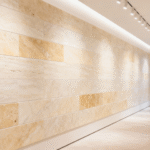
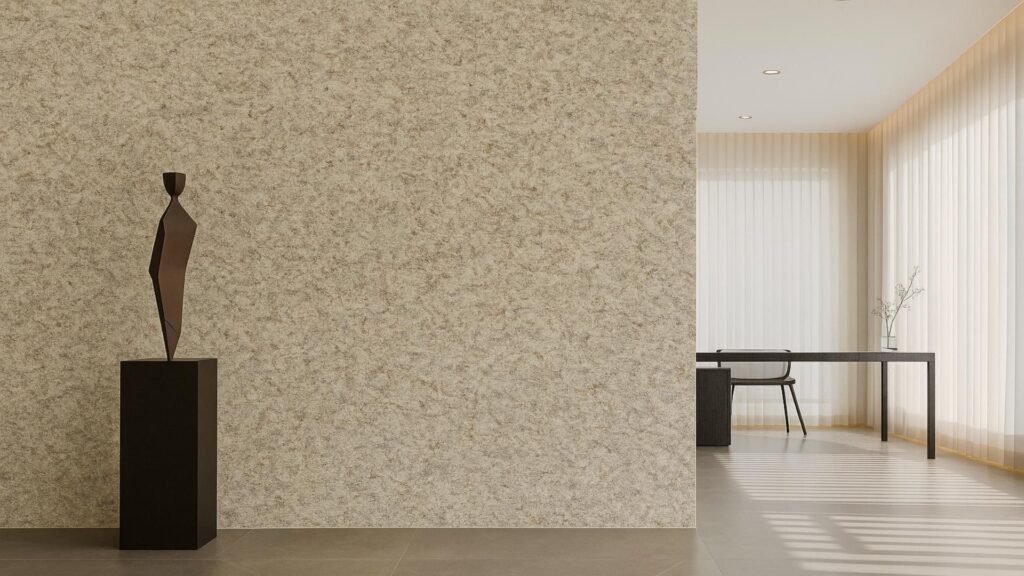
Begin with how the wall will be seen. In close-view or side-lit spaces, flexible stone veneer presents a mineral surface that stays calm under raking light, so the texture reads naturally without glare or wipe marks. Where sightlines are long—lobbies, corridors, reception zones—this low-sheen behavior keeps surfaces consistent from morning to evening, even as lighting shifts.
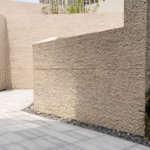
Geometry is the next filter. Columns, arches, and tight radii reward materials that bend cleanly and keep joints discreet. Flexible stone veneer wraps with knife cuts and flat bonding, so seams remain quiet and the finish reads as one continuous skin. PVC wall panels excel on long, flat runs, but tight curves and inside–outside corners rely on trims; as trim count rises, visual continuity drops and layout time increases.
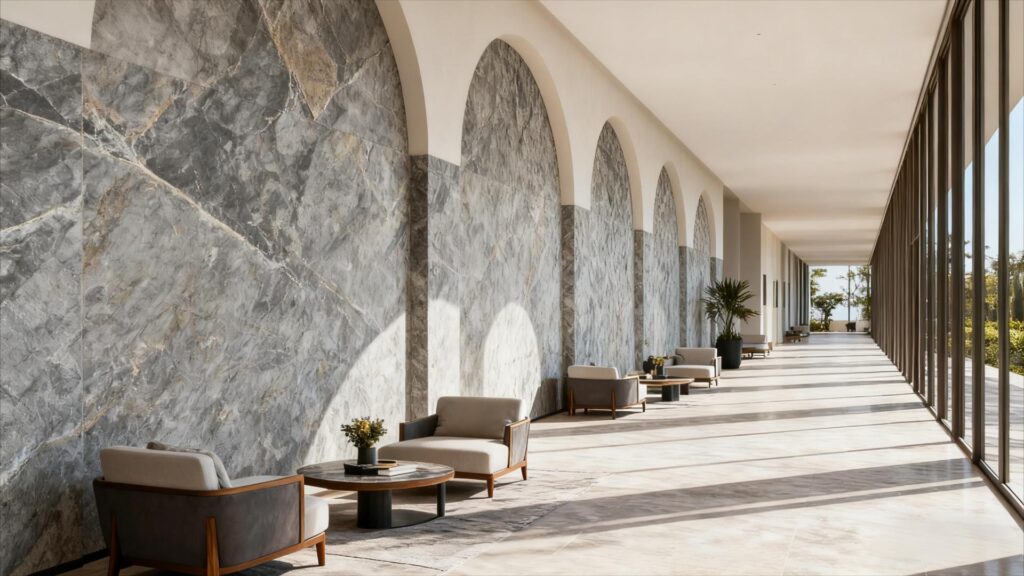
Exposure determines how the finish ages. Near glazing or skylights, a UV-stable flexible stone veneer build holds tone and seam integrity when edges are sealed and substrates are correctly primed. In bathrooms or service areas with intermittent steam, a matched polymer adhesive and edge sealing maintain bond through routine cleaning cycles. PVC wall panels perform well in dry, shaded interiors; under strong sun or warm façades, printed films and clear layers age faster, and thermal movement becomes visible if perimeter gaps and trims are not generous.
Maintenance and repair affect lifetime costs more than day-one price. Flexible stone veneer can be refreshed in place—localized blending or a light re-topcoat restores high-touch bands without removing sheets—so small issues stay small. With PVC wall panels, dent or film scratches are difficult to disguise; replacing the affected panel is the usual remedy, which introduces downtime and alignment checks across the run.
Program and build-up close the decision. If the schedule favors night-shift changeovers or elevator moves, flexible stone veneer simplifies handling, reduces framing and trim dependency, and keeps joint lines quiet, which shortens installation and punch-list work. If the brief is a quick refresh on flat, shaded, smooth walls and expansion detailing can be executed precisely, PVC wall panels remain a practical option. These cues are consistent with factory mockups—adhesive coverage checks, bend tests, QUV exposure—and post-handover site audits that track how both finishes behave under real operating conditions.