
How MCM Interior Flexible Tiles Lead 2025 Interior Design Trends

Discover why MCM interior flexible tiles are defining 2025 design trends. This article explores why designers globally are choosing them—not just for their aesthetic versatility but for their unique performance. Explore their diverse applications from commercial hotels to private homes, and understand why MCM is a valuable long-term investment beyond the initial price. Read on to see how this material can transform your next project.

Table of Contents

MCM flexible tiles are leading the 2025 design trend by solving fundamental challenges in modern construction. This represents not just a material substitution, but a crucial shift toward efficient and intelligent building. Choosing MCM delivers measurable advantages: 70% lighter weight reduces logistics costs, 30% faster installation accelerates timelines, and a 10-year warranty ensures long-term reliability with low maintenance. With Duolong’s 30,000 m² automated factory and international certifications, we provide not just products, but certainty, consistency, and a competitive edge—transforming trends into your tangible project benefits.

How MCM Interior Flexible Tiles Lead 2025 Interior Design Trends

Choosing the right interior wall material for upcoming projects is more than just a design decision—it’s a balancing act between aesthetics, budget, timeline, and sustainability.At Duolong Soft Stone, we’ve worked with architects and developers across Southeast Asia and Latin America, and one question comes up again and again: How can we deliver a high-end, durable finish without the usual complications and costs?The answer lies in MCM Flexible Tiles—a material that’s redefining not just surfaces, but entire project workflows.

Why Designers Are Turning to MCM Tiles More Than Just Looks

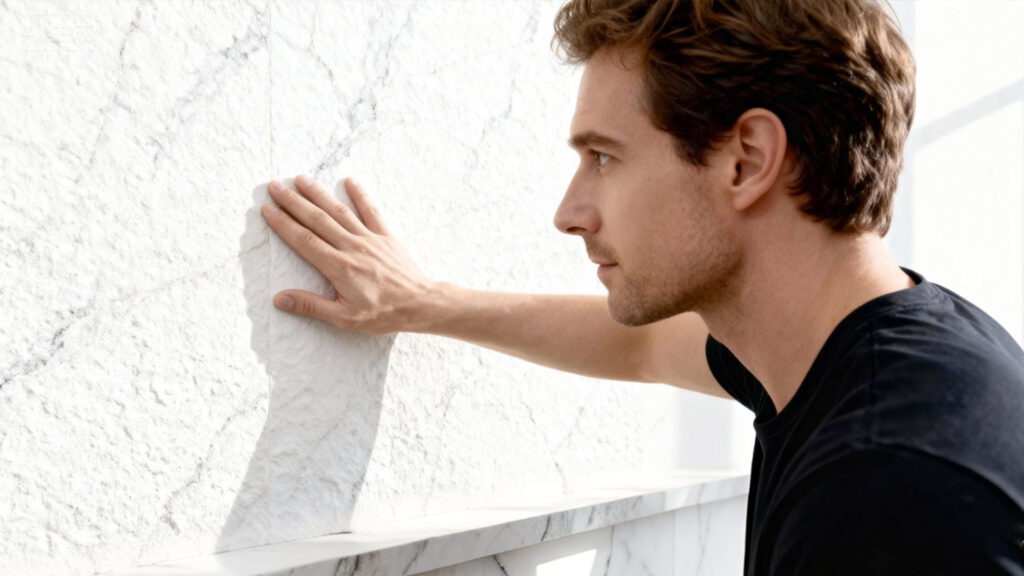
It starts with visual appeal.Our design team has created more than 50 distinct finishes—from realistic marble and wood grains to contemporary concrete and metal effects.But what truly sets MCM tiles apart is their physical flexibility.Unlike rigid ceramics, these tiles can bend to fit curved walls, arches, and columns—something we’ve seen used to stunning effect in hotel lobbies and retail spaces.

One project lead from a Singapore-based architecture firm shared:“We used Duolong’s MCM tiles on a curved feature wall that traditional tiles couldn’t handle.The consistency in color and texture across all batches eliminated the risk of visual breaks—which was crucial for the client.”

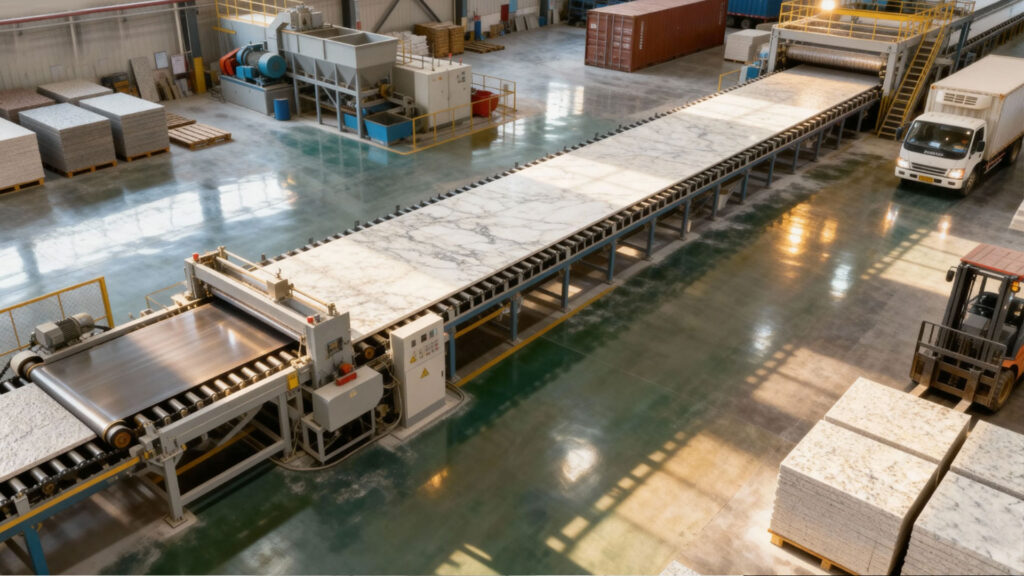
That level of consistency isn’t accidental. It’s the result of fully automated production lines that control every stage, ensuring each tile matches the next, batch after batch.

Lightweight Design, Heavyweight Savings: How MCM Cuts Costs at Every Stage.The cost benefits become obvious from the moment materials arrive on site.

Take weight, For example: A standard pallet of ceramic tiles covering 100 m² can weigh 2,000 kg or more.

The same area using Duolong MCM tiles weighs just 600 kg—a 70% reduction.

That’s not just a shipping saving—it influences everything from freight charges to on-site labor.In retrofit projects, it often means no extra structural support is needed, saving both engineering time and material costs.

Installation is also significantly faster.A three-person team can install 80–100 m² of MCM tiles per day, compared to roughly 60 m² for traditional tiles—speeding up project timelines by about 30%.In an industry where time is money, that’s a game-changer.
From Hotels to Homes Where MCM Tiles Perform

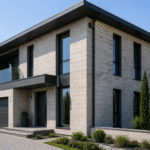
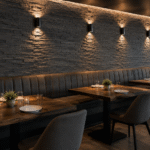
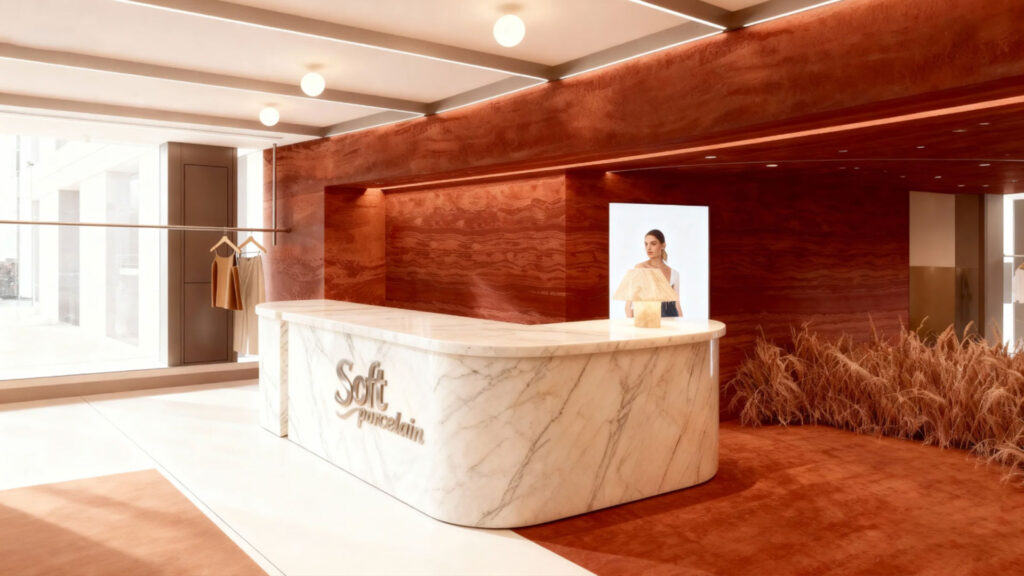
Thanks to their durability and adaptability, MCM tiles are being specified across a growing range of settings:Commercial spaces like hotels, malls, and offices benefit from their Class I fire resistance and high scratch resistance—essential for high-traffic areas.

Residential projects gain from aesthetics plus health safety: all Duolong tiles are SGS-certified for low VOC emissions, supporting better indoor air quality.

We’ve supplied tiles for everything from hospital renovations to luxury villas—each application leveraging the same core advantages: safety, durability, and design freedom.
Beyond the Price Tag MCM as a Long-Term Investment

While the upfront cost of MCM tiles is competitive with mid-range ceramics, the real value emerges over time. Their resistance to cracking, chipping, and staining translates into lower maintenance and longer service life. In fact, most of our clients report a 40–50% reduction in maintenance costs over a 10-year period compared to conventional tiles.

That’s why we back every installation with a 10-year warranty—not just as a promise, but as a commitment to durability you can count on.

Your Partner, Not Just a Supplier: The Duolong Difference

A reliable supply partner does more than deliver products—they deliver certainty. With a 30,000 m² production facility, 5 automated lines, and a monthly output capacity of 50,000 m², we’re built to handle large and complex orders without compromising on quality.

Our certifications—including ISO 9001, CE, and SGS—aren’t just badges; they’re proof of a manufacturing system designed for global standards.We also offer custom color and size options, working directly with design teams to match exact specifications.

Ideal Duolong partners are typically:

  • Large-scale developers and contractors
  • Architectural and design firms
  • Export-oriented trading companies
  • They value consistent quality, on-time delivery, and a factory partner that can scale with their growth.
  • Build Smarter for 2025 and Beyond

The shift to MCM flexible tiles isn’t just about keeping up with trends—it’s about building smarter, faster, and more sustainably.By choosing a partner like Duolong, you’re not only selecting a product;you’re investing in a solution that adds value at every stage, from shipment to installation to long-term performance.

Ready to see how MCM tiles can elevate your next project?

Contact us for samples, technical data sheets, or a consultation with our design team.

Share the Post:

Most Posts

Acrylic Solid Surface Panels for Modern Spaces

Acrylic Solid Surface Panels are widely used in modern commercial and residential design because they combine lightweight construction, seamless appearance, and flexible fabrication capabilities. This article explains how the material is applied across hotels, office buildings, retail interiors, furniture systems, residential spaces, and renovation projects while offering advantages in transportation efficiency, installation flexibility, and long-term maintenance performance.
The content also explores why importers, wholesalers, contractors, furniture manufacturers, and interior designers increasingly prefer Acrylic Solid Surface Panels over traditional stone and heavy decorative materials. From wall systems and custom furniture applications to commercial renovation projects and minimalist interiors, the article highlights how Acrylic Solid Surface Panels support modern architectural trends while improving project efficiency and commercial value.

Seamless Renovation Transform Spaces with Thin Porcelain Tile

Thin Porcelain Tile is transforming modern renovation projects by combining lightweight structure, large-format aesthetics, and versatile installation applications into one advanced architectural surface solution. This article explains how the material is used across interior walls, commercial spaces, furniture surfaces, exterior facades, and fast renovation systems while helping reduce transportation costs, construction time, and long-term maintenance requirements.
The content also explores why Thin Porcelain Tile is becoming increasingly important for wholesalers, importers, contractors, and building material distributors looking for products that offer both premium visual appeal and practical commercial value. From tile-over-tile renovation systems to modern seamless interior designs, the article provides detailed insights into how Thin Porcelain Tile improves project efficiency while supporting contemporary architectural trends across residential and commercial markets.

Luxury Interior Manufactured Stone Veneer Ideas

This report is designed to be more than a technical manual; it is a value-driven toolkit for professionals navigating the complexities of modern material sourcing. By reading this guide, you will gain a deep understanding of how Manufactured Stone Veneer (MSV) serves as a strategic asset in your project lifecycle. We move beyond basic aesthetics to address the critical “Why” and “How” of stone application.
You will learn how to drastically reduce site labor costs through simplified installation protocols, how to eliminate structural reinforcement expenses using lightweight material technology, and how to safeguard project timelines with predictable, batch-consistent textures. Whether you are seeking to minimize transit breakage, optimize container loading for global import, or deliver a zero-maintenance luxury finish to your clients, this content provides the technical proof and operational insights needed to gain a competitive edge in the building materials market.

Best Spaces to Install SPC Wall Panels in Any Project

This article provides a comprehensive blueprint for professionals looking to optimize their material supply chain. By reading this guide, you will gain a clear understanding of how SPC Wall Panels outperform traditional WPC and natural stone in terms of impact resistance, waterproof integrity, and B1 fire safety compliance. For contractors, we provide specific insights into “over-tile” installation techniques that can slash labor costs and project timelines. For wholesalers and importers, we share manufacturing secrets on how to maximize container loading density to lower your landed costs per square meter. Beyond just product specs, this guide offers a professional perspective on creating “integrated wall and floor” systems that allow you to sell complete aesthetic solutions rather than just individual boards. Ultimately, this content serves as a technical resource to help you make informed procurement decisions that balance high-end design with industrial-grade performance.

What Are WPC Wall Panels and How They Are Used

This article provides a practical breakdown of what WPC wall panels are and how they are used across different types of projects. It focuses on real-world applications rather than general descriptions, explaining how the material performs in terms of durability, installation efficiency, and long-term stability.
The content highlights key advantages such as resistance to moisture, consistent surface quality, and ease of handling. It also compares WPC panels with traditional materials like wood, PVC, and stone, offering a clearer perspective on where each option fits.
For businesses involved in sourcing, distribution, or construction, this serves as a reference for evaluating WPC wall panels not only as a material choice, but as part of a broader solution that impacts cost control, workflow efficiency, and product reliability.

Get The Quote!