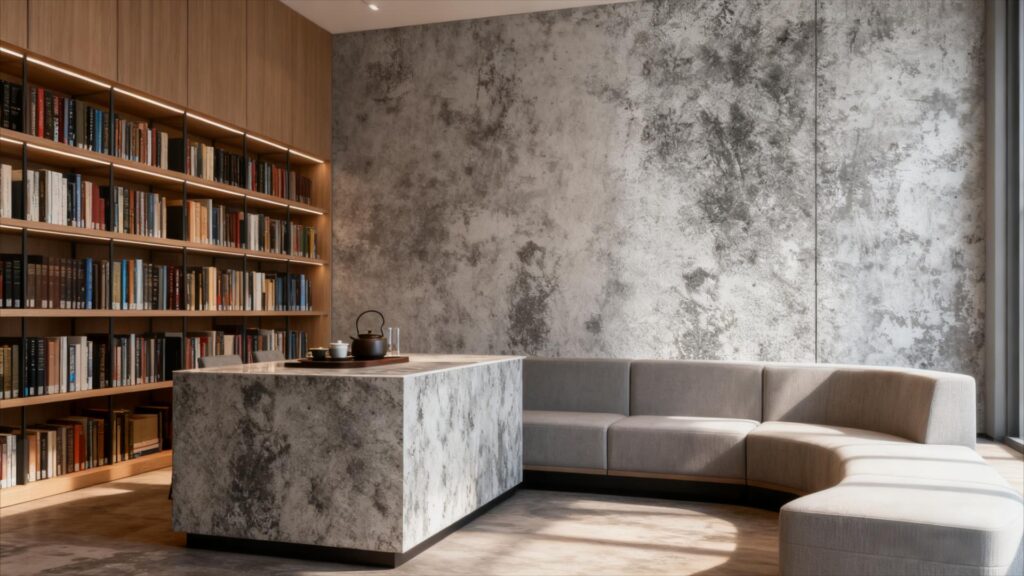
A new generation of wall coverings combines the authentic look of natural stone with a fraction of the weight and a fraction of the installation time. Flexible stone achieves realistic textures and veining in sheets just 2–10 mm thick, able to bend around curves and adhere to many substrates without heavy structural changes. The result is the kind of visual impact once reserved for full stone cladding, but delivered with lower logistics cost, faster turnaround, and fewer on-site constraints. Read on to learn how this material is made, where it performs best, and exactly what to check for when specifying it for a project.
What Exactly Is Flexible Stone
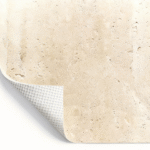
Flexible stone, also referred to as soft stone, soft porcelain, or flexible rock panels, is a high-performance, thin, and lightweight building veneer made from modified inorganic mineral composites. Its primary ingredients include finely processed natural stone powder, recycled construction waste, quartz sand, and clay. These materials are carefully blended and engineered to ensure consistent quality, durability, and aesthetic versatility.
The manufacturing process involves composite modification, followed by controlled light-curing and temperature-curved shaping. The result is flexible sheets typically ranging from 2mm to 10mm in thickness. Despite their reduced thickness, these sheets maintain structural integrity while offering the authentic textures and patterns of natural stone, brick, wood, ceramic, leather, woven surfaces, and embossed designs.
One of the key benefits of flexible stone is its adaptability. Unlike traditional rigid stone or ceramic tiles, it can conform to curved or uneven surfaces, enabling creative architectural solutions for columns, arches, or concave walls. This property opens up new design possibilities for both interior and exterior applications, including feature walls, cladding, and renovation projects where weight or structural constraints are a concern.
In addition to its flexibility and aesthetic appeal, flexible stone is recyclable, lightweight, and easy to transport and install. These characteristics reduce logistical challenges and installation costs, while maintaining a high-quality finish. Its combination of durability, adaptability, and realistic surface appearance makes it a practical and versatile option for modern architectural and decorative projects.
Why Flexible Stone Is Changing Modern Wall Design
Lightweight and Easy to Install
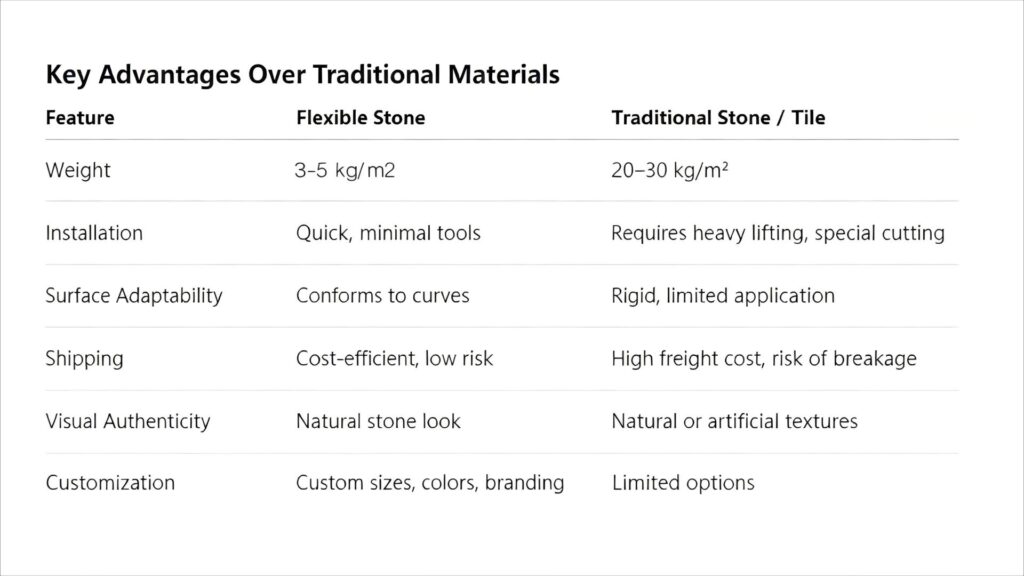
One of the most significant advantages of flexible stone is its exceptionally low weight. While traditional natural stone panels often weigh between 20 and 30 kilograms per square meter, flexible stone typically weighs only 3 to 5 kilograms per square meter. This drastic reduction in weight simplifies handling, cutting, and installation, allowing surfaces to be clad more efficiently. In practical experience, installation times can be cut nearly in half compared to conventional stone, reducing labor demands and minimizing project delays.
Adaptable to Curves and Complex Surfaces
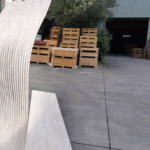
Flexible stone’s thin, bendable structure allows it to conform to curves, arches, rounded columns, and other irregular or non-linear surfaces. This property enables the creation of seamless, continuous wall designs that are impossible with rigid materials. Despite its flexibility, the material maintains the natural texture, veining, and strength of stone, ensuring that both aesthetic and functional qualities are preserved. Designers and builders have successfully applied it to create visually striking feature walls and sculptural elements.
Authentic Stone Appearance Without the Bulk
Flexible stone offers the visual and tactile qualities of natural stone—grain, veining, and surface finish—while significantly reducing structural load. This combination makes it suitable for applications where traditional stone would be too heavy or cumbersome. The material can mimic a wide range of surfaces, from rough-hewn stone and brick patterns to smooth, polished finishes, all while maintaining a fraction of the weight.
Cost-Effective for a Wide Range of Projects
The lightweight nature of flexible stone not only streamlines installation but also reduces shipping costs and the risk of damage during transport. Unlike traditional materials, it often eliminates the need for wall reinforcement or demolition during renovations, resulting in substantial savings in both time and materials. Its durability and ease of handling contribute to lower long-term maintenance and replacement costs.
Suitable for Both Indoor and Outdoor Applications
Flexible stone is engineered to withstand a variety of environmental conditions. Properly sealed, it resists moisture, UV exposure, and temperature fluctuations, making it suitable for interior walls, exterior cladding, and high-traffic areas. Testing and certifications, including ISO and CE standards, verify its durability and long-term performance under diverse conditions, ensuring that the material delivers consistent quality over time.
Where Flexible Stone Excels
Flexible stone stands out for its versatility, combining aesthetic appeal with practical performance across a wide range of architectural and decorative applications.
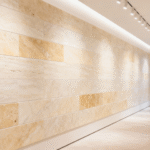
- Interior Feature Walls: Thanks to its thin and lightweight construction, flexible stone is ideal for accent walls, lobby cladding, and decorative partitions. Unlike traditional stone panels, it adds minimal weight to the structure, eliminating the need for heavy reinforcement while delivering the authentic textures and patterns of natural stone. Installation is faster and more precise, often requiring fewer tools and less labor, which reduces overall project time and cost.
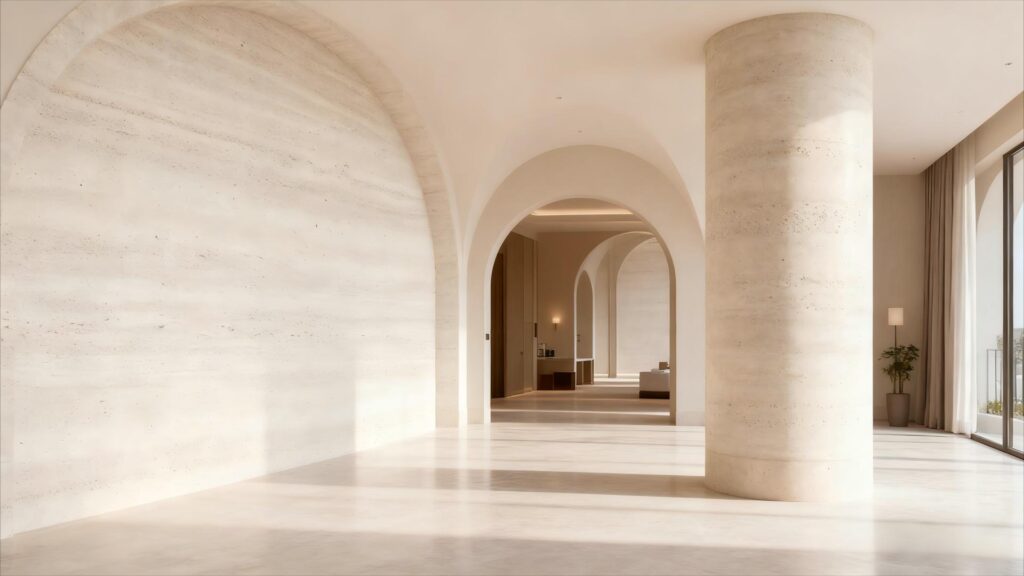
- Curved and Irregular Surfaces: One of flexible stone’s most notable advantages is its ability to conform to non-linear surfaces. Columns, arches, concave walls, and other curved structures can be covered seamlessly without cracking or compromising the stone’s visual quality. This adaptability allows for continuous, flowing wall designs that would be difficult or impossible to achieve with rigid stone or tiles, enabling more creative architectural solutions.
- Renovation and Retrofitting Projects: Its lightweight and thin profile makes flexible stone highly practical for upgrading existing walls. It can be applied directly over many surfaces without removing old materials, reducing labor and structural modifications. The lower weight also minimizes stress on existing walls and floors, which is particularly beneficial in older buildings or retrofitting projects.
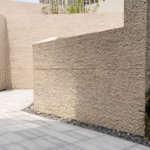
- Exterior and Outdoor Applications: Flexible stone is durable and can withstand various environmental conditions when properly sealed. It resists moisture, UV exposure, and temperature fluctuations, making it suitable for exterior facades, feature walls, and outdoor decorative elements. Its weather resistance ensures long-term performance without frequent maintenance, providing both aesthetic and functional benefits.
Flexible stone merges genuine natural aesthetics with practical adaptability, offering a solution that is lighter, easier to handle, and more versatile than traditional stone or ceramic tiles. Its proven performance, combined with ease of installation and design flexibility, makes it a reliable material for both new constructions and renovation projects.
How to Make the Most of Flexible Stone in Projects
Flexible stone offers a range of benefits, but to truly maximize its potential, proper installation and maintenance are key. Attention to detail during every stage of the project—from preparation to finishing—ensures that the material delivers both aesthetic appeal and long-lasting durability.
When preparing the substrate, the surface must be clean, smooth, and free from any debris, dust, or grease. A properly prepared wall guarantees strong adhesion of the flexible stone panels and prevents issues like peeling or uneven bonding over time. Whether installing on drywall, concrete, or another surface, ensuring that the substrate is structurally sound is essential for a successful installation.
Once the substrate is ready, the next step is cutting and handling the material. Flexible stone is easy to cut but requires the right tools for precise results. Sharp utility knives or precision cutters are ideal for trimming the sheets to the desired size. It’s important to avoid folding or bending the material beyond its designed tolerance, as this can cause the surface to crack or lose its structural integrity. For larger installations, careful planning of the sheet layout is essential to ensure the design remains seamless, reducing waste and ensuring pattern continuity across large surfaces.
The adhesive used for installing flexible stone is just as important as the material itself. Choosing a high-quality, compatible adhesive ensures strong, long-lasting bonding. It’s essential to select an adhesive that works well with both the flexible stone and the wall substrate. This helps prevent issues like shifting or gaps that can occur with poor bonding over time. Additionally, make sure the adhesive is suitable for the specific environment (indoor or outdoor) to provide optimal moisture resistance and stability.
When it comes to the actual installation, flexible stone panels should be applied from bottom to top to ensure a secure fit. After applying each panel, use a pressing board to gently compact the material, ensuring that it adheres evenly. Avoid pressing the material by hand, as this can cause uneven pressure, leading to an imperfect finish.
Filling gaps and joints between the panels is another crucial part of the installation process. Use a grout or filler that matches the color of the stone panels to fill any gaps, nail holes, or joints. It’s important to carefully smooth out the filler with a blade, ensuring the natural look of the stone is preserved. The gaps should be subtle, mimicking the natural seams seen in stone or tile installations. This creates a uniform, professional finish that enhances the overall aesthetic.
Once the installation is complete, it’s time to focus on the final cleaning and surface protection. Use a dry sponge to clean the surface of the flexible stone, ensuring that any excess adhesive or dust is removed. Be cautious during this step to avoid scratching or damaging the surface. After cleaning, it’s essential to protect the finished product. For added durability, consider applying a sealant to protect the stone from moisture, UV damage, and dirt buildup, particularly in high-traffic areas or outdoor applications.
By following these essential steps—from preparation and cutting to installation and finishing—you can ensure that your flexible stone installation will be both visually stunning and durable for years to come. With careful attention to detail, flexible stone will perform as intended, providing a beautiful, low-maintenance solution for a variety of architectural applications.
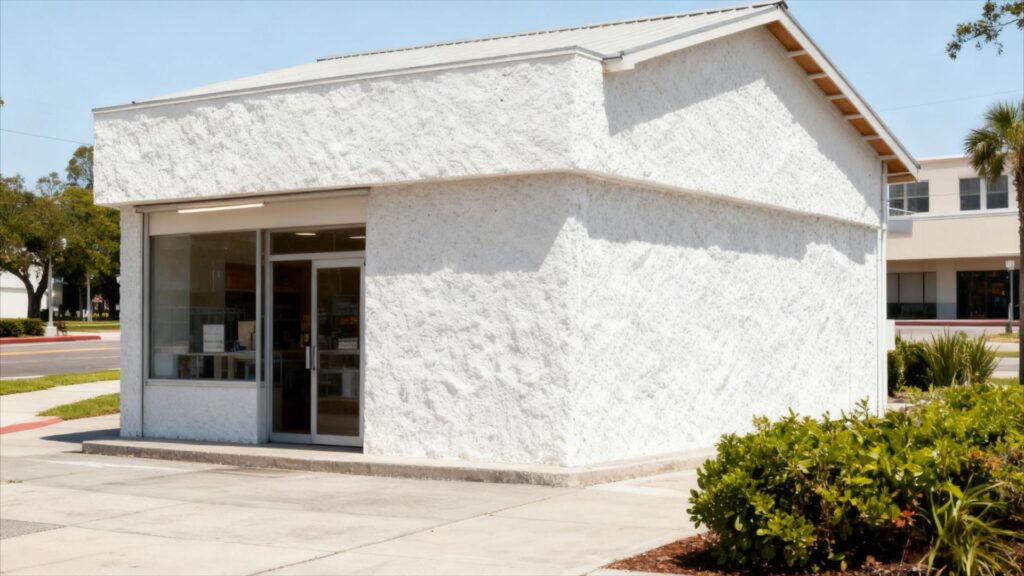
A Material That Balances Beauty and Practicality
Flexible stone represents a significant evolution in wall materials, combining the natural beauty of stone with lightweight, versatile, and cost-efficient properties. Its ability to adapt to complex surfaces, reduce installation time, and provide authentic stone aesthetics makes it an excellent solution for modern architectural design.
As wall design evolves, materials that offer both practicality and visual appeal are essential. Flexible stone provides a clear path forward, demonstrating how innovation in material science can redefine what is possible in both renovation and new construction projects. Its proven performance, backed by real-world experience and industry-standard certifications, ensures it is a reliable choice for a wide range of applications.