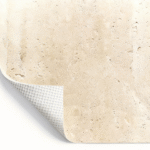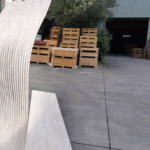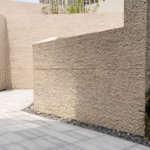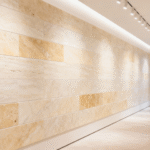
Curved and irregular walls can transform an ordinary structure into a statement piece, but they also introduce challenges that push traditional cladding materials to their limits. Rigid stone struggles with tight bends, adds weight that may require costly reinforcement, and often generates high waste from complex cuts. Flexible stone changes the equation. Combining the authentic texture of natural stone with a thin, lightweight, and adaptable format, it can wrap smoothly around curves, bond to multiple substrates, and withstand years of weather and wear. The result is greater design freedom, faster project delivery, and measurable cost savings—without compromising on quality or appearance. In the following sections, you’ll see how eight core advantages make Flexible Stone a practical, tested, and future-ready choice for complex architectural surfaces.
Perfect Fit for Curved and Irregular Surfaces
Rigid stone panels have clear physical limitations: they resist bending, and even with precision machinery, achieving a clean wrap on tight-radius curves often leads to micro-cracks or visible seams. On small-radius columns or complex arches, installers are frequently forced to cut the material into narrow strips, breaking the visual continuity and creating more joints that require long-term maintenance. Over time, those joints can discolor, loosen, or even detach under environmental stress, undermining the overall design impact.
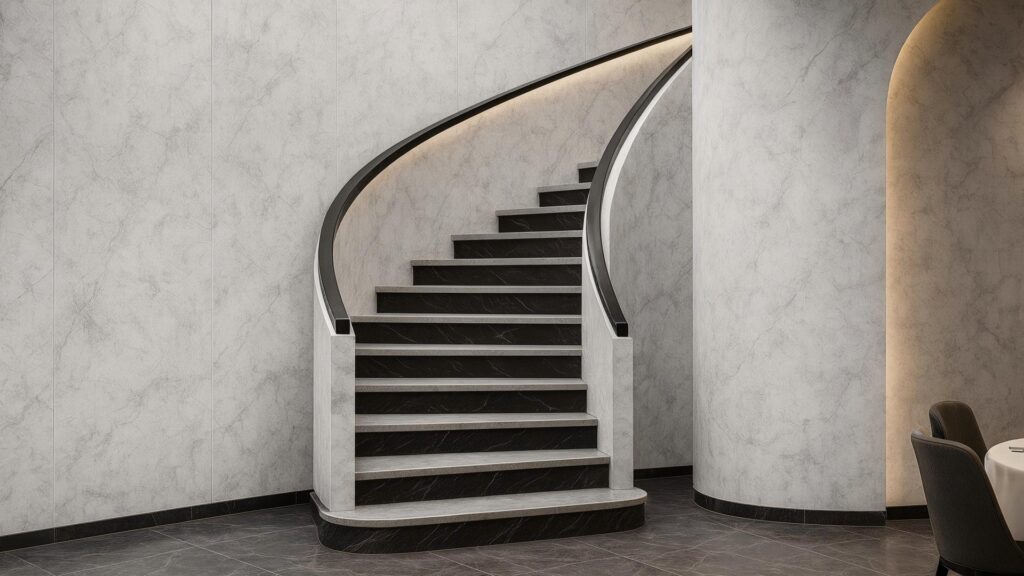
Flexible stone changes this outcome entirely. Thanks to its inherent bendability, it can adapt to curves with radii as tight as 10–15 cm while maintaining surface integrity and visual smoothness. This flexibility allows entire columns, domes, or flowing wall lines to be clad in a continuous layer of natural stone texture—avoiding both structural stress and aesthetic compromise.
One notable application involved the renovation of a five-star hotel lobby where the design featured multiple cylindrical columns and soaring arched entrances. The original specification called for marble tiles, but during mock-up tests, the cuts required for each curve left noticeable seams and wasted significant material. By switching to 2.8mm Flexible Stone sheets, the installation team wrapped each surface in single, unbroken layers, reducing visible joints by more than 80% and cutting installation time by nearly a third. The end result was not only a sculptural, uninterrupted stone finish that enhanced the sense of luxury but also a lower long-term maintenance requirement—joints were fewer, edges were cleaner, and the material’s flexibility meant it would better accommodate subtle structural movement over time.
From a project management standpoint, this approach also provided two critical benefits:
- Design assurance — The continuous surface preserved the intended high-end visual effect without resorting to workaround cuts.
- Lifecycle savings — Fewer joints meant lower risk of repairs, directly reducing maintenance budgets over the building’s lifespan.
For projects where curves or irregular surfaces are a central design element, integrating Flexible Stone from the outset can streamline installation planning, safeguard aesthetic goals, and deliver measurable cost benefits over the full lifecycle of the cladding.
The Ultra-Lightweight Advantage of Flexible Stone
Weight has always been a critical consideration in cladding projects, particularly when dealing with high-rise structures or older buildings where the load capacity of the existing framework is already near its limit. Traditional natural stone panels—such as 20mm-thick granite—can weigh between 55–60 kg per square meter. Adding this much weight during a renovation doesn’t just increase installation difficulty; it can also require structural reinforcement or even a partial redesign of the supporting system. These extra steps can delay schedules, inflate budgets, and in some cases, make the desired design impractical.
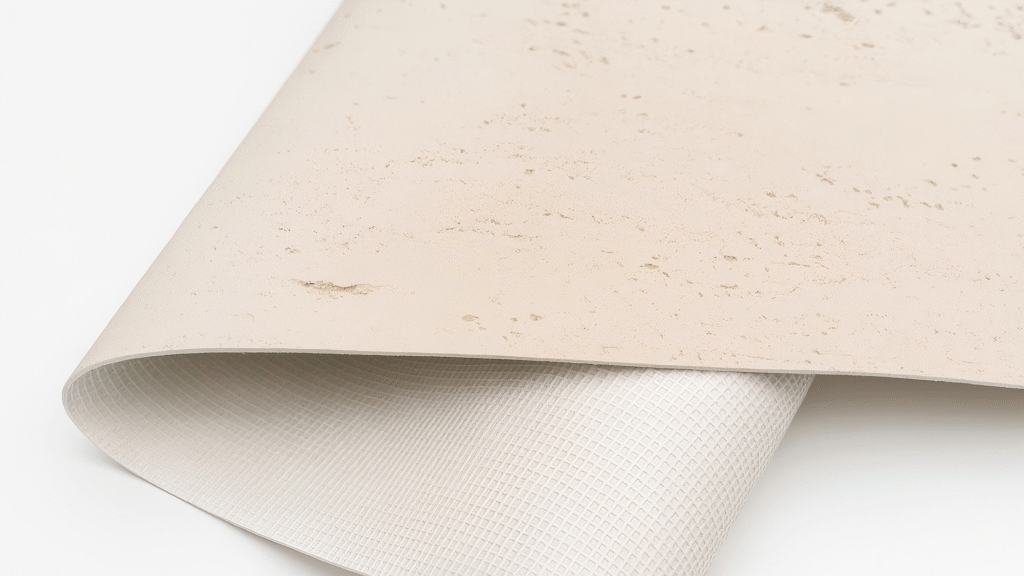
Flexible stone offers a practical alternative.It weighs less than one-tenth of full-thickness stone, yet retains the authentic texture and appearance of quarried material. This significant weight reduction opens up possibilities for installing stone finishes directly onto existing walls—without adding new load-bearing structures or steel subframes. In weight-sensitive spaces such as glass curtain wall systems, atriums, or historic façades, this characteristic can be the difference between a feasible upgrade and an abandoned design.
During the renovation of an older waterfront building, inspections revealed that the existing façade materials had deteriorated and required replacement. Structural evaluations showed that using solid marble panels would add significant weight, pushing the load close to the building’s safe limits. By choosing flexible stone, the project team was able to achieve a high-end natural stone finish while keeping the cladding’s weight well within capacity. This eliminated the need for additional reinforcement, saving considerable structural work costs and helping the project remain on schedule.
In any project where the structural capacity is a concern—whether due to building age, height, or design constraints—selecting a lightweight yet durable material early in the planning stage can protect both the budget and the timeline. Flexible stone not only solves the technical challenge but also allows the original design vision to be realized without compromise.
Slash Installation Time & Labor Costs with Flexible Stone
Installing cladding on curved or irregular walls is one of the most time-consuming tasks in a construction project. With rigid materials such as thick stone panels or ceramic tiles, every curve demands multiple dry-fits, precise shaping, and extensive on-site cutting. Each extra joint means more alignment work, more grouting, and more cleanup. This not only extends timelines but also increases the risk of visible imperfections that can compromise the design.
Flexible stone overcomes these challenges because it is delivered in thin, lightweight sheets that can be rolled, handled by a single installer, and cut cleanly with simple tools like a utility knife or shears. Its pliability allows it to follow the exact contours of the wall without forcing the material into unnatural bends that might cause cracks. Installation teams can cover large, continuous sections in a single application, avoiding the need for complicated subframes or anchoring systems.
In practical terms, this means the workflow becomes much more efficient. The surface is prepared, adhesive is applied, and a full-size sheet is positioned and pressed into place, wrapping smoothly around the curve. Fewer seams reduce the time spent on joint finishing and ensure a cleaner, more continuous visual effect. On projects where speed is critical—such as commercial interiors that must reopen quickly—this efficiency can be decisive.
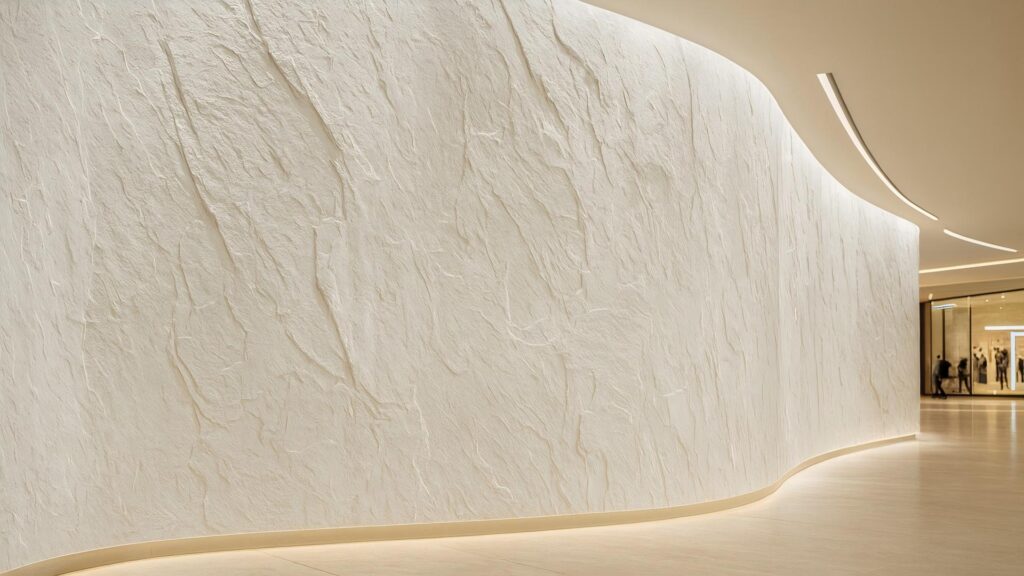
One renovation in a large retail atrium illustrated the advantage clearly. The design featured a 40-meter-long serpentine wall that, under the original rigid-tile plan, would have required over a week of labor and generated significant dust from continuous cutting. By switching to flexible stone, the installation team completed the wall in just four days. The flexible sheets conformed to every curve without segmenting, joint count dropped by nearly half, and the minimal cutting meant the surrounding shops remained open without disruption.
The lesson is straightforward: when project schedules are tight or work must be completed in occupied spaces, selecting a cladding material that installs in larger, continuous sections—and with fewer mechanical modifications—saves both time and operational cost. Flexible Stone delivers that advantage while maintaining the visual quality expected of natural stone finishes.
Reduced Material Waste and Cutting Loss
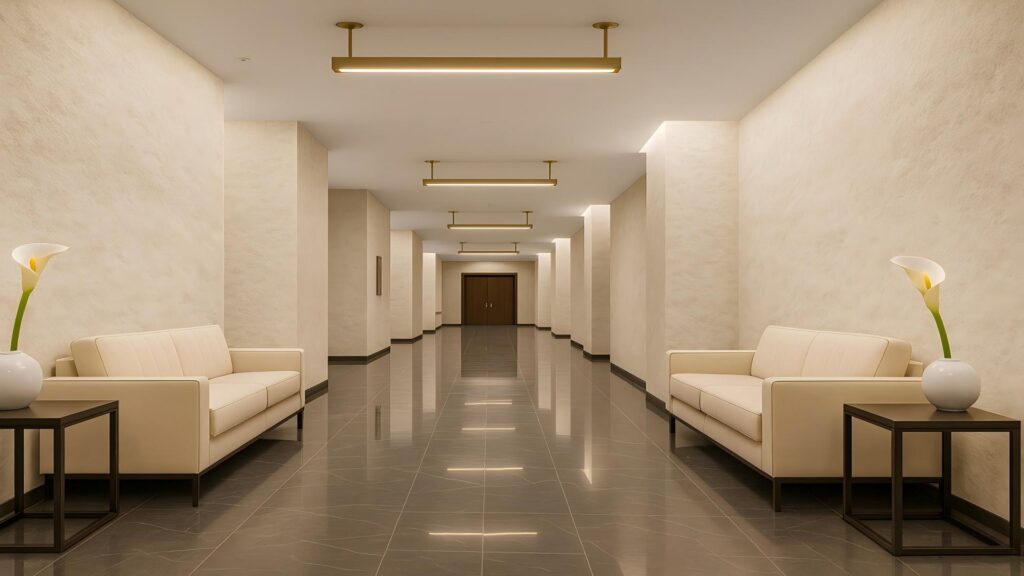
When working with curved or irregular walls, traditional rigid stone materials often produce significant waste. Each curve or non-standard angle demands additional cutting, and the offcuts can rarely be reused effectively. For premium stone, this waste can account for 10–15% of the total order, turning into a direct cost increase. Beyond the financial impact, the environmental footprint also grows due to the additional raw material extraction, processing, and transport required to cover those losses.
Flexible stone changes this equation by allowing precise shaping to match the wall’s exact profile. Its thin, pliable sheets can be laid flat for accurate tracing and trimmed cleanly with hand tools. This makes it possible to follow even complex contours without producing large, unusable fragments. In field applications, waste rates have been reduced to as low as 3–5%, saving both budget and resources.
Superior Weather & Impact Resistance for Demanding Environments
Exterior curved walls are exposed to more than just visual scrutiny. They face constant environmental stress from every angle. Wind-driven rain can push moisture deep into surface joints, shifting sunlight exposure can cause uneven heating, and daily temperature swings create expansion and contraction cycles. Over time, these forces can push rigid stone materials beyond their tolerance, leading to hairline cracks, edge chipping, or in some cases, panel detachment.
Flexible stone is designed to withstand these challenges without losing its performance or appearance. Tested in accordance with CE standards, it demonstrates strong resistance to UV fading, minimal water absorption, and stability under repeated freeze–thaw cycles. This makes it a reliable choice for climates ranging from humid coastal areas to regions with harsh winters. In real-world conditions, installations have maintained their finish and integrity for 15–20 years, even on fully exposed façades.
Its resilience is not limited to weather. In high-traffic environments such as transport hubs, shopping centers, or public plazas, accidental impacts are inevitable—trolleys, luggage, or maintenance equipment can collide with wall surfaces. Unlike brittle rigid panels, Flexible Stone’s composite structure can absorb and disperse impact energy, greatly reducing the likelihood of chips or surface fractures.
One public transit station upgrade demonstrated these strengths clearly. The design included curved feature walls along a busy passenger corridor. Two years after installation, site inspections showed the Flexible Stone cladding remained free of cracks, with no fading despite daily exposure to direct sunlight and heavy pedestrian traffic. In contrast, an adjacent area finished with rigid ceramic panels displayed visible chips and hairline fractures within the same period.
For projects where the exterior design must endure both environmental extremes and human activity, a cladding solution that combines long-term weatherproofing with impact resistance isn’t just desirable—it’s essential. Flexible Stone offers this dual protection, ensuring that both the structure and its visual appeal remain intact well into the future.
Design Versatility and Aesthetic Freedom
Architectural design often calls for visual variety—gradients, mixed textures, or unique patterns that set a project apart. With rigid natural stone, achieving these effects is not only technically complex but also costly, as it requires precise cutting, multiple material batches, and sometimes custom quarrying. These constraints can limit creativity, forcing compromises in the final look.
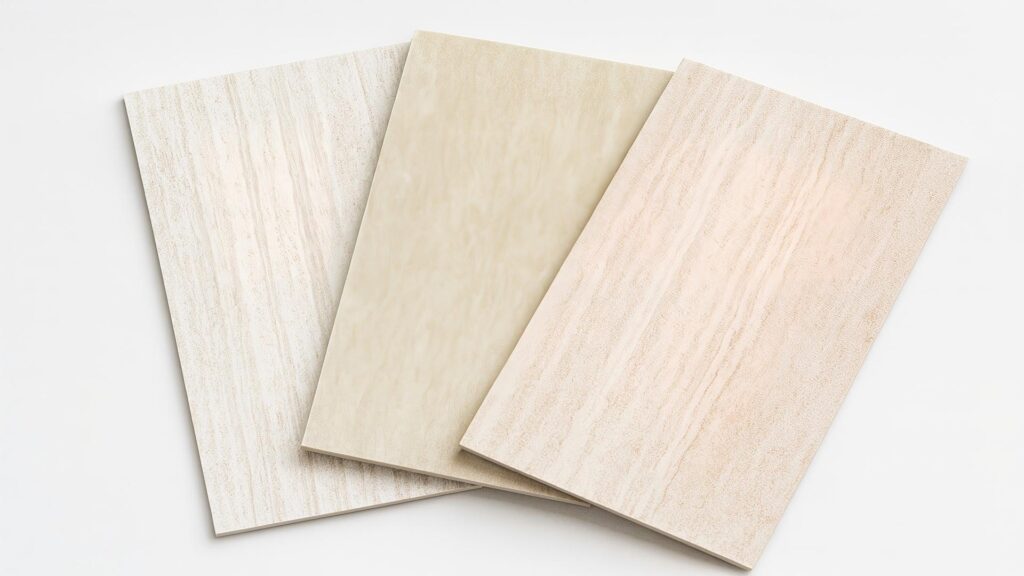
Flexible stone removes many of these limitations. It is available in an extensive range of natural textures—slate, sandstone, marble effect and a broad color palette. The manufacturing process also allows for custom shades and surface treatments, enabling exact color matching to other design elements. For projects seeking a truly distinctive finish, printing technology can reproduce intricate patterns or branding elements directly on the stone surface, something traditional stone cannot easily accommodate.
In one mixed-use development, the façade design required a gradual shift from warm beige at street level to deep charcoal at the upper floors, creating a visual link between the retail base and the residential tower above. With conventional stone, the transition would have demanded multiple material sources and complex installation sequencing, driving costs and risking inconsistencies. Using three custom Flexible Stone finishes, the installers achieved a seamless gradient effect in continuous runs, without visible banding or shade variation. The flexibility in customization not only simplified logistics but also ensured the architectural intent was delivered exactly as envisioned
Cost Efficiency Across the Project Lifecycle
When evaluating cladding options, the purchase price is only part of the equation. Transportation, installation, and long-term upkeep can significantly influence the real cost of ownership. Heavy natural stone requires reinforced packaging, higher freight costs, and more labor to handle and install—expenses that can exceed the material cost itself.
Flexible stone’s lightweight profile reduces shipping weight and volume by up to 80%, allowing more surface area to be transported per load. On site, the ability to handle large sheets with a smaller crew and minimal lifting equipment cuts installation man-hours considerably. Over the life of the building, the absence of grout-heavy joints means there is no need for regular sealing or intensive cleaning, lowering maintenance budgets year after year.
A performance review of a 1,000 m² commercial façade over a 10-year span found that total installed and maintained costs for Flexible Stone were 25–35% lower than for natural stone veneer. The savings came from three areas: reduced freight charges, shorter installation timelines, and minimal upkeep. These efficiencies free budget for other design features or allow projects to meet cost targets without sacrificing quality or appearance.
Flexible Stone Bonds to Diverse Substrates
In many projects, wall surfaces are not uniform one section may be reinforced concrete, another could be brick, while certain areas might use metal panels or plywood for weight reduction. With traditional stone, each substrate type demands a different preparation method: concrete might need mechanical anchors, brick could require leveling mortar, and metal typically calls for specialized framing. These extra steps mean more trades involved, higher labor costs, and longer timelines.
Flexible stone changes that workflow. Its lightweight structure and thin profile allow it to bond directly to concrete, brick, metal, or wood using the correct high-performance adhesive. By eliminating the need for substrate-specific anchoring systems, projects can move from preparation to installation in a single stage, reducing the overall scope of work. This adaptability is particularly valuable in renovations, where mixed substrates are common and time on site is often limited.
A large-scale airport terminal upgrade highlighted this advantage clearly. The original plan involved installing rigid stone panels over aluminum cladding, which would have required secondary framing and mechanical fixings—adding both cost and three weeks to the schedule. By opting for Flexible Stone, installers applied the cladding directly to the aluminum surface after a simple cleaning and priming process. The work was completed ahead of schedule, avoided complex substructure fabrication, and cut material costs for framing by over 20%.
For projects where speed, cost control, and material compatibility are critical, a cladding system that can handle diverse substrates without re-engineering the wall structure is a strategic advantage. Flexible stone delivers that flexibility, helping teams maintain design continuity while keeping budgets and timelines on track.
Why Flexible Stone is the Future for Complex Wall Designs
Curved and irregular walls can transform a space into something memorable, but they also demand a cladding solution that can adapt without compromise. Flexible Stone addresses these challenges with a rare balance of structural adaptability, visual consistency, and long-term durability—qualities that traditional rigid materials often struggle to deliver in such applications.
Its performance has been proven in demanding environments, from high-traffic public areas to fully exposed exterior façades, withstanding years of weathering and wear while retaining its original appearance. Backed by certified testing for strength, weather resistance, and dimensional stability, it stands as a reliable choice for projects where precision, aesthetics, and efficiency are equally important.
For any design where complex geometries are part of the vision, Flexible stone offers the freedom to execute those forms while maintaining cost control, speeding installation, and ensuring the finished surface performs for decades. It’s not just an alternative material—it’s a way to achieve ambitious designs without sacrificing practical project demands.