In an industry where time is money and consistency is king, construction professionals face a daily battle against unpredictable elements. Weather delays that stretch project timelines, skilled labor shortages that compromise quality, and the constant challenge of managing multiple variables on-site – these aren’t just operational headaches, they’re bottom-line threats. What if there was a way to bypass these challenges while delivering superior aesthetic results? The answer lies in rethinking not just how we build, but what we build with. This exploration uncovers how innovative materials are reshaping construction methodologies, offering solutions that address both practical constraints and design aspirations. What follows is an inside look at how the very definition of building materials is evolving to meet the demands of modern construction.
Modern Construction’s New Material Demands
A quiet revolution is reshaping the world of construction. For years, the industry has grappled with a familiar set of challenges: projects stalling due to unexpected weather, budgets evaporating because of prolonged timelines, and final outcomes varying in quality depending on which crew was on site that day. These aren’t just minor inconveniences; they are systemic issues rooted in the very nature of building outdoors, exposed to the elements. This reality is pushing the entire sector toward a smarter, more controlled approach: off-site construction.
Imagine entire sections of a building—complete wall systems with insulation and wiring already in place, or fully tiled bathroom units—being manufactured with the precision of a car on an assembly line. This is the core of off-site construction. It happens in a climate-controlled factory, where every step is meticulously planned and executed, leading to astounding gains in speed, accuracy, and a dramatic reduction in material waste. However, this shift to a manufacturing mindset places unprecedented demands on every component used, particularly the building’s exterior cladding, its public face.
Redefining the Building’s “Skin” for a Manufacturing Era
In this new paradigm, the exterior cladding is no longer just a decorative afterthought applied on a scaffold. It becomes an integral, non-negotiable component of a precision-engineered product. Its performance criteria have fundamentally changed.
The first and perhaps most critical requirement is weight. Prefabricated modules are designed for logistical efficiency, meaning they must be light enough to be transported cost-effectively on trucks and easily lifted into place by cranes. Every extra kilogram has a ripple effect, necessitating a heavier structural frame and increasing fuel costs. The dream has been to find a cladding that delivers the timeless, prestigious look of natural stone without its backbreaking mass.
Furthermore, the installation rhythm is completely different. A factory production line moves at a set pace, and the application of the cladding cannot be the bottleneck. The ideal material must integrate seamlessly and rapidly with pre-formed wall panels, adhering to a predictable schedule that doesn’t rely on perfect weather or the immediate availability of a rare, specialized artisan.
This factory setting also demands absolute consistency. On a traditional site, a project manager might walk through and make on-the-spot decisions about a slightly off-color batch of stone, finding a less visible spot for it. In a factory, where panels for a single building are produced in sequence, the hundredth panel must look identical to the first. There is simply no room for visual inconsistencies or on-site fixes; the quality must be baked in from the start.
Finally, the cladding must be inherently durable enough to be “road-tough.” It has to survive the journey from the factory to the construction site, enduring the vibrations of highway travel and the dynamic stresses of being lifted and swung into position by a crane, all without cracking, chipping, or separating from its base.
Why Traditional Materials Struggle on the Modern Production Line
Many classic and trusted building materials, while proven in conventional construction, reveal their limitations when placed in this high-efficiency, off-site context.
Consider full-dimension natural stone. Its primary drawback is its immense weight, which often makes it a non-starter for modular projects where weight savings are paramount. Its inherent fragility also poses a significant risk; the vibrations during transport could easily lead to hairline cracks or breakages, turning a beautiful facade into a costly repair job before it’s even installed.
Then there are site-applied finishes like stucco or plaster. These materials are almost completely incompatible with the off-site philosophy. By their very nature, they require messy, wet, and time-consuming application on-site, reintroducing the very delays, weather dependencies, and quality control variables that off-site construction was designed to eliminate.
Even some modern dry-cladding systems, while lightweight, can present challenges. They often rely on a complex array of metal brackets, rails, and anchors. This “kit of parts” requires precise assembly, which can slow down the production line and introduce a margin for error that contradicts the goal of predictable, repeatable factory precision. In the race for efficiency on the production line, complexity is the enemy.

The Engineering Marvel of Flexible Stone
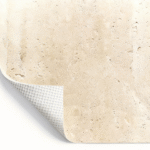
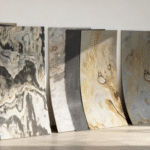
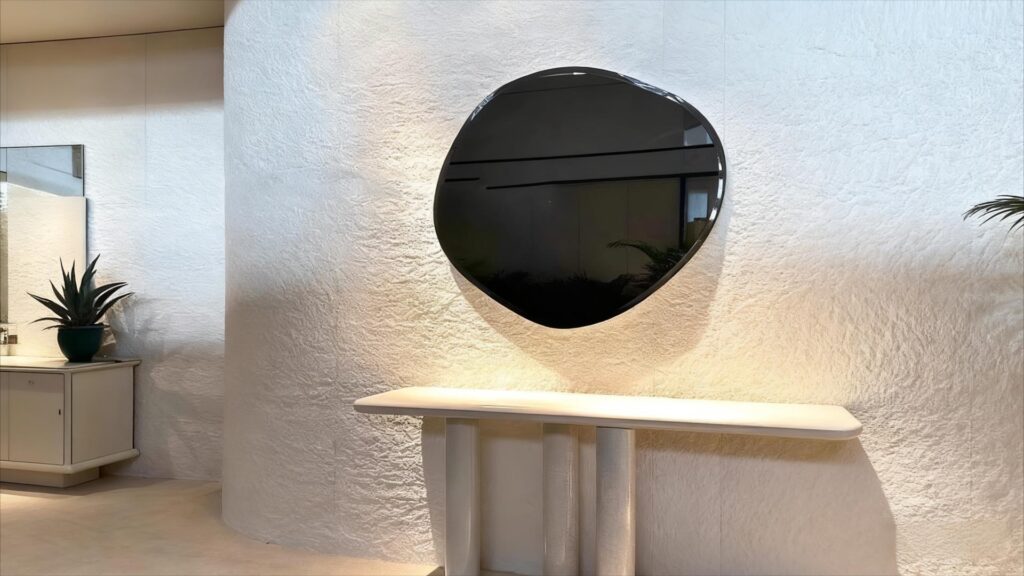
What we’re witnessing in flexible stone technology represents one of the most significant material innovations in modern construction. This isn’t just a decorative option – it’s a complete reimagining of what natural stone can achieve. Through advanced manufacturing processes, natural stone slabs undergo a remarkable transformation, being precision-ground to an almost impossibly thin 1-2mm veneer while maintaining all the authentic characteristics that make stone so desirable.
The secret lies in the sophisticated backing system. Each thin stone veneer receives reinforcement through fiberglass mesh or non-woven fabric backing, laminated using high-performance resins to create a composite material that typically ranges from 2.5mm to 8mm in total thickness. This intelligent engineering preserves the natural beauty of stone while introducing capabilities that traditional stone simply cannot match.
Revolutionizing Weight and Logistics
The weight differential between flexible stone and traditional stone cladding tells a compelling story. Where conventional stone burdens a structure with 70-150kg per square meter, flexible stone achieves the same coverage with just 3-5kg. This dramatic reduction – approximately 95% lighter – creates opportunities throughout the construction process that simply didn’t exist before.
The implications extend far beyond easier handling. This weight revolution transforms structural engineering considerations, reduces foundation requirements, and completely redefines transportation logistics. Where traditional stone might require specialized heavy transport, flexible stone can be shipped using standard logistics, dramatically cutting fuel consumption and environmental impact while improving project economics.
Transforming Installation Methodology
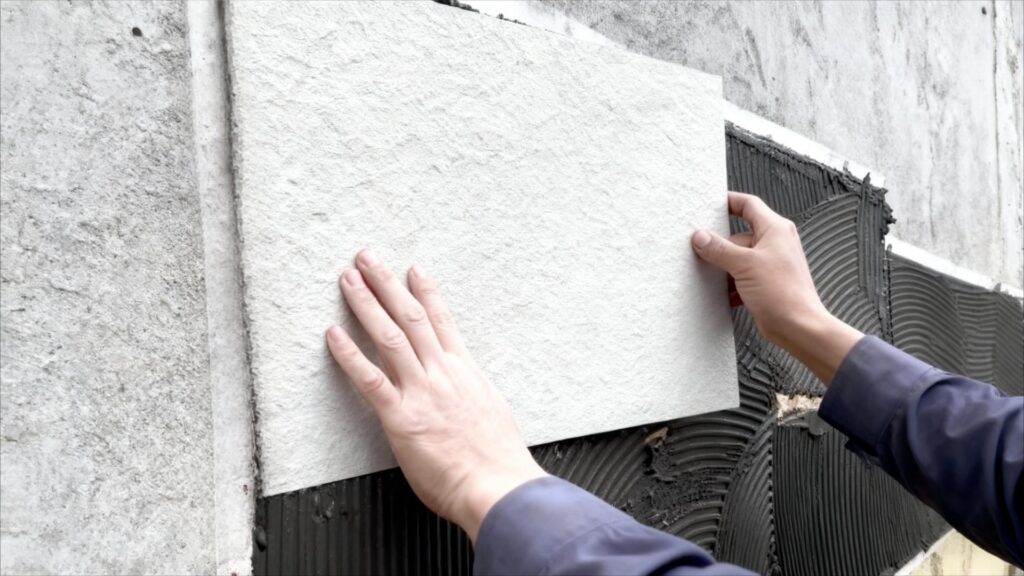
The installation process reveals how fundamentally different flexible stone is from traditional materials. In factory settings, large sheets can be applied to substrates like cement board or ALC panels using high-strength adhesives in a process that resembles precision manufacturing more than traditional construction. This method eliminates the need for complex sub-framing systems, drilling, and mechanical anchoring that characterize conventional stone installation.
What emerges is a seamless, monolithic surface free from visible joints or fasteners. The controlled environment of factory application ensures perfect bonding conditions year-round, removing the weather dependencies and quality variables that plague outdoor construction sites. This represents not just an improvement in speed, but a complete reengineering of the installation work flow.
Durability and Maintenance Reimagined
Contrary to what one might assume about thinner materials, flexible stone demonstrates remarkable resilience. The composite backing system allows the material to absorb and dissipate energy that would cause traditional stone to crack or fracture. This makes it particularly suited to withstand the stresses of transport and handling that often damage conventional stone materials.
The maintenance advantages represent another area where flexible stone outperforms expectations. The material’s surface exhibits minimal static charge, meaning it doesn’t act as a magnet for dust and airborne particles. For the minimal settling that does occur, maintenance becomes remarkably simple – typically requiring only water rinsing to restore the surface to its original condition. This combination of durability and easy care ensures that the initial beauty remains with minimal ongoing effort.
Verified Performance and Quality Assurance
The true measure of any innovative building material lies in its verified performance characteristics. Reputable manufacturers subject their flexible stone products to rigorous international testing standards, including German DIN standards for fire resistance (DIN 4102) and emissions testing (DIN EN 16516). These verifications provide the confidence needed for specification in demanding applications worldwide.
This commitment to quality extends from raw material sourcing through final production, ensuring that every sheet meets the highest standards of performance and environmental responsibility. It’s this comprehensive approach to quality assurance that has enabled flexible stone to become a trusted solution for seeking to combine natural beauty with modern engineering excellence.
A Vision of Efficiency and Economic Impact
During a recent hospitality project, while ground-level preparations were underway, room modules were being assembled in a specialized production facility. The process resembled a well-orchestrated manufacturing operation, where wall panels moved systematically between workstations. At the cladding phase, installers were applying large-format charcoal-grey flexible stone sheets with an efficiency that traditional stone installation simply cannot match. The material’s manageable size and minimal weight – approximately 3-5 kg per square meter – allowed for rapid placement and adjustment, creating perfect alignment without the physical strain typically associated with stone work.
What made this approach particularly effective was how these finished modules arrived at the construction site. Each unit was essentially complete, with interior finishes, mechanical systems, and architectural details already in place. Using crane systems, these pre-finished modules were positioned and connected with remarkable precision. The building’s exterior, featuring consistent and elegant stone cladding, achieved weather-tight status in weeks rather than months – a timeline that would be unthinkable using conventional construction methods.
The economic implications of this integrated approach are substantial. According to construction industry analysis, projects utilizing these modern methods regularly achieve schedule reductions of 40-60% compared to traditional approaches. This accelerated timeline creates significant financial advantages that extend throughout the project lifecycle.
- Time Savings: By moving the majority of the work indoors and enabling parallel processes (foundation work on-site while modules are built off-site), projects can achieve total schedule reductions of 40-60%. This means a faster return on investment.
- Labor Optimization: The dependency on highly specialized stone masons on-site is drastically reduced. Labor is shifted to the factory, where it is more efficient, safer, and not subject to weather delays.
- Financial Velocity: A faster project timeline means earlier occupancy for the owner, earlier rental income, and lower construction loan interest costs. Time, quite literally, is money.
- Risk Mitigation: By controlling the environment, the supply chain, and the workflow, off-site construction minimizes the vast majority of risks that cause budget overruns and delays in traditional projects. Flexible stone, as a key component, supports this risk-averse approach.
Building the Future, Together
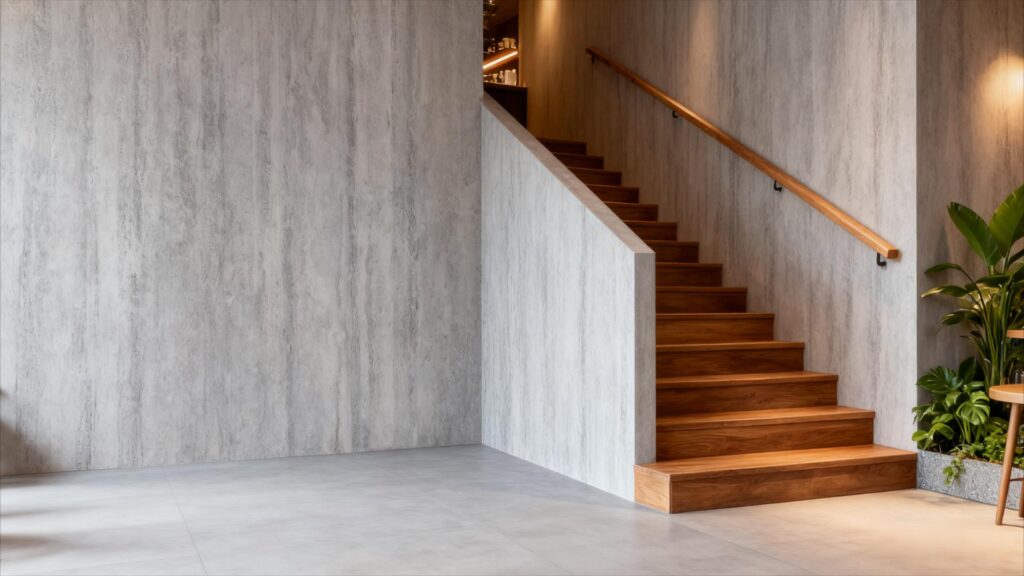
Flexible stone is far more than just another decorative option. It is a core enabling technology for the off-site construction revolution. It elegantly solves the final puzzle of how to combine the timeless beauty and durability of natural stone with the radical efficiency, quality, and speed of modern manufacturing methods.
It bridges the gap between aesthetic aspiration and operational excellence, proving that in the future of construction, we don’t have to choose between beauty and brains. The future of building is intelligent, efficient, and beautiful—and flexible stone is the material making it possible.