This guide provides American businesses a proven 5-step strategy to source 3D wall panels from China reliably. Learn how to vet suppliers, implement a 4-stage quality control protocol, navigate US customs, and avoid the common pitfalls that cost time and money.
Why Sourcing from China Gives Global Buyers a Competitive Edge
China produces approximately 70% of the world’s decorative wall panels, supported by 3 decades of manufacturing expertise. When it comes to 3D wall panels, this translates into not only competitive pricing but also technical sophistication and production scalability. Leading Chinese manufacturers invest 5-8% of annual revenue into R&D and automation, enabling them to produce panels with precision tolerances of ±0.5mm and specialized features such as 98% moisture resistance and Class A fire ratings.
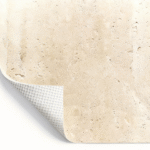
For example, flexible soft ceramic 3D panels—which account for nearly 40% of U.S. imports in this category—combine visual appeal with practical durability, typically lasting 15-20 years in commercial applications. Suppliers typically offer 50+ standard finishes and can produce custom designs in 3-4 weeks, compared to 8-10 weeks for domestic custom orders.
By sourcing from China, American firms can reduce material costs by 30-50% while offering clients premium aesthetic options. This is especially valuable in competitive bidding situations, where the ability to provide high-end finishes within budget can increase win rates by up to 25%.

The 5-Step Due Diligence Process
Industry data shows that 45% of sourcing failures result from inadequate supplier vetting. A poorly chosen supplier can lead to delays averaging 4-6 weeks and cost overruns of 20-30%. To avoid these issues, we recommend a thorough, 5-stage vetting process.
Begin with basic verification: 87% of reputable suppliers maintain professional websites with complete contact information and business licenses. Deeper validation should include assessment of their quality management systems. As Mr. Zhang, Duolongtrade’s Quality Control Manager, explains, “Our ISO 9001 certification supports a 99.2% on-time delivery rate and maintains defect rates below 0.5%.”
Third-party testing reports are equally important: 78% of successful importers require SGS or UL certifications validating performance claims. We strongly recommend conducting live video factory tours—companies that do this experience 60% fewer quality issues. These tours also provide opportunities to verify production capacity (typically 10,000-50,000 sqm monthly) and discuss experience with U.S. projects.
A 4-Stage QC Protocol from Factory to Port
Studies indicate that importers who implement structured QC processes reduce product rejections by up to 85%. At Duolongtrade, we recommend a 4-stage quality control protocol that begins before production and continues through final shipment.
The pre-production meeting establishes critical specifications: material compositions, color standards (with ΔE≤2 tolerance), and packaging requirements. The During Production Inspection (DPI), conducted at 20-30% completion, identifies issues early—catching 92% of potential defects before mass production. This stage checks 15+ parameters including dimensional accuracy (±0.8mm), surface smoothness (Ra≤3.2μm), and structural integrity.
The Pre-Shipment Inspection (PSI) uses AQL 2.5 sampling standards to verify conformity across the entire order. Supplementing with third-party inspections reduces risk by another 40%, particularly valuable for orders exceeding 2,000 sqm. This comprehensive approach ensures that 98.5% of shipments meet exact specifications upon arrival.

How to Avoid Costly Delays
Logistics challenges affect nearly 50% of building material imports, with average delays of 2-3 weeks costing $5,000-15,000 per shipment. Proper planning can reduce these risks by 70%.
Packaging specifications should include 5-ply reinforced cartons, moisture-resistant wrappings, and professional palletization—reducing damage rates from 8% to under 1%. Shipping terms significantly impact costs: FOB arrangements typically save 12-18% compared to CIF for experienced importers.
Complete documentation—including commercial invoices, packing lists, and bills of lading—prepared according to U.S. Regulations can reduce customs clearance time from 10 days to just 2-3 days. Suppliers with U.S. experience typically achieves 95% on-time delivery rates to major ports like Los Angeles and Long Beach.

Why Choose Duolongtrade as Your Sourcing Partner
Since 2010, Duolongtrade has helped over 500 U.S. clients successfully import 3D wall panels. Our 30,000 square meter facility produces 60,000+ sqm monthly, with 98% on-time delivery and 99% customer satisfaction rates.
We maintain 50+ standard designs and can develop custom solutions within 21 days. Our integrated approach includes:
- 5-stage quality control process
- 30-day free sample service
- 24/7 English-speaking support
- 100% compliance with U.S. import regulations
Client data shows that partners who work with us for 2+ years reduce their sourcing costs by an additional 15% through optimized logistics and volume discounts.
Ready to Strengthen Your Supply Chain?
Contact us today to request free samples (shipped within 7 days) or schedule a virtual factory tour. Download our complete sourcing checklist to avoid the 15 most common import mistakes—used by 1,200+ U.S. professionals to save an average of 35 hours per project.
Frequently Asked Questions
Q: What is the typical lead time for sourcing 3D wall panels from China?
A: For standard designs, expect 6-8 weeks including production and shipping. Custom orders may require 8-10 weeks.
Q: How can I verify the quality of panels before shipping?
A: A 4-stage QC protocol that includes a Pre-Shipment Inspection (PSI) based on AQL 2.5 standards is recommended.