Modern renovation projects are no longer defined by just surface aesthetics—they’re shaped by how efficiently materials perform across the entire build. Behind every seamless wall or striking feature lies a network of choices about weight, adaptability, install time, and maintenance. Among these, wall cladding plays a surprisingly pivotal role. When timelines are tight and structural demands are high, selecting a finish that works with—not against—the realities of construction can make the difference between profit and setback. This article breaks down six key reasons why flexible stone is quietly reshaping how ambitious spaces get built and finished.
Why the Material You Choose Matters
The success of a wall renovation often hinges on a seemingly simple decision: what material to use. But that choice carries weight far beyond appearance. It directly affects how fast a project moves forward, how much labor is required, and how well the final result holds up over time.
In practice, the wrong material can slow down crews, inflate installation budgets, and trigger follow-up repairs that weren’t in the original plan. Heavy, rigid tiles—like ceramic or stone slabs—may offer a familiar aesthetic, but they also introduce complexity. They require perfectly level surfaces, generate high waste during cutting, and often need reinforced support if installed on older or elevated structures. For larger projects, these factors multiply quickly, making what seemed like straightforward material choice a source of delay and added cost.
That’s why flexible alternatives are gaining ground. Flexible stone, for example, preserves the natural texture and variation of real stone but comes in a thin, lightweight format that’s easier to transport, handle, and install. It adheres to surfaces that would challenge traditional tiles—uneven walls, rounded edges, or existing finishes—without demanding major prep work or structural changes.
Choosing the right material is about more than design intent. It’s about protecting timelines, controlling budgets, and reducing the chance of costly rework. And in that regard, flexible stone is proving to be a smarter, more adaptable choice across a wide range of projects.
Easier Installation Saves Time and Labor
Installation efficiency doesn’t come from skipping steps—it comes from doing them smarter. Flexible stone simplifies the wall finishing process, but like any high-performance material, it requires a proper foundation. A well-prepared substrate is not just recommended—it’s essential.
Before application, the wall surface must be structurally sound, flat, and free of loose particles. In new construction, this means the base layer—whether it’s plaster, fiber cement board, or concrete—should be fully cured, levelled, and without visible bulges, hollows, or fine gravel protrusions. Any unevenness should be corrected using leveling putty or skim coat to achieve a consistent surface plane.
In renovation projects, especially when overlaying old finishes, additional inspection is critical. The existing surface must be free from hollow spots, cracks, oil residue, paint peeling, or areas that show delamination. Tiles or paint that appear solid but are poorly bonded underneath can cause adhesive failure and bubbling. Where needed, sanding, washing, or mechanical repair should be done prior to installing flexible stone panels.
Once the base is properly treated, installation becomes a clean and efficient process. Flexible stone is typically 2-4mm thick and lightweight, which makes it easy to carry, cut, and apply. The panels can be trimmed on-site with a standard utility knife and bonded with a trowel-applied or roller-applied adhesive, depending on the surface and conditions. Unlike traditional tiles, there’s no need for spacers or grout, and no heavy-duty cutting tools are required—only accuracy and care during alignment.
This leaner process reduces the reliance on highly skilled tile setters, shortens the installation cycle, and significantly lowers the volume of dust, noise, and wet work on-site. For time-sensitive projects or interior upgrades where minimizing disruption is a priority, flexible stone offers a practical balance of aesthetics and installation efficiency—without compromising on the fundamentals.
Lightweight Yet Durable
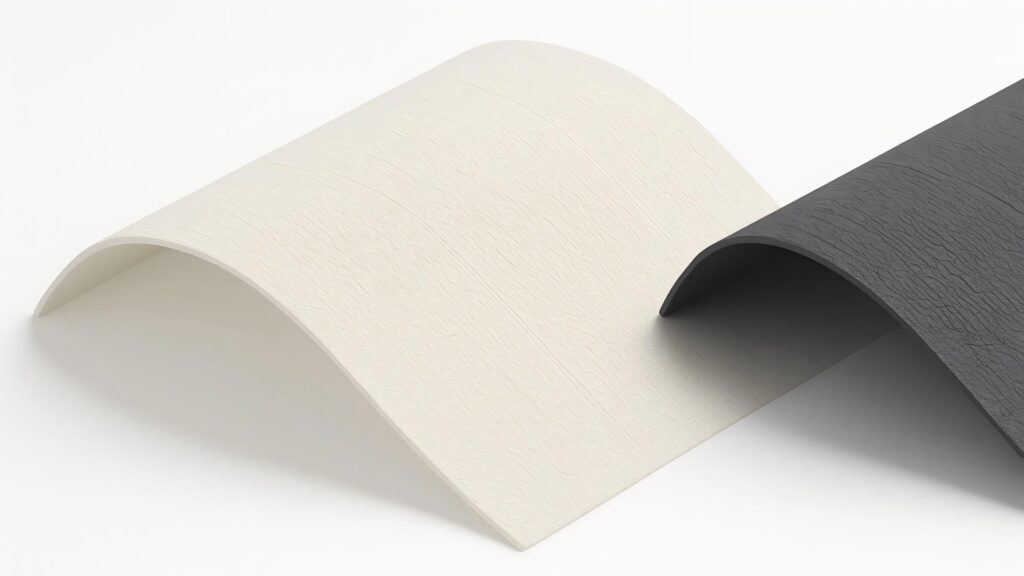
Weight is one of the most underestimated factors in wall cladding projects—until it becomes a constraint. Traditional tiles and stone slabs often weigh upwards of 20kg/m², requiring reinforced walls, mechanical lifting, and more workers to handle installation safely. Flexible stone offers a practical alternative. With a unit weight ranging from 3 to 6kg/m² depending on the color and structure, it significantly reduces load pressure on substrates while maintaining excellent durability and structural stability.
This weight advantage proves especially valuable in projects involving high walls, ceilings, or upper-floor installations, where reducing vertical load helps minimize the need for costly reinforcement or special brackets. In older buildings or lightweight framing systems, this allows design freedom without risking structural stress.
Unlike thin wallpaper-like finishes, flexible stone is a true architectural material. The surface is composed of a real stone layer bonded to a fiberglass or resin backing, giving it both visual authenticity and physical resilience. It performs reliably under a range of conditions—handling daily wear, temperature changes, and humidity without cracking, warping, or delaminating.
In actual project use, flexible stone panels have withstood accelerated aging, thermal cycling, and impact tests under international standards such as SE and ISO. This makes them suitable for both interior and exterior applications, including lobbies, stairwells, corridors, and even sheltered outdoor facades.
It’s worth noting that despite the name “flexible,” these stone panels are transported in flat sheets—not rolled—since the product maintains a natural rigidity that supports a clean, seamless installation. This flat-panel format improves site planning: panels can be stacked, labeled, and unloaded efficiently, reducing damage risk during transport and eliminating the need for special handling equipment.
In short, flexible stone achieves what many traditional materials can’t: a lighter cladding solution that still feels solid, looks authentic, and delivers dependable performance across demanding architectural environments.
Adapts to Curved and Uneven Surfaces
In architectural design, curves are no longer a rarity—they’re a statement. Whether it’s rounded columns in hotel lobbies, concave feature walls in retail spaces, or arched corridors in cultural buildings, these forms demand a finishing material that can keep up both aesthetically and structurally. This is precisely where flexible stone offers a distinct advantage.
Unlike traditional tiles, which are inherently rigid and prone to cracking when forced over non-flat surfaces, flexible stone can adapt to architectural contours with minimal adjustment. While it does not stretch or deform, its natural thinness—combined with controlled flexibility—allows it to follow gentle curves, wrap around corners, and cover faceted or slightly uneven planes with consistent contact and finish quality.
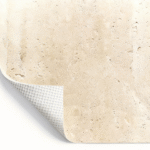
This adaptability is made possible by its engineered backing. Each flexible stone panel is composed of a real stone surface bonded to a fiberglass mesh, non-woven fabric, or a composite backing depending on the model. These backings serve dual purposes: they reinforce the stone layer to resist cracking or splitting during handling, and they provide a textured, open-pore surface that improves adhesive bonding strength during installation.
Specifically, the backside of each panel often features a slightly roughened texture or visible grid lines from the mesh, giving adhesives more grip on the wall. This is critical when working on slightly curved or transitional surfaces, where consistent adhesion prevents bubbling or edge lifting over time. Some models also use non-woven cloth as an interlayer, which adds dimensional stability and crack resistance—particularly helpful in large-scale applications or temperature-variable environments.
It’s worth noting that flexible stone isn’t designed for sharp angles or extreme compound curves, but on radii of 300mm or more—or gentle convex and concave walls—it can be installed cleanly without cutting into small pieces or compromising the visual integrity of the finish. In practical terms, this means fewer seams, faster installation, and a more fluid appearance that follows the geometry of space rather than fighting against it.
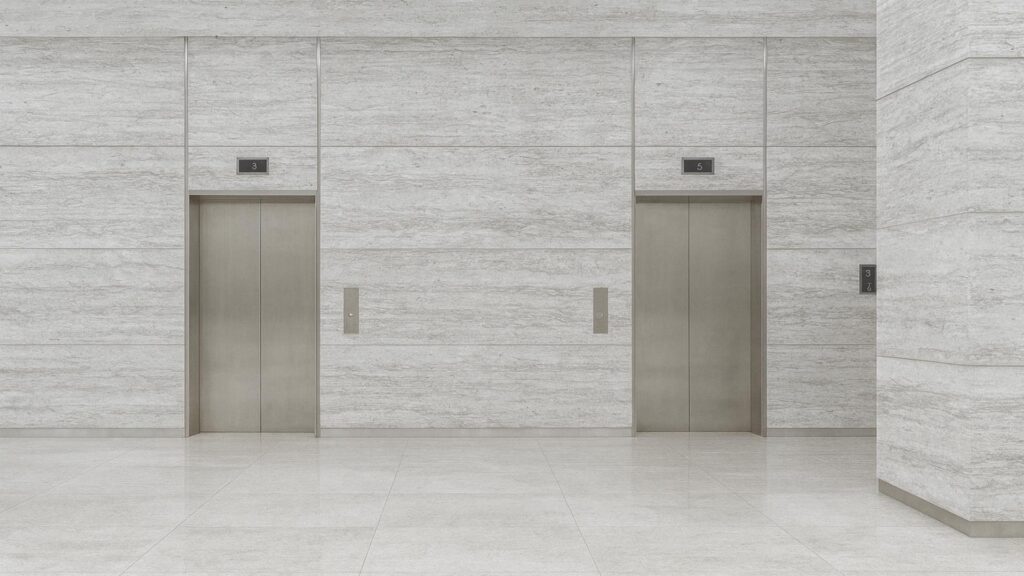
In several hospitality and commercial upgrade projects, flexible stone has been successfully applied to curved reception desks, fluted columns, semi-arched alcoves, and elevator reveals—areas that would typically require either custom tile fabrication or hand-applied plaster finishes. The result isn’t just aesthetic—it’s efficient, repeatable, and structurally sound.
Lower Transportation and Storage Costs
Logistics is often an overlooked cost driver in wall cladding projects. Materials like ceramic tiles or natural stone may appear economical at first glance, but their weight, fragility, and bulky packaging requirements often result in high freight charges and labor-intensive handling. Crates packed with rigid tiles require foam separators, edge protectors, and reinforced pallets to prevent breakage, while occupying significant container space.
Flexible stone offers a more space-efficient and manageable alternative. Each panel weighs between 3 to 6 kilograms per square meter—substantially lighter than conventional materials—yet it maintains structural stability through its composite backing. Rather than being rolled, the panels are shipped flat, stacked in layers with protective sheets between them, and packed tightly into wooden crates. A standard crate can typically hold between 200 to 300 square meters of material, depending on panel thickness, optimizing both volume and weight in transit.
Once on site, handling is straightforward. The crates can be opened and panels accessed directly without lifting equipment. No sorting, repalletizing, or reconditioning is necessary, which saves valuable time in fast-paced installations. This flat-pack, lightweight format also makes flexible stone easier to store in warehouses and staging areas—ideal for large-scale orders with multiple finishes. It’s not just a surface material; it’s part of a smarter, more efficient supply chain.
Design Variety and Natural Aesthetics
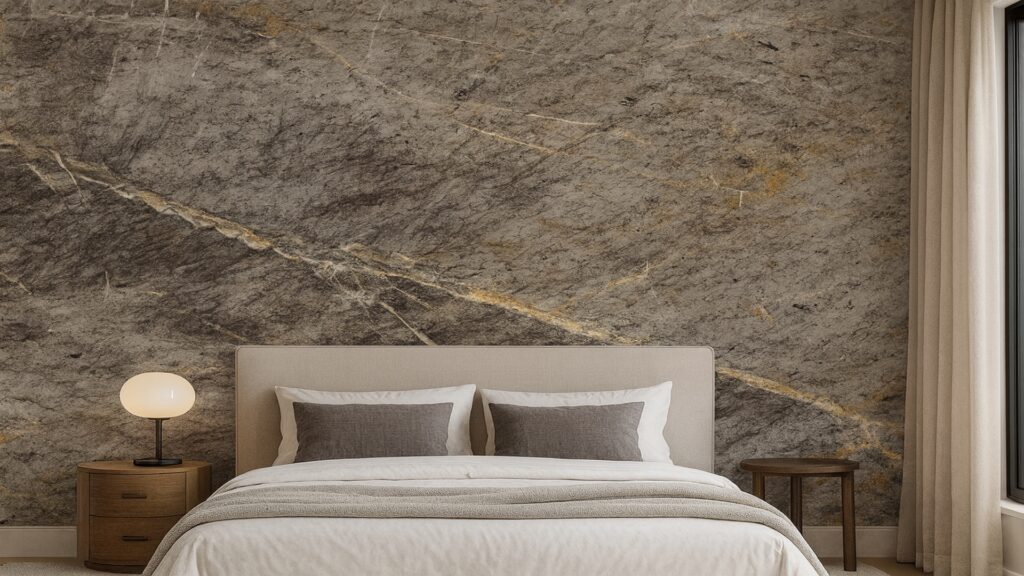
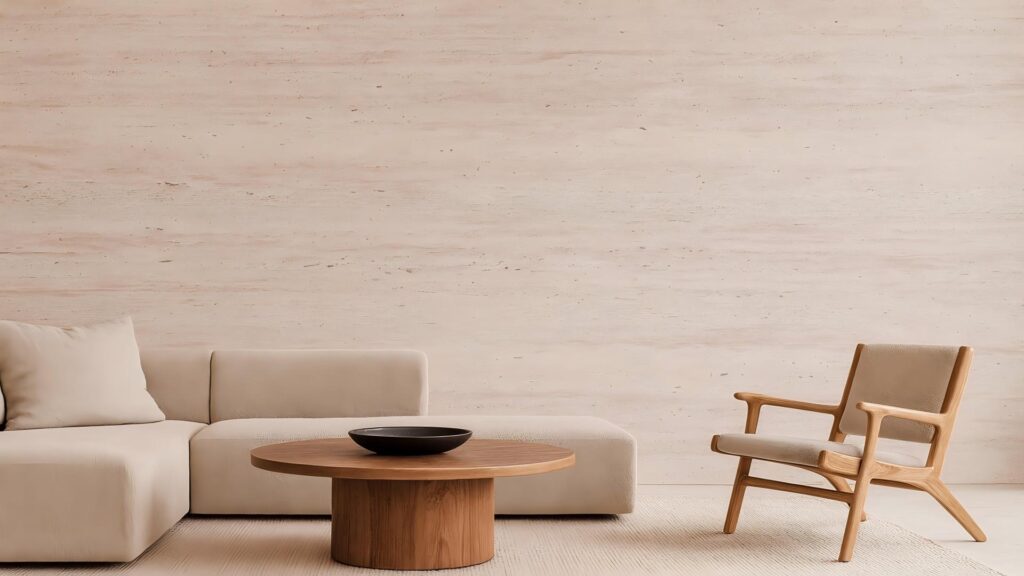
While technical performance is essential, appearance plays an equally critical role, especially when wall finishes define the overall visual experience of a space. Flexible stone achieves this by using a real stone surface layer rather than synthetic prints or imitation patterns. Each panel carries the authentic depth, texture, and mineral variation of natural stone, ensuring that no two sheets are exactly alike.
Available in over 30 carefully curated finishes, flexible stone enables architects and designers to match diverse palettes and design concepts with ease. From subtle, understated tones to bold and dramatic textures, the options support a wide range of architectural themes. Panels can be precisely cut on-site into custom shapes, seamlessly integrated into joinery, or combined with other wall materials to create layered, high-impact designs.
Its adaptability extends across both interior and exterior applications, including high-humidity environments such as bathrooms or shaded façades. By combining natural aesthetics with practical installation benefits, flexible stone delivers a balanced solution where visual impact and technical feasibility go hand in hand.
Better Long-Term Value
Choosing a wall cladding material isn’t just about the cost per square meter—it’s about understanding the true cost of ownership across the entire project lifecycle. Flexible stone offers tangible long-term advantages by reducing installation complexity, minimizing breakage, and requiring less labor to handle, fix, and finish. These factors add up quickly, especially on projects with tight schedules or limited site resources.
Once installed, flexible stone proves to be a low-maintenance material. It doesn’t chip or crack easily, and it performs well under varying temperature and humidity conditions. Unlike traditional tiles that may loosen or require regrouting over time, flexible stone panels stay secure and visually consistent without ongoing surface treatment or repair. This not only preserves the finished look but also reduces the need for follow-up maintenance or material replacements—especially important in commercial spaces where access for repair can be disruptive.
Over time, these performance traits translate into fewer call-backs, better cost control, and greater project stability. For teams managing multi-phase construction or overseeing multiple properties, working with a surface material that consistently performs without unexpected issues provides not just efficiency—but peace of mind.
A Smarter Choice for Modern Projects
Flexible stone offers a rare blend of technical performance and design freedom. It simplifies installation, reduces structural and logistics burdens, adapts to complex architectural forms, and maintains the natural character of real stone—all while optimizing the overall cost of a project. These advantages make it a forward-looking material for anyone seeking efficiency without compromise.
For procurement professionals balancing quality expectations with budget discipline and installation timelines, this material offers a practical solution backed by both engineering and on-site performance. It aligns well with complex project schedules, phased deliveries, and varied site conditions. More importantly, it allows teams to execute bold design without inviting the usual risks of brittle or overly technical finishes.
If long-term reliability, installation clarity, and supply chain efficiency are on your checklist, flexible stone deserves a closer look. It’s more than a design choice—it’s a strategic material decision that supports the project from drawing board to final handover.