The pursuit of beautiful, durable stone cladding has long been tempered by practical realities: back-breaking weight, complex installations, and budgets that spiral out of control. For decades, the industry accepted these trade-offs as the unavoidable cost of achieving a high-end aesthetic. But what if the equation could change? What if you could specify a material that delivers the timeless appeal of stone while simultaneously solving its most persistent problems? The answer lies in a fundamental reimagining of what stone cladding can be. This article moves beyond surface-level features to examine the five core advantages that make flexible stone veneer a transformative choice for projects where performance, budget, and aesthetics matter equally. The following insights will change how you evaluate cladding options forever.
Significant Reduction in Overall Weight
When it comes to wall cladding, weight has always been one of the biggest challenges. Traditional stone cladding isn’t just heavy—it often weighs over 70 kg per square meter, requiring complex structural support and specialized handling. In contrast, flexible stone veneer represents a fundamental shift. Weighing just 5 to 7 kg per square meter, it’s more than 90% lighter, and that difference isn’t just a number—it reshapes how projects are designed and built.
From a structural standpoint, this weight reduction is transformative. In high-rise construction, for example, every kilogram added to the facade requires additional reinforcement from the building’s framework. With traditional stone, that often means thicker slabs, deeper foundations, and more steel—all adding cost, time, and complexity. Flexible stone veneer eliminates much of that.Using lightweight cladding can reduce the dead load on the building envelope significantly, simplifying calculations and speeding up approvals.
Renovation projects benefit even more. Older structures—historical buildings, retrofitted offices, or residential extensions—often can’t handle the load of conventional stone. We’ve worked on projects where flexible veneer was the only realistic way to achieve a high-end stone aesthetic without compromising the original building’s integrity. One architect shared how using the material helped preserve a century-old brick facade while giving it a modern update—something traditional stone would have made impossible.
The practical advantages extend to the installation phase. Because the material is so light, it’s easier to transport, handle, and fix. Workers can carry full sheets without machinery, and adjustments can be made quickly and safely. This isn’t just about convenience—it’s about reducing labor time, lowering equipment costs, and minimizing disruption on-site.
But lightweight doesn’t mean less durable. The material’s composition—typically layers of natural stone and flexible composite materials—is engineered to maintain performance without the mass. It meets international standards for cladding materials, including tests for tensile strength, flexibility, and adhesion. This makes it a reliable, code-compliant choice for everything from commercial towers to private homes.
In short, the benefit isn’t just that flexible stone veneer is light—it’s that this lightness enables smarter, safer, and more efficient construction. It allows designers to think bigger and builders to execute with more confidence, all while keeping projects on budget and within scope.
Enhanced Cost Efficiency Across the Board
While the initial price per square meter of flexible stone veneer is competitive, its true economic advantage lies in the substantial savings it delivers throughout the entire project lifecycle. These savings extend far beyond the material itself and into logistics, labor, and long-term maintenance, making it an intelligent choice for budget-conscious projects without compromising on quality.
From the moment the material leaves the manufacturing facility, the cost benefits begin. Traditional stone cladding is weight-prohibitive—shipping a container of natural stone can cost significantly more due to weight restrictions and lower quantity caps. Flexible stone veneer, 90% lighter, allows nearly 10 times the coverage in the same shipping container. This translates to measurable reductions in freight costs, which is particularly impactful for international projects. One project manager overseeing a hotel chain expansion in Southeast Asia noted that switching to flexible veneer cut their logistics expenses by over 40%, allowing them to reallocate funds to other critical areas of the build.
The most significant savings, however, emerge during installation. Traditional stone requires skilled masons, specialized cutting equipment, and often structural support systems. With flexible veneer, the installation process is simplified considerably. The material can be cut with a standard utility knife, shaped effortlessly around corners, and adhered directly to properly prepared surfaces. This efficiency reduces labor time dramatically—what might take a week with traditional stone can often be completed in two to three days. Contractors frequently report a 30-50% reduction in installation time, which directly lowers labor costs and accelerates project timelines, leading to earlier completion bonuses or reduced overhead.
Furthermore, the need for heavy-duty anchors, backing systems, and specialized tools is eliminated. There’s no requirement for expensive cutting saws, reinforcing meshes, or custom-fabricated support structures. This reduction in ancillary materials and equipment further contributes to the overall cost efficiency. The lightweight nature also means that lighter-gauge and less expensive framing can often be used behind the veneer, adding another layer of structural savings.
Beyond the initial installation, the long-term economic benefits are equally compelling. The material’s durability and resistance to weathering, fading, and impact minimize the need for repairs and replacements. Its low-maintenance nature means cleaning is simple and inexpensive, requiring no specialized treatments or sealants over its lifespan.
In essence, the cost efficiency of flexible stone veneer is holistic. It’s not just about a cheaper material; it’s about a smarter system that reduces expenses at every stage—from the factory floor to the building facade and for years beyond. This makes it an exceptionally sound economic decision for projects where controlling the total cost of ownership is a priority.
Streamlined and Rapid Installation Process
The installation efficiency of flexible stone veneer represents one of its most practical advantages. Unlike traditional stone cladding that requires specialized masons, heavy machinery, and complex fixing systems, this material simplifies the entire process. Its flexible nature allows it to be cut with a standard utility knife and easily shaped around corners, curves, and intricate architectural details. This adaptability means installers can work quickly and precisely without expensive cutting equipment or extensive training.
Labor time is significantly reduced—what typically takes five days to install with traditional stone can often be completed in just two to three days with flexible veneer. This efficiency isn’t just about speed; it translates into tangible cost savings. With fewer labor hours and no need for highly specialized stonemasons, project managers can allocate resources more effectively, helping keep projects on schedule and within budget.
Material waste is another area where efficiency shines. Because installers can make precise cuts on-site and use almost every part of each sheet, waste is minimized. It’s common to see waste rates drop to under 5%, compared to 15–20% with traditional stone. This reduction supports both economic and environmental goals, making it an appealing option for projects targeting sustainability certifications.
Beyond simplicity and speed, the installation process is designed for reliability. When installed according to manufacturer guidelines using appropriate adhesives, the veneer forms a durable, long-lasting surface. Its consistent sizing and flexibility also reduce the risk of installation errors, ensuring a high-quality finish that meets professional standards. This combination of speed, simplicity, and performance makes it an increasingly popular choice for projects where timeline and budget predictability are critical.
Unparalleled Design Versatility and Application Range
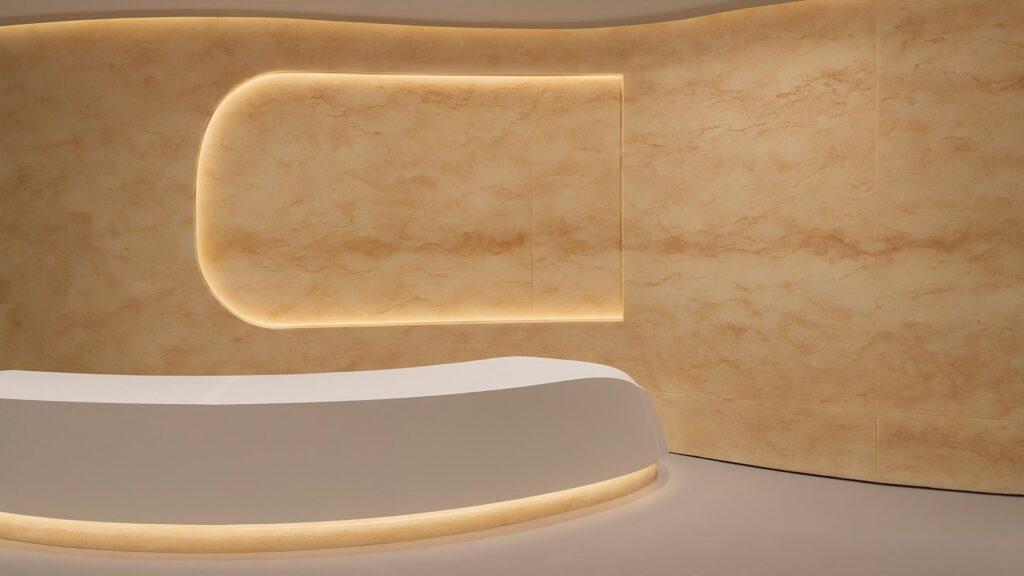
What truly sets flexible stone veneer apart is its remarkable adaptability to both conventional and innovative design challenges. Unlike rigid stone panels that limit creative expression, this material bends and conforms to curved surfaces, enabling architects to implement organic shapes and flowing designs that were previously cost-prohibitive or structurally unfeasible. This flexibility opens up new possibilities for creating signature architectural elements without compromising on the natural stone aesthetic.
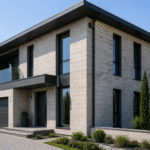
For exterior applications, the material performs exceptionally well in diverse climates and settings. It has been successfully specified for commercial building facades, retail storefronts, and residential exterior accents. The ability to wrap columns, archways, and soffits with a continuous stone finish creates a cohesive high-end appearance. Particularly valuable in renovation projects, it can be installed over existing substrates, dramatically transforming outdated structures without the need for complete demolition.
The practical benefits extend to customization as well. Available in various stone types, colors, and finishes, the material can be specified to match existing stonework or create entirely new design schemes. This versatility makes it equally suitable for contemporary minimalist designs and traditional architectural styles.
This combination of aesthetic flexibility and practical performance has made flexible stone veneer a preferred choice for projects seeking to balance visual impact with installation efficiency. It demonstrates how material innovation can expand design possibilities while maintaining the timeless appeal of natural stone.
Superior Long-Term Durability and Performance
While some may initially question how a flexible material can match traditional stone’s durability, extensive testing and real-world applications have demonstrated that high-quality flexible stone veneer delivers exceptional long-term performance. The material undergoes rigorous manufacturing processes that enhance its natural durability while adding modern protective qualities. Unlike traditional stone that may require periodic sealing, these veneers come with permanent UV stabilization, ensuring colors remain true for decades without fading, even in direct sunlight. This makes them particularly valuable in high-sunlight regions where material degradation is a common concern.
The product’s technical specifications confirm its resilience in challenging environments. Independent testing shows these veneers can withstand the freeze-thaw cycles without damage, making them suitable for climates with extreme temperature variations. Their waterproof nature prevents moisture absorption, eliminating concerns about mold, mildew, or structural damage that can occur with porous natural stones. For commercial applications, the surface resistance to abrasion and impact ensures maintenance costs remain low even in high-traffic areas.
Maintenance requirements are minimal compared to traditional stone surfaces. Routine cleaning requires only mild soap and water, without the need for specialized cleaners or periodic sealing treatments. The non-porous surface resists staining from common substances like oil, wine, and chemicals, ensuring the appearance remains consistent over time. This combination of durability and easy maintenance makes flexible stone veneer an economically smart choice for projects where long-term performance and reduced lifecycle costs are important considerations.
The Smart Choice for Modern Construction
Flexible stone veneer is not merely an alternative to traditional stone cladding—it is a comprehensive upgrade. By significantly reducing weight, it unlocks new architectural possibilities and streamlines construction processes. The substantial cost savings, achieved through efficient logistics, rapid installation, and minimal waste, make it an economically sound decision from concept to completion. Coupled with its unparalleled design versatility and proven long-term durability, this material delivers a powerful combination of aesthetic appeal and practical performance.
For projects where budget, timeline, and quality are non-negotiable, flexible stone veneer provides a reliable, future-proof solution. It represents a smarter way to build, allowing you to achieve ambitious design goals without compromising on efficiency or structural integrity.