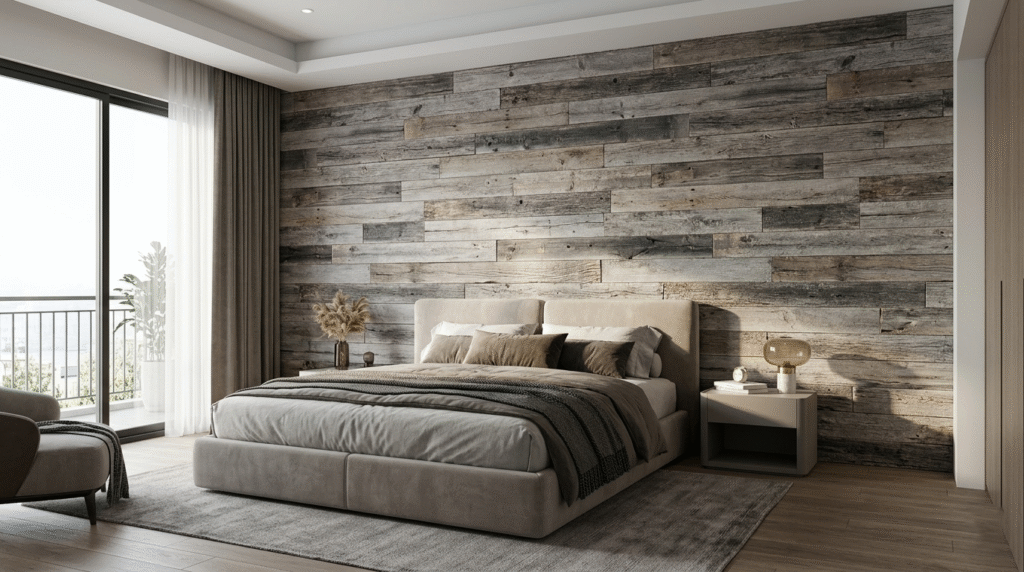
In high-end interior design, the timeless allure of stone has always been balanced by a harsh reality: the prohibitive cost and structural burden of natural rock. For decades, architects and developers were forced to compromise their vision due to the heavy structural reinforcement and specialized labor required for traditional masonry. But what if the “weight” of luxury could be engineered out of the equation?
The transition to Manufactured Stone Veneer (MSV) represents more than a trend; it is a fundamental shift in how the modern building industry handles premium aesthetics. By decoupling the visual density of stone from its physical weight, we have unlocked a new frontier for interior cladding. This article explores the intersection of artisan craftsmanship and industrial engineering, providing a roadmap for those who refuse to choose between architectural grandeur and project efficiency. Read on to discover how high-fidelity stone systems are redefining the boundaries of interior space, from load-bearing realities to the finishing touches that satisfy the most discerning eye.
Strategic Interior Applications and Market Trends
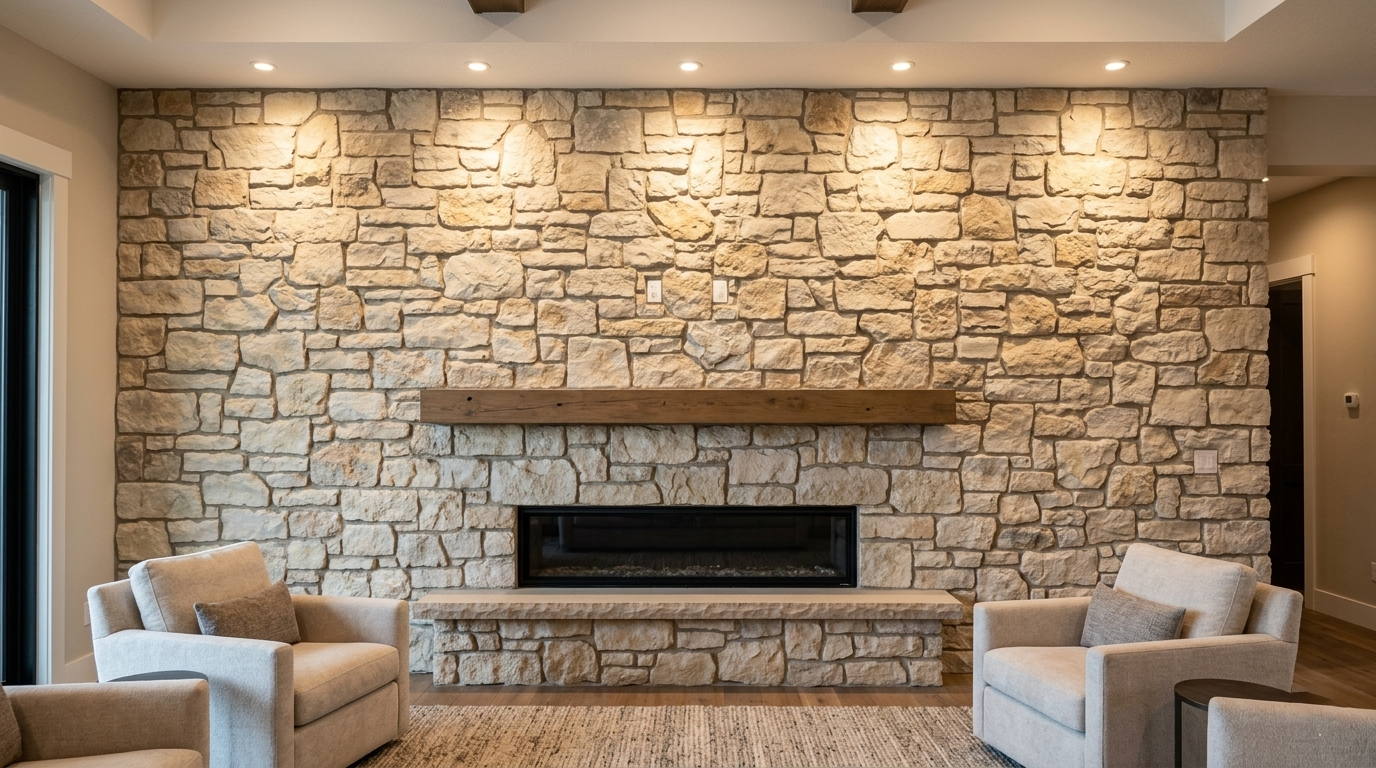
The primary advantage of Manufactured Stone Veneer is its ability to be installed on surfaces that cannot support the weight of natural stone. In residential projects, the most impactful application is the full-height feature wall. Because our MSV is roughly 75% lighter than natural stone, it can be applied to standard interior partitions in living rooms or entryways without structural reinforcement. In the past, achieving a stone-clad Great Room required reinforced floor joists and steel wall ties. Today, MSV allows for the same visual gravity without the structural overhead.
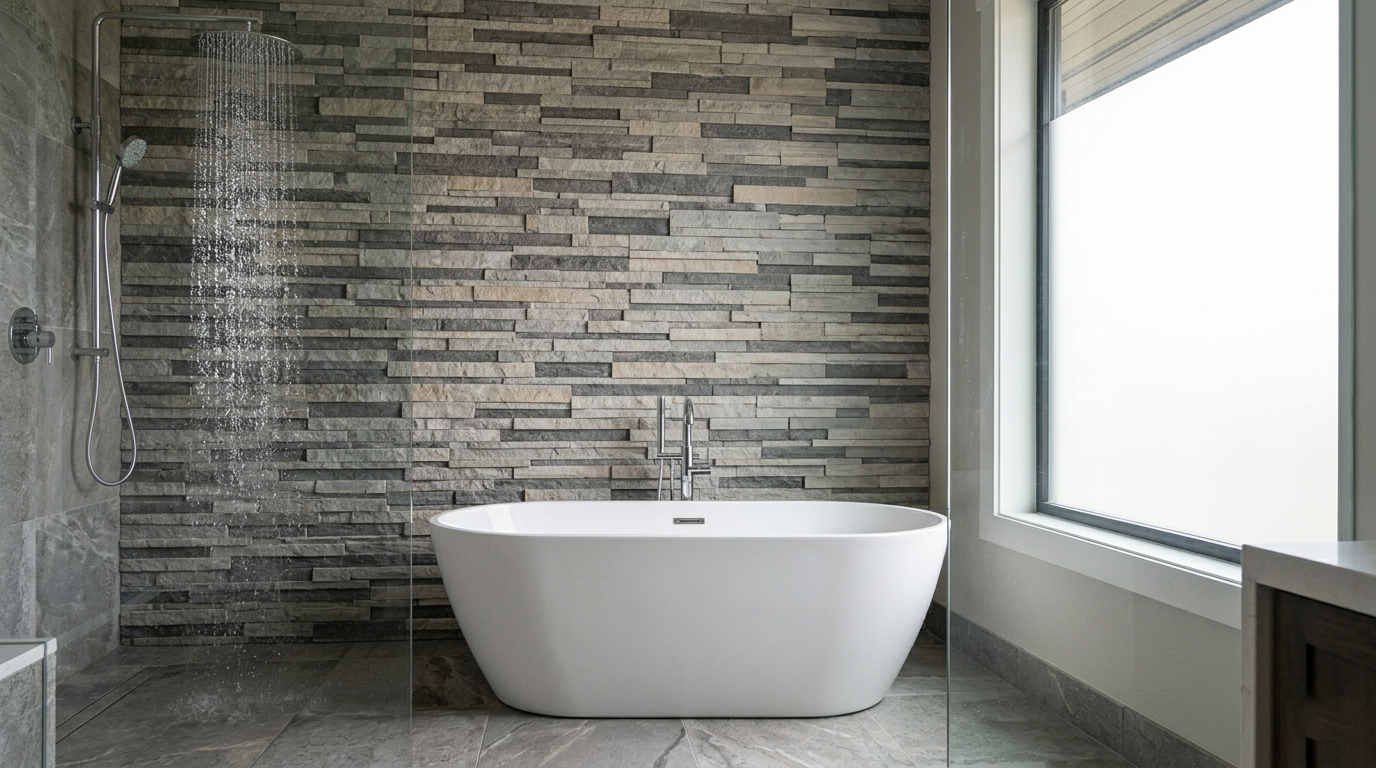
In commercial settings, such as boutique hotels or luxury restaurants, MSV is a preferred material for fireplace surrounds. Our stone is rated as A1-class non-combustible, making it a safe and durable choice for high-heat areas. Unlike some natural stones that can crack or “spall” when exposed to extreme thermal cycles, the controlled composition of MSV handles heat expansion predictably. Additionally, due to the factory-sealed, non-porous nature of our production process, it is increasingly used in spa-style bathrooms. It provides a rugged, organic texture behind bathtubs or vanities that remains resistant to moisture, mold growth, and water staining.
Wall Preparation and Substrate Requirements
Successful installation begins with a clean, stable substrate. For most interior projects, MSV is installed over cement backer board or masonry surfaces. If you are working with standard drywall, you must first install a moisture barrier followed by a 2.5lb metal lath to provide a mechanical grip for the mortar. This lath acts as the “skeleton” for your stone, ensuring that the weight is distributed across the wall studs rather than the paper face of the gypsum board.
A critical step we emphasize at the manufacturing level is the “Dry Run.” Before applying any mortar, installers should lay out approximately 2 to 3 square meters of stone on the floor. This allows you to visualize the distribution of sizes, shapes, and color nuances. In natural stone, you are at the mercy of the crate’s contents. With duolongtrade MSV, we provide standardized color profiles, but manual blending is still required to ensure the final wall has a natural, random appearance rather than showing repetitive patterns or color clusters. Professional masons know that the “invisible” work of sorting stone on the ground is what creates a masterpiece on the wall.
The Installation Masterclass
The installation process follows a bottom-up sequence. Using a high-quality, polymer-modified thin-set mortar—specifically a Type S or N mortar—apply a “butter coat” to the back of each stone. This coat should be roughly 1/2 inch thick, ensuring total coverage to eliminate air pockets. These air pockets are the primary cause of stone failure in the field; if moisture or air is trapped behind the stone, the bond can weaken over time.
Press the stone firmly against the wall with a slight wiggling motion to set it into place. For a “Dry Stack” look, stones are placed tightly together to hide the mortar. This style is currently dominant in modern luxury design because it emphasizes the raw, rugged texture of the stone. For a traditional look, gaps are left for grouting. A professional tip from our technical team is to always install the L-shaped corner pieces first. This anchors the project and creates the illusion of a full-thick stone block. If you start with the flats and try to add corners later, the geometry of the wall will never look quite right. Corners are the signature of a master mason.
Cutting and Customization Techniques for High-Fidelity Results
One of the most user-friendly aspects of duolongtrade MSV is the ease of cutting. While natural granite requires heavy-duty wet saws and diamond-tipped industrial equipment, our stone can be shaped using a standard circular saw with a masonry blade or masonry nippers for fine adjustments. This significantly reduces the noise and dust on interior job sites, allowing for cleaner renovations in occupied buildings.
To maintain the luxury aesthetic, you must handle “cut ends” correctly. A common mistake is leaving a fresh, flat cut exposed at the end of a wall. To avoid this, always place the cut edge facing toward the inside of a joint or tuck it behind an adjacent stone. After making a cut, use a masonry rasp or a piece of scrap stone to smooth the edge and re-texture the corner. This small detail ensures that the stone looks hand-hewn rather than machine-cut, preserving the authentic masonry feel throughout the project. The goal is to hide the “human hand” and let the stone appear as if it were pulled directly from a mountain.
Grouting and Finishing for Long-Term Durability
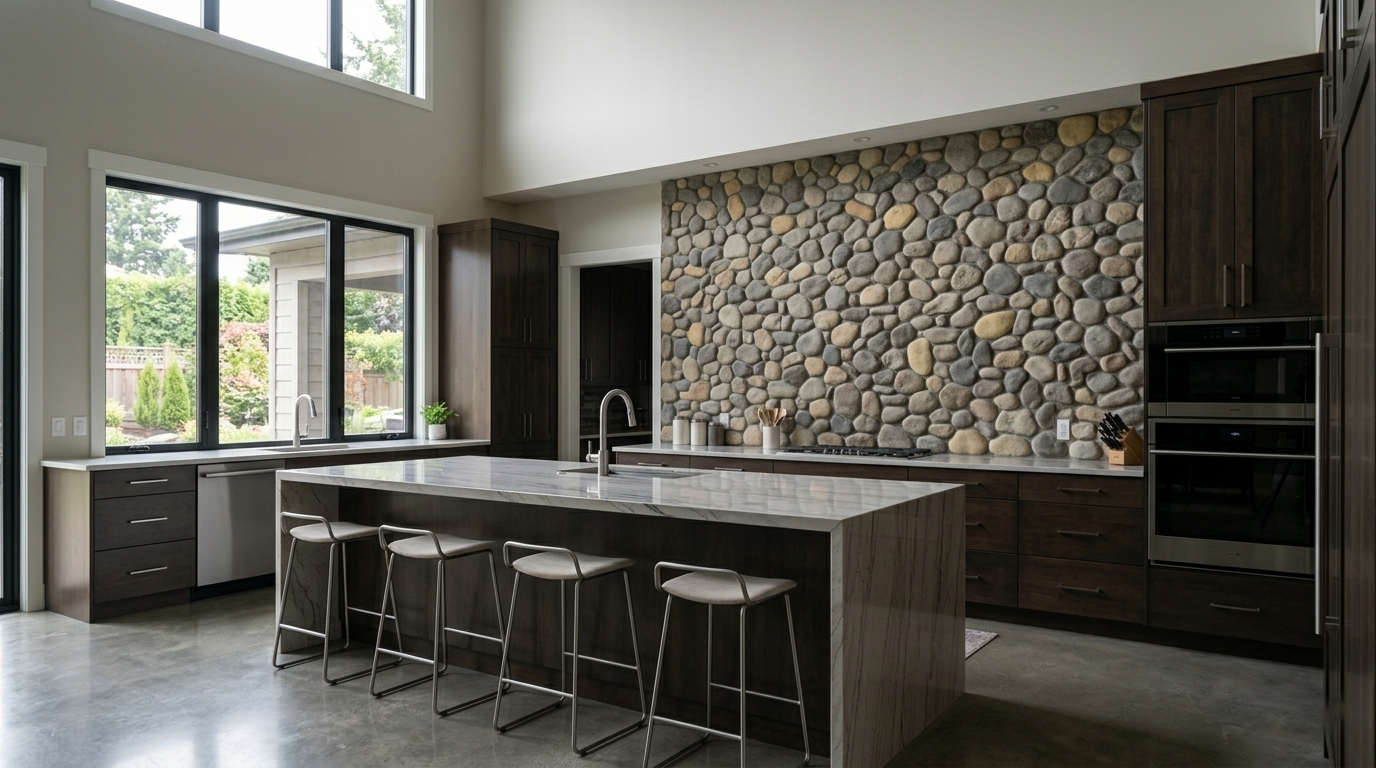
If your design requires visible mortar joints, the grouting stage is where the final texture is defined. Use a grout bag to fill the spaces between the stones, ensuring the mortar does not smear onto the face of the stone. If mortar does get on the surface, wait until it is dry and crumbly before brushing it off; wiping wet mortar will stain the pores of the stone permanently. Once the mortar is “thumb-print hard,” use a striking tool to rake out the excess and a medium-bristle brush to clean the joints.
Although our stones are pre-treated during the casting process, we recommend applying a final coat of breathable silane-siloxane sealer for projects in high-traffic areas or kitchens. This invisible layer does not add an artificial shine or “wet look” that ruins the natural stone aesthetic. Instead, it creates a chemical shield against oils, dust, and wine spills. This ensures the stone remains pristine and easy to clean, providing long-term value for the property owner. In the world of high-end real estate, a low-maintenance luxury finish is always more valuable than one that requires constant professional cleaning.
The Visual and Economic Result of Engineered Stone
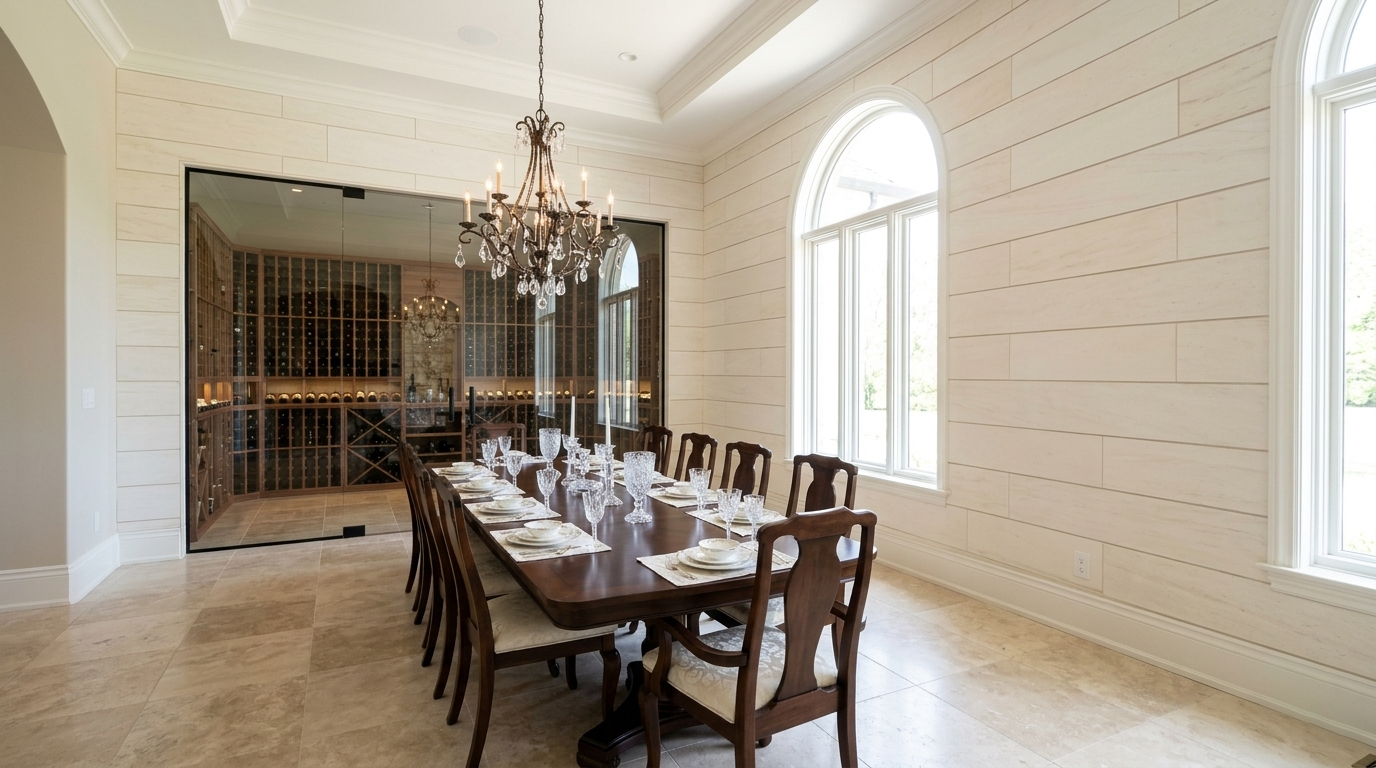
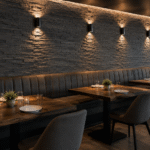
When the installation is complete, the effect is a wall with deep shadows and rich tactile relief. The lighting in a room—especially recessed ceiling lights or wall sconces—catches the 3D surface of the stone, creating a grounded, permanent feel that instantly raises the property value. The visual “weight” of stone provides a psychological sense of security and luxury that paint or wallpaper can never replicate.
For the contractor and the client, the value of duolongtrade MSV is found in the balance of speed and quality. You achieve a world-class stone interior in half the time of traditional masonry, with significantly lower labor costs and zero structural risk. Because the product is consistent in thickness and size, there is virtually zero waste on the job site. The final result is an architectural statement that is indistinguishable from natural stone but engineered for the specific demands of modern interior construction. By choosing a manufactured solution, you are not compromising on quality; you are optimizing for the reality of the 21st-century building industry.
From a procurement perspective, a reliable supplier isn’t just selling a product—they are selling the elimination of risk. In the building materials sector, your profitability is constantly threatened by transit damage, batch-to-batch color variance, and unpredictable lead times. This guide confirms that partnering with a direct manufacturer like duolongtrade solves these friction points at the source. For a B2B buyer, the value of our MSV lies in its “Predictable ROI.” By sourcing an engineered stone that is 75% lighter than the natural alternative, you are effectively cutting your logistical overhead while simultaneously providing your contractors with a product that installs twice as fast.
As a strategic partner, we understand that your reputation depends on the technical integrity of the materials you supply. That is why we emphasize ASTM-compliant fire safety, factory-sealed moisture resistance, and rigorous quality control. Choosing our Manufactured Stone Veneer means you are offering your network a solution that bypasses the supply volatility of natural quarries. You gain a streamlined, scalable, and high-margin product line that meets the most stringent commercial codes, ensuring that every project you supply—from boutique hotels to residential developments—remains on budget, on time, and visually flawless.