Why Natural Stone Is No Longer the Only Choice
Natural stone has been used in architecture for centuries because of its appearance, durability, and association with premium construction. For many years, granite, marble, limestone, and slate were considered the standard solution whenever a project required a natural and high-end finish. While these materials continue to be widely recognized, the way buildings are designed and constructed today is very different from the way projects were delivered twenty years ago.
Modern construction places greater emphasis on efficiency, installation speed, transportation costs, and long-term maintenance. Materials are no longer selected solely because they look impressive. They are evaluated based on how they affect the entire project lifecycle, from manufacturing and shipping to installation and future maintenance.
One of the biggest challenges with natural stone is weight. Heavy materials increase freight costs, require stronger support systems, and often demand more labor during installation. These factors may not be obvious when reviewing material samples, but they become significant once a project moves into production and construction.
As a result, architects are increasingly exploring materials that can achieve a similar visual effect while reducing the practical limitations associated with traditional stone systems.
Why Weight Has Become a Major Design Consideration
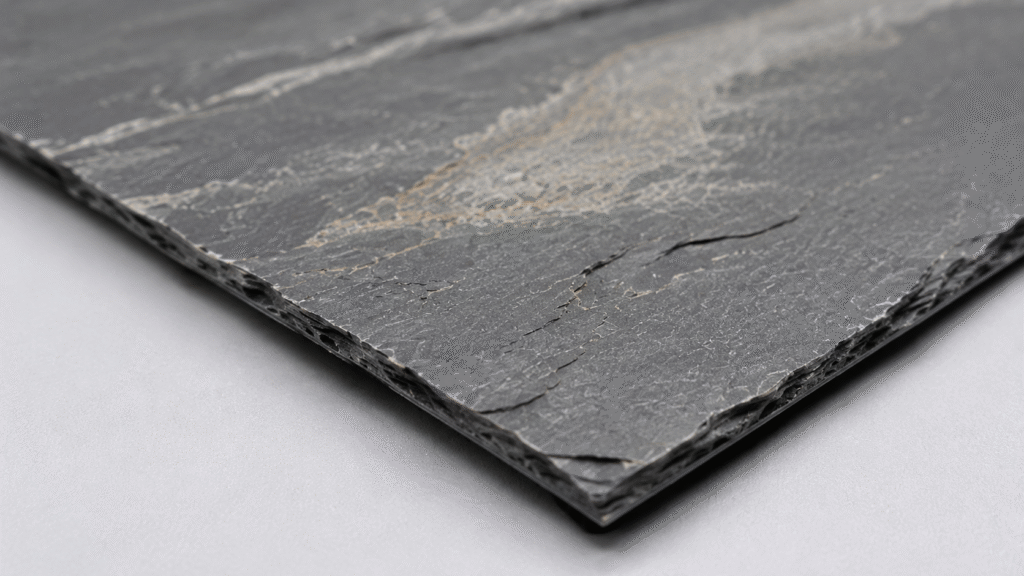
The weight of a facade material affects far more than transportation. It directly influences structural engineering, installation procedures, labor requirements, and project budgets.
Natural stone can place considerable load on a building. In many cases, additional support systems, reinforcement structures, or specialized fixing methods are required to safely accommodate the material. These requirements increase complexity and often add costs that extend beyond the stone itself.
Transportation presents another challenge. Heavy materials reduce container efficiency and increase freight expenses. They also require additional handling during loading, unloading, and installation. Every stage of the supply chain becomes more complicated when weight increases.
Lightweight materials help solve many of these issues. By reducing structural load and simplifying logistics, they allow project teams to improve efficiency without compromising visual quality. This shift has encouraged architects to consider alternatives that provide the appearance of stone while eliminating many of the disadvantages associated with heavy cladding systems.
Material Comparison Under Real Project Conditions
| Material | Structural Load | Installation Complexity | Humid Climate Performance | Maintenance Pressure | Shipping Efficiency |
| Natural Stone | High | High | Medium | High | Low |
| Ceramic Tile | Medium | Medium | Medium | Medium | Medium |
| Lightweight Stone Systems | Lower | Lower | High | Lower | High |
| Aluminum Panels | Lower | Lower | Medium | Low | High |
In real commercial construction, facade selection is rarely driven by appearance alone. Most projects require balancing structural efficiency, installation practicality, climate durability, maintenance access, and transportation logistics simultaneously.
This is one reason lightweight facade systems are becoming more common in international projects where lifecycle performance matters as much as architectural aesthetics.
What Architects Are Using Instead of Traditional Stone
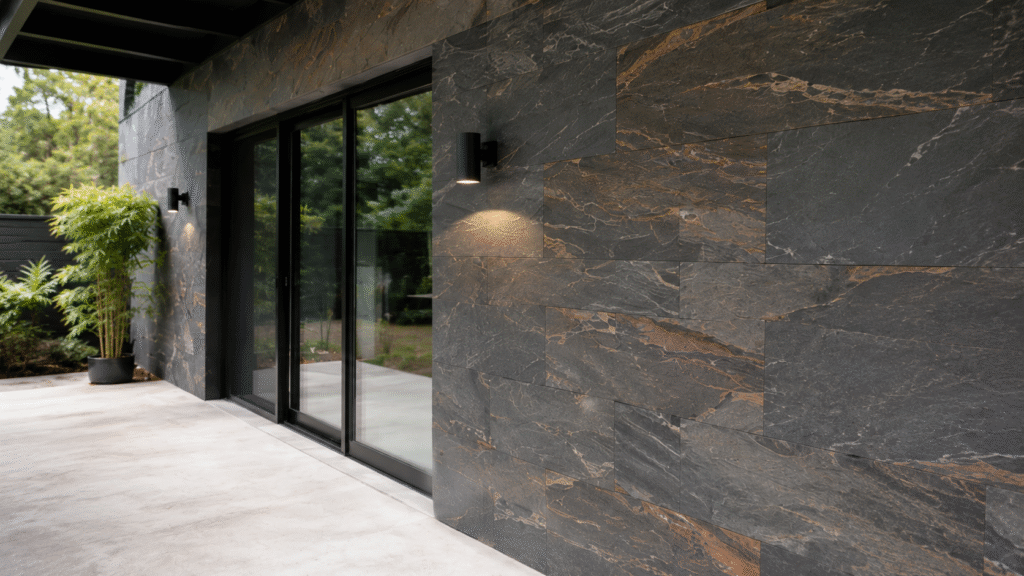
Among the alternatives currently available, flexible stone panels have become one of the most practical solutions.
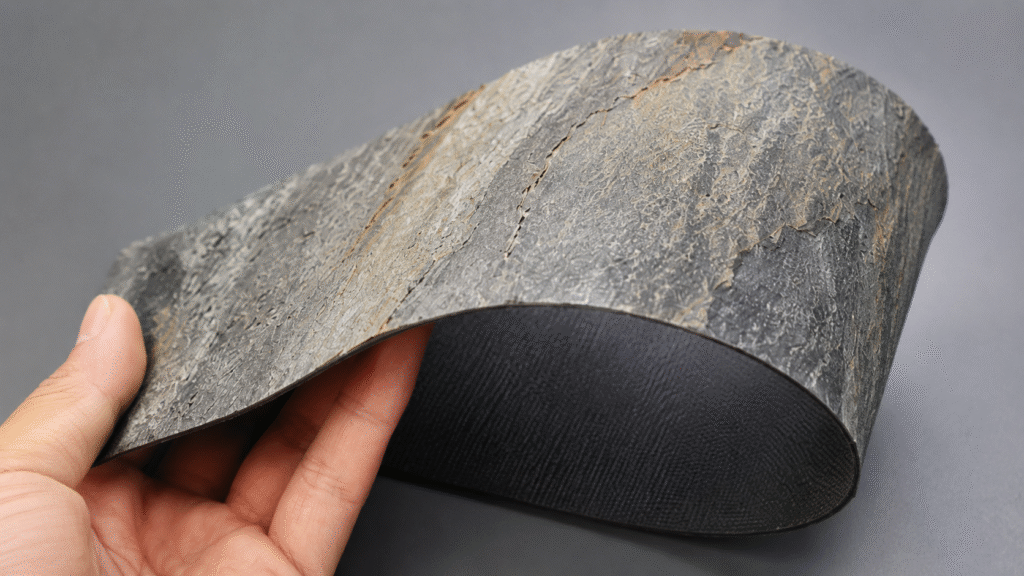
Flexible stone panels combine the appearance of natural stone with a lightweight backing system, creating a material that is significantly easier to transport and install. Unlike conventional stone slabs, they do not require the same level of structural support and can be handled more efficiently throughout the construction process.
Another advantage is material flexibility. Traditional stone is rigid and difficult to adapt when surfaces include curves, corners, columns, or complex architectural details. Flexible stone panels are designed to accommodate these conditions more easily while maintaining the visual texture and appearance associated with natural stone.
This combination of appearance, flexibility, and reduced weight has made flexible stone panels increasingly attractive for modern building envelopes where efficiency and performance are just as important as aesthetics.
How Flexible Stone Panels Improve Installation Efficiency
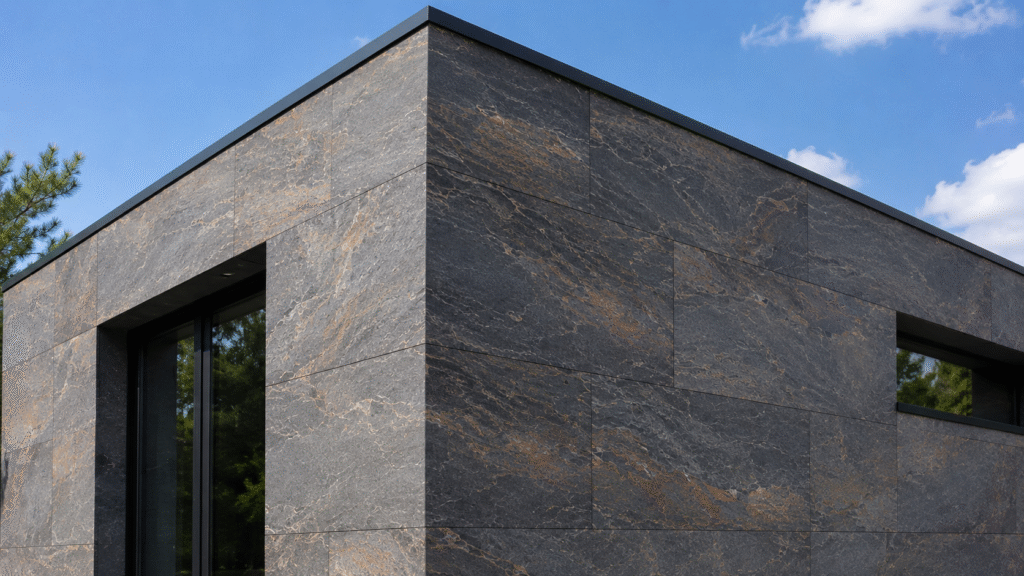
Installation costs continue to represent a significant portion of construction budgets. Materials that require specialized labor, extensive preparation, or complicated fixing systems often increase both cost and project duration.
Traditional stone installation typically involves lifting equipment, mechanical fixing systems, and experienced installers. Material handling alone can consume a considerable amount of time and labor.
Flexible stone panels simplify this process. Their lightweight structure allows installers to move, position, and apply the material more efficiently. Reduced handling requirements help accelerate installation while minimizing labor intensity.
Faster installation provides advantages beyond cost savings. Shorter installation periods help reduce disruption, improve scheduling flexibility, and allow projects to progress more smoothly. These benefits are becoming increasingly important as labor costs continue to rise in many markets.
Why Material Flexibility Matters in Modern Architecture
Modern architecture often includes design elements that are difficult to achieve using rigid materials. Curved surfaces, rounded corners, irregular transitions, and custom forms can create challenges when traditional stone is specified.
Rigid stone materials frequently require additional fabrication, specialized cutting, and increased labor to accommodate these details. This not only increases cost but can also result in material waste and longer installation times.
Flexible stone panels provide greater adaptability. Their ability to conform to different surfaces allows architects to maintain design freedom without introducing unnecessary installation complexity. The material can follow shapes that would be difficult or expensive to achieve with conventional stone systems.
For architects, this flexibility expands design possibilities while helping maintain project efficiency and cost control.
Why Long-Term Performance Is Becoming More Important
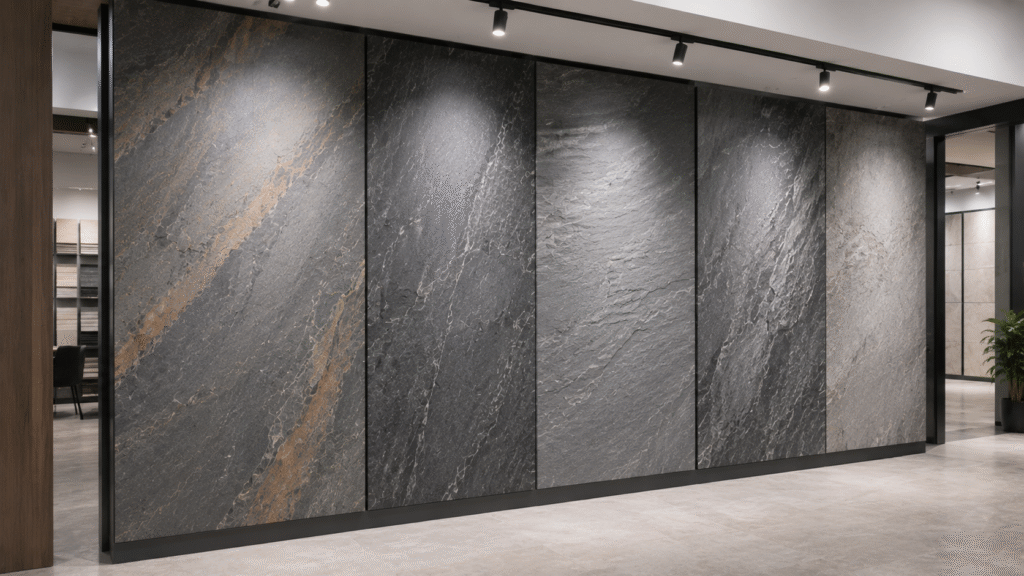
The value of a building material is not determined solely by its appearance on the day installation is completed. Long-term performance has become a major factor in material selection.
Transportation damage, maintenance requirements, repair costs, and lifecycle performance all influence the true cost of ownership. Materials that perform consistently over time help reduce operational expenses and maintain the quality of the finished building.
Flexible stone panels are designed to provide long-term durability while reducing many of the risks associated with heavier materials. Their lightweight construction minimizes transportation challenges, while their flexibility helps reduce installation-related stress.
As architects and building owners place greater emphasis on lifecycle value, materials that combine aesthetics with long-term performance continue to gain attention.
Why Flexible Stone Panels Are Becoming a Preferred Alternative
The shift away from traditional stone is not driven by appearance. Natural stone remains visually appealing and continues to be used around the world. The change is being driven by practicality.
Modern projects demand materials that simplify transportation, reduce installation complexity, improve design flexibility, and support long-term performance. Flexible stone panels address these requirements while maintaining the natural appearance that architects and designers value.
As construction methods continue to prioritize efficiency and lifecycle performance, lightweight stone alternatives are becoming an increasingly important part of modern building design. Flexible stone panels represent a balance between visual quality and practical performance, making them one of the most effective alternatives to traditional stone systems available today.
FAQ
What facade materials perform better in humid climates
Facade systems with lower water absorption and better flexibility generally perform more reliably in tropical and coastal environments where long-term moisture exposure is unavoidable.
Why do traditional stone facades crack in hot climates
Thermal expansion, substrate movement, moisture penetration, and installation stress are among the most common reasons facade cracking develops over time.
Are lightweight facade systems suitable for high-rise buildings
Many architects prefer lighter exterior systems in tall buildings because reducing facade load may simplify structural engineering and installation logistics.
Why are lightweight materials becoming more common in renovation projects
Older structures often have load limitations and uneven substrates. Lighter systems reduce additional wall stress and may simplify renovation work considerably.
Do lighter facade materials reduce shipping pressure
In many international projects, lower-weight materials improve container efficiency and reduce freight-related handling complexity.