Upgrading a wall isn’t always about what looks good on the surface—it’s about what happens behind the scenes. The choice of material determines how long the job takes, how much it costs, and whether the result holds up over time. Yet in many projects, the same challenges repeat: weight, complexity, waste, and slow progress. What if there were a way to achieve a natural stone look without all the usual complications? This article takes a closer look at a material designed to simplify the entire process—from planning and logistics to cutting, shaping, and installation.
Why tiles complicate wall upgrades
At first glance, traditional ceramic or stone tiles might seem like the go-to choice for wall finishes. They’re familiar, widely available, and visually solid. But anyone who has managed a renovation or construction site knows: when it comes to real-world execution—especially under time and budget pressure—traditional tiles can turn into more of a burden than a solution.
Let’s start with the basics: weight and rigidity. Standard tiles are heavy. For every square meter, you’re hauling a significant load—both in terms of transportation and manual labor. In high-rise projects, or sites with limited crane access, just getting the materials to the right floor becomes a cost-heavy operation. In fact, on one recent commercial job, a client told us their tile shipment consumed nearly double the expected container space, driving freight costs 40% over budget before installation even began.
Then comes the installation itself. Wet-setting methods require a perfectly level surface, controlled moisture content, and significant curing time. That means downtime, delays, and the need for skilled labor who know how to mix, apply, align, and wait. On busy sites—like shopping malls, hotels, or public infrastructure projects where downtime equals lost revenue—every extra day hurts.
Now imagine you’re not working with flat surfaces. Curved walls, round pillars, sloped ceilings—traditional tiles resist anything that’s not square. Even slight misalignment can cause cracking or detachment. Specialized tile saws are required for shaping, and in some cases, you’ll need metal mesh reinforcement or backup adhesives to keep them in place. The result? A slow, tedious process filled with breakage risk, waste, and coordination headaches.
And let’s not forget cleanup. Cutting ceramic or natural stone produces clouds of dust, chipped edges, and the occasional cracked tile out of the box. These aren’t just annoying—they’re costly. Every broken tile is a line item on your material loss sheet.
Flexible stone sheets the smarter choice
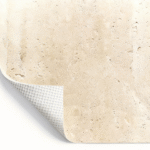
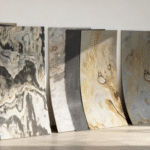
Flexible stone sheets offer a practical alternative to conventional wall materials, especially when time, weight, and installation complexity are part of the equation. Designed with a natural stone surface bonded to a composite base layer, these sheets deliver the texture and appearance of real stone in a much thinner and more workable format.
Each panel is typically only 2.5-3mm thick, making it light enough to carry by hand yet durable enough to maintain structural integrity during bending, shaping, and installation. This slim profile not only simplifies handling, but also significantly reduces the overall weight load applied to wall structures, which is a critical consideration in both new construction and renovation work.
One of the most distinctive advantages is the ease of installation. Unlike traditional tiles that require mortar setting, leveling tools, and precise alignment, flexible stone sheets can be cut with basic tools and applied directly to prepared surfaces using commonly available adhesives. This dry-lay method eliminates the mess of grout, avoids long curing times, and allows for faster project progression—especially in interior environments where downtime needs to be minimized.
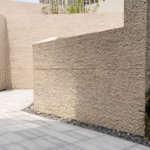
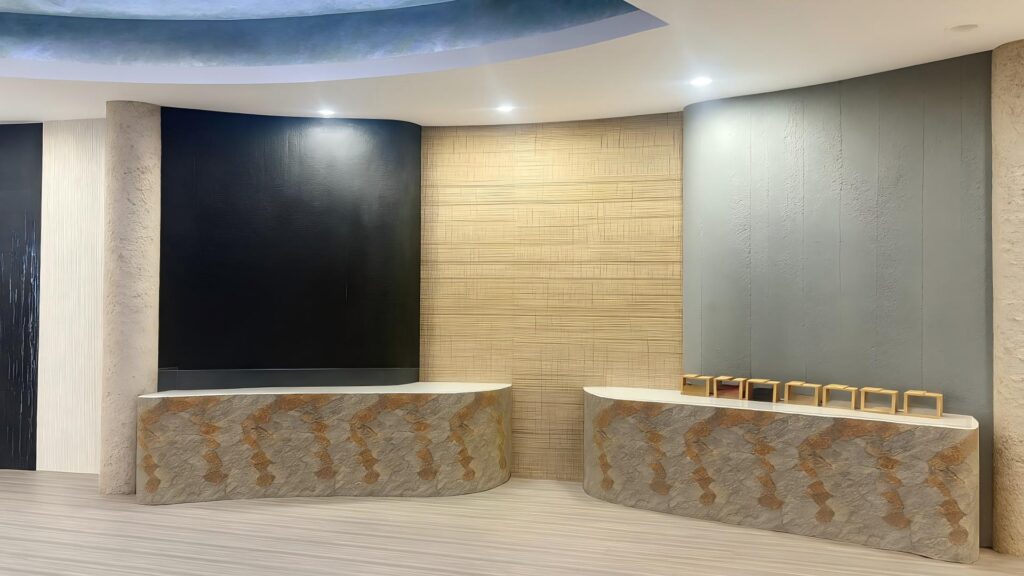
Adaptability is another core strength. These sheets can be applied to flat surfaces just as easily as to curved walls, rounded columns, recessed arches, or irregular geometries. Their ability to conform to complex shapes without cracking or chipping reduces the need for specialized substructures or extensive tile cutting, and opens up new possibilities for seamless, continuous surface design.
The material also demonstrates consistent performance under regular building use conditions. Its layered structure maintains stability without warping or deformation, even when applied over broad vertical surfaces or architectural curves. Through standard production testing, flexible stone sheets have shown reliable adhesion compatibility, dimensional consistency, and surface integrity over extended periods.
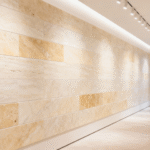
This level of performance allows them to be used confidently in both interior and exterior wall applications where lasting appearance and structural compatibility are important. The surface finish remains intact after cutting, shaping, and installation, with no noticeable changes in form or adhesion during normal site handling and use. These qualities make flexible stone sheets not only easy to install, but also dependable throughout the lifecycle of the finished wall.
By combining the visual appeal of natural stone with a lightweight, easy-to-handle structure, flexible stone sheets redefine how wall finishes can be designed, transported, and installed. Their performance characteristics support more efficient workflows and offer greater freedom in both architectural design and practical execution.
Where flexible stone sheets shine
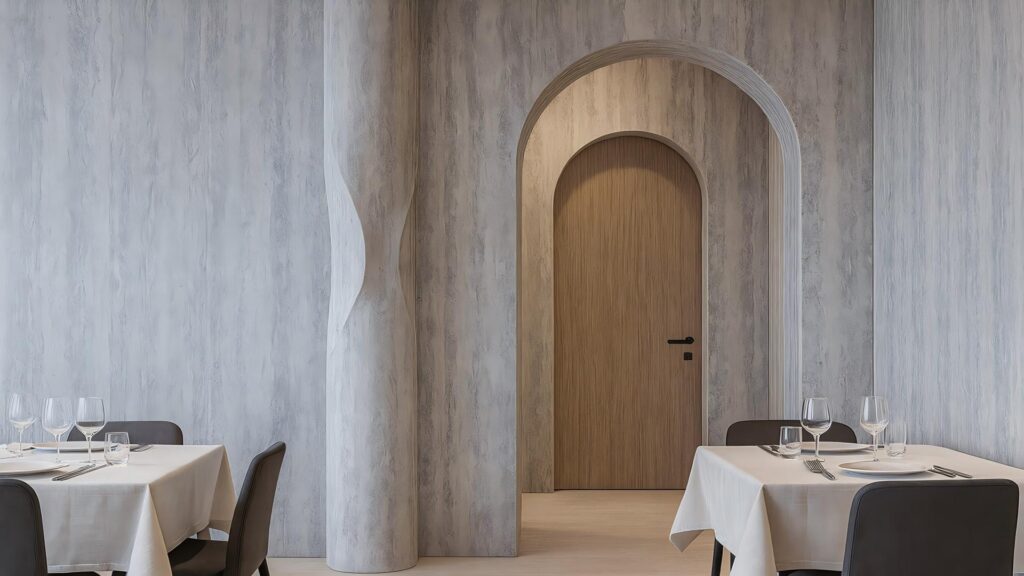
Flexible stone sheets offer clear practical advantages in a range of built environments, particularly when working with surfaces that extend beyond simple flat planes. Their ability to conform to curves, angles, and unconventional geometries makes them especially well-suited for design features that require both material adaptability and visual continuity.
In architectural spaces featuring rounded columns, recessed niches, or concave feature walls, these sheets can be applied without the need for specialized reinforcement or complex framing adjustments. The material’s structural flexibility reduces breakage during handling and enables precise shaping directly on-site using simple tools. This streamlines the installation process and allows for seamless coverage even on surfaces that would typically require custom tile cutting or segmented paneling.
Renovation scenarios also benefit from the efficiency of flexible stone sheets. When upgrading interiors where downtime must be minimized—such as active-use public buildings or commercial interiors—the sheets can be installed directly over existing wall finishes, provided the substrate is stable and properly prepared. This avoids the need for full demolition or extended closure periods, while still achieving a clean, high-end surface result.
In environments with tight construction windows or phased scheduling, the speed and simplicity of installation translate directly into time savings. Compared to traditional stone or ceramic materials, which often require multiple trades and sequential drying times, flexible stone sheets support faster progression between work stages, reducing labor overlap and improving overall workflow coordination.
Whether applied in new construction or adaptive reuse projects, this material provides a reliable and precise finish that accommodates modern architectural intent without the structural or logistical burden associated with conventional rigid cladding systems.
Easier logistics and installation
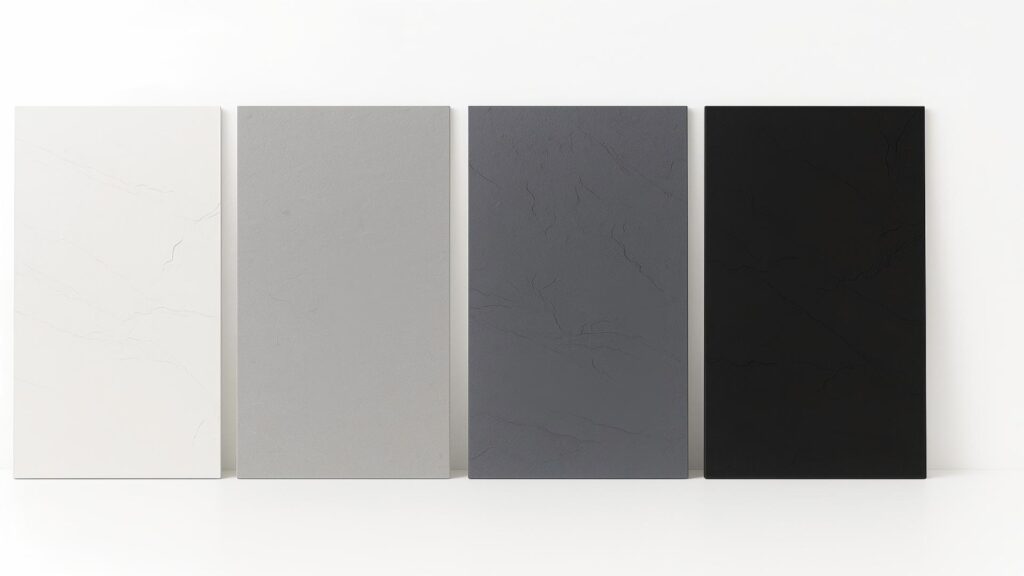
In many modern renovation and construction projects, wall surfaces are no longer limited to flat, rectangular designs. Curved structures, seamless transitions, and unconventional geometries are increasingly common, and these require materials that are both visually consistent and physically adaptable.
Flexible stone sheets respond well to these design demands. Their ability to bend and wrap around surfaces without breaking opens up possibilities in spaces where traditional rigid panels fall short. For example:
- Curved walls and rounded corners can be finished in a single layer, eliminating segmented joints or visible cuts.
- Arched entryways or concave features achieve a cleaner look without the need for custom tile shaping.
- Existing surfaces can often be covered directly, helping avoid demolition work in upgrades or retrofits.
In addition to their formability, these sheets reduce the need for heavy-duty installation tools and specialized labor. For settings where access is limited—such as stairwells, high ceilings, or narrow corridors—the lightweight format and cut-to-fit nature of the material make application more manageable.
By simplifying the execution of complex design features and reducing time on site, flexible stone sheets serve as a practical choice in spaces where precision, efficiency, and aesthetic quality are equally important.
Common questions about using flexible stone sheets
Do flexible stone sheets require special adhesives?
Flexible stone sheets are compatible with widely available construction adhesives, including tile glue and stone-specific bonding agents. The key is to match the adhesive type to the substrate material—for example, using polymer-modified adhesive on cement board or high-strength contact glue on wood or metal panels. No proprietary adhesive systems are required, which simplifies sourcing and installation.
How should flexible stone sheets be stored before installation?
Sheets should be stored flat and in a dry, shaded environment. While the material is flexible, improper stacking—especially under uneven weight—can cause unwanted curvature before use. Keeping them on a smooth, horizontal surface helps maintain their shape and makes onsite handling more efficient.
Can flexible stone sheets be cut on-site without professional equipment?
Yes. A utility knife with a sharp blade is typically sufficient for cutting the sheets to size. Straight cuts, curves, and outlet openings can be marked and trimmed manually, without producing dust or requiring electric saws. For complex designs, basic templates can be used to trace shapes before cutting.
What happens if the wall surface is slightly uneven?
Minor surface irregularities are generally not a problem. Due to their thin and pliable nature, flexible stone sheets can adapt to subtle undulations without detachment or visual distortion. However, for best results, it’s recommended to smooth out major bumps or hollows before installation to ensure full surface contact and long-term adhesion.
Upgrade smarter with flexible stone sheets
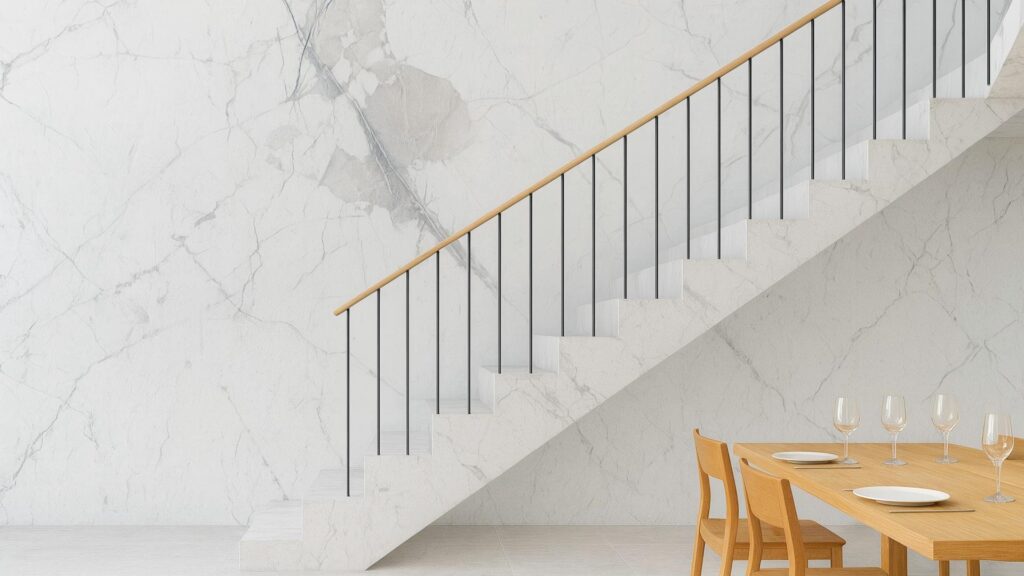
Wall upgrades no longer need to rely on heavy, rigid materials or time-consuming installation methods. Flexible stone sheets offer a more efficient approach—combining the natural texture of stone with a structure that’s easier to handle, faster to install, and better suited for complex surfaces.
Their lightweight profile reduces physical strain during transport and handling, while the ability to cut and shape on-site allows for smoother progress, even in spaces with curved walls or limited access. The entire process—from preparation to finishing—becomes more manageable, with fewer delays and cleaner results.
Beyond construction speed, what stands out is long-term practicality. The material holds its shape, bonds reliably to common substrates, and supports a clean, seamless aesthetic. For those seeking a reliable wall finish that performs well under real-world conditions, flexible stone sheets offer a strong balance of form and function.
Whether used in a new project or as part of a renovation, they bring clarity and control to what is often a complicated task. Choosing the right material isn’t just about appearance—it’s about making the entire process smarter from the ground up.