Imagine cutting your shipping and installation costs by up to 70% while completing cladding work weeks faster. That’s what several recent projects achieved after switching from traditional stone slabs to flexible stone veneer — and this article breaks down how the savings actually add up (shipping, storage, labor, and structural costs)The decision between traditional stone and modern flexible stone veneer represents more than just material selection—it’s about redefining construction efficiency. This analysis reveals how weight reduction revolutionizes not only logistics and installation but also unlocks new design possibilities, backed by concrete data from international projects that demonstrate measurable advantages beyond initial cost considerations.
Lightweight Savings Vs Backbreaking Costs
What happens before materials ever reach your project site often determines the real cost of your construction decisions. While most discussions focus on price per square meter, the true financial impact lies hidden in shipping documents, warehouse configurations, and labor timelines. The choice between traditional stone and modern flexible stone veneer represents a fundamental divide in how you manage these often-overlooked operational factors.
Consider the mathematics of material transportation. Where traditional stone slabs typically weigh 40 kilograms or more per square meter, flexible stone veneer delivers identical aesthetic impact at just 3kg per square meter. This isn’t merely a weight reduction—it’s a complete rethinking of shipping economics. Documented cases show reductions exceeding 70% in international shipping expenses, with some projects saving enough to fund additional project phases. The numbers become even more compelling when you examine container efficiency: where traditional stone might fill 12 containers, the same project using flexible stone veneer requires just two. This translates to substantially lower customs fees, reduced insurance costs, and dramatically simplified logistics coordination.
The financial advantages continue revealing themselves in storage facilities. Traditional stone demands reinforced flooring, heavy-duty shelving, and wide aisles for equipment access—all representing silent costs that accumulate daily. The mathematics of warehouse economics shows flexible stone veneer operating in an entirely different category. With laboratory-certified anti-bending strength exceeding 18MPa, the material demonstrates remarkable durability that translates to practical benefits. Industry data reveals damage rates dropping from the 8% industry standard for traditional stone to just 0.3% for flexible veneer. More significantly, multiple operations report storing their complete flexible stone veneer inventory in less than one-third of their previous allocated space. This liberated square footage often becomes home for additional product lines or eliminates the need for expensive warehouse expansions.
The most immediate differences emerge at the project site itself. Traditional stone typically requires forklifts, specialized equipment, and multiple workers just for basic material movement—creating scheduling complexities and equipment rental costs that many projects underestimate. Flexible stone veneer transforms this dynamic entirely. A standard bundle covering 10 square meters weighs approximately 30kg, allowing a single worker to transport what would normally require machinery. Documented projects consistently show unloading times reduced by 70% or more, with some reporting complete elimination of equipment rental costs. This efficiency extends throughout the project timeline as workers spend more time installing and less time managing materials. The simplified handling process means projects advance faster, with fewer delays and significantly reduced labor hours—advantages that directly translate to improved project economics and predictable completion dates.
The cumulative effect of these logistical advantages often surprises even experienced project managers. When you calculate the combined savings from shipping, storage, and site handling, many discover that the apparent price difference between traditional stone and flexible stone veneer completely disappears—and often reverses in favor of the modern solution. This explains why so many operations are reevaluating their material selections not based on upfront cost, but on total project economics that account for the full journey from warehouse to completed installation.
Streamlined Efficiency Vs Backbreaking Labor
Walk onto any traditional stone installation site and you’ll witness a familiar scene: skilled masons maneuvering heavy slabs into position, specialized saws creating clouds of dust, and the inevitable delays as workers navigate the physical challenges of working with rigid, weighty materials. This approach doesn’t just test human endurance—it directly impacts project viability through extended timelines and escalating costs.
The transformation that occurs when using flexible stone veneer isn’t merely about switching materials—it’s about reimagining what’s possible in installation efficiency. Consider these fundamental shifts:
- Tool Requirements: Where traditional stone demands heavy-duty wet saws and specialized equipment, flexible stone veneer adapts to standard utility knives and basic construction tools
- Labor Expertise: The need for highly specialized masons transitions to capabilities achievable by standard construction crews with minimal additional training
- Adjustment Flexibility: Mistakes in measurement become easily correctable rather than resulting in costly material waste
The safety implications extend far beyond basic convenience. Traditional stone installation consistently ranks among construction’s higher-risk activities, with strain injuries from lifting heavy materials and laceration risks from handling sharp stone edges. Flexible stone veneer fundamentally changes this risk profile. The material’s lightweight nature eliminates heavy lifting concerns, while its flexible composition allows for controlled cutting without the dangerous blade-binding tendencies of rigid slabs.
Documented projects reveal consistent patterns of improvement: installation timelines compressed by 40-60%, labor requirements reduced by approximately 30%, and near-elimination of material waste from cutting errors. These aren’t marginal improvements—they represent a fundamental restructuring of installation economics.
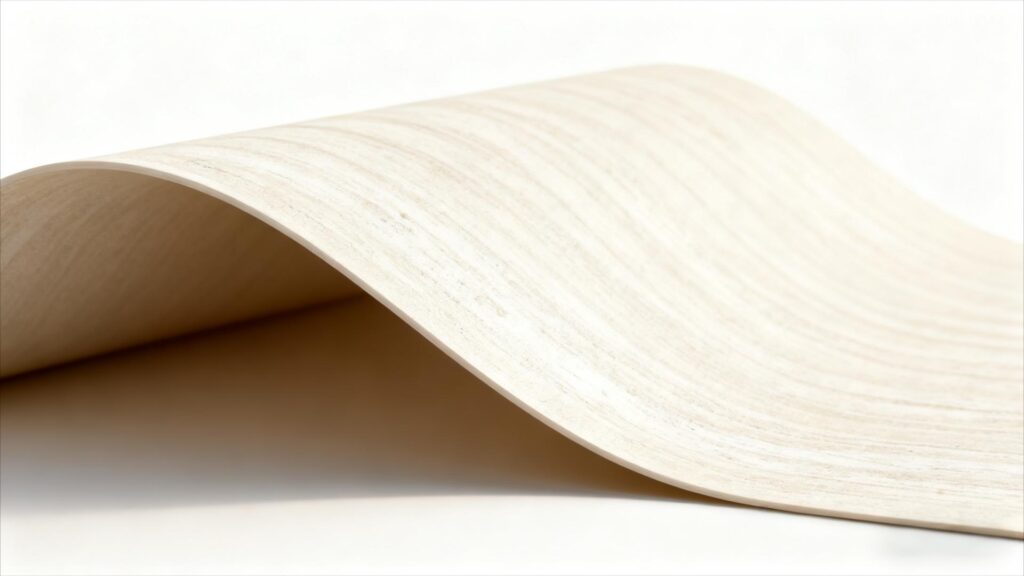
The true advantage emerges when confronting complex installations. Curved walls, irregular surfaces, and intricate patterns that would challenge even experienced stonemasons become manageable tasks. This adaptability proves particularly valuable in renovation work where existing structures rarely provide the perfect planes that traditional stone demands.
Beyond the immediate installation benefits, the long-term implications for project management become equally compelling. Reduced equipment requirements mean lower capital investment and simplified job-site logistics. The decreased physical strain on workers translates to sustained productivity throughout the workday and across multiple projects. Perhaps most significantly, the simplified installation process creates scheduling flexibility that protects against the domino effect of delays that often plagues traditional stone projects.
What begins as a material selection inevitably becomes a strategic decision affecting every aspect of project execution. The efficiency gains with flexible stone veneer installation don’t just save time and money—they create predictable, manageable installation processes that deliver consistent results regardless of project complexity.
Unlimited Freedom Vs Backbreaking Limitations
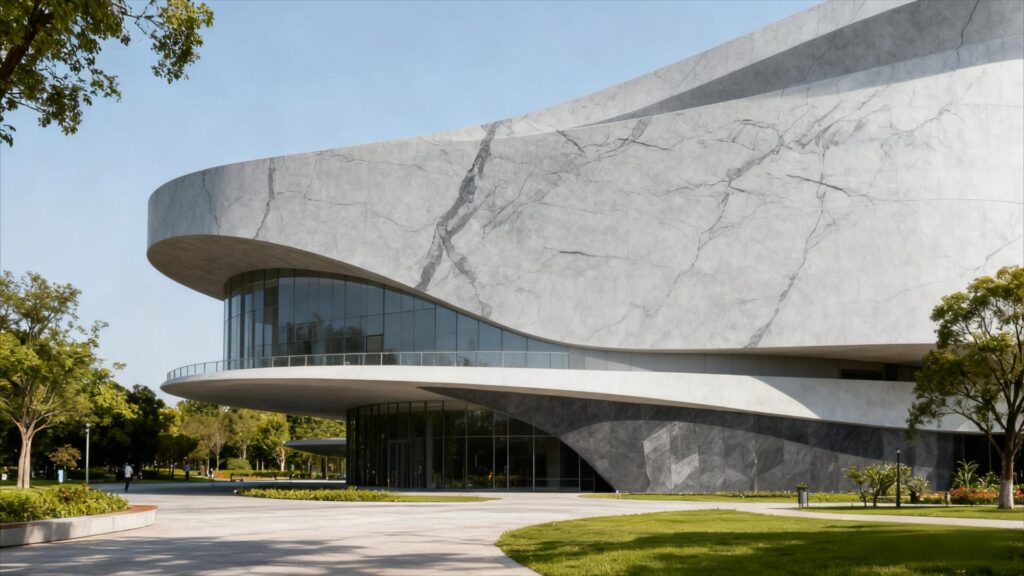
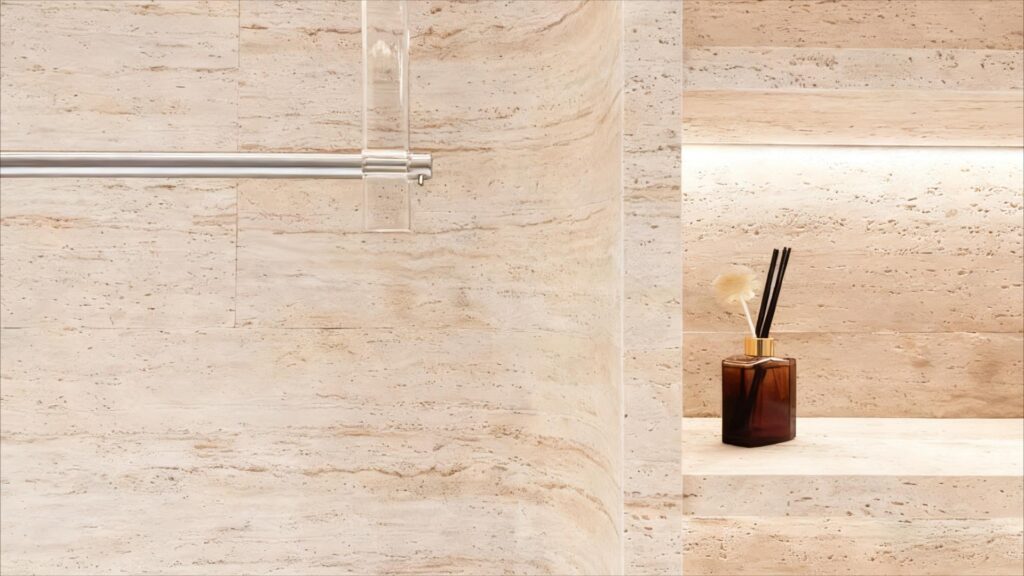
In architectural design, the gap between conceptual ambition and construction reality often widens when material limitations intervene. Traditional stone, despite its timeless appeal, frequently demands design compromises due to its inherent physical constraints. The rigid nature of conventional stone slabs dictates straight lines and flat surfaces, forcing designers to adapt their visions to material limitations rather than material capabilities.
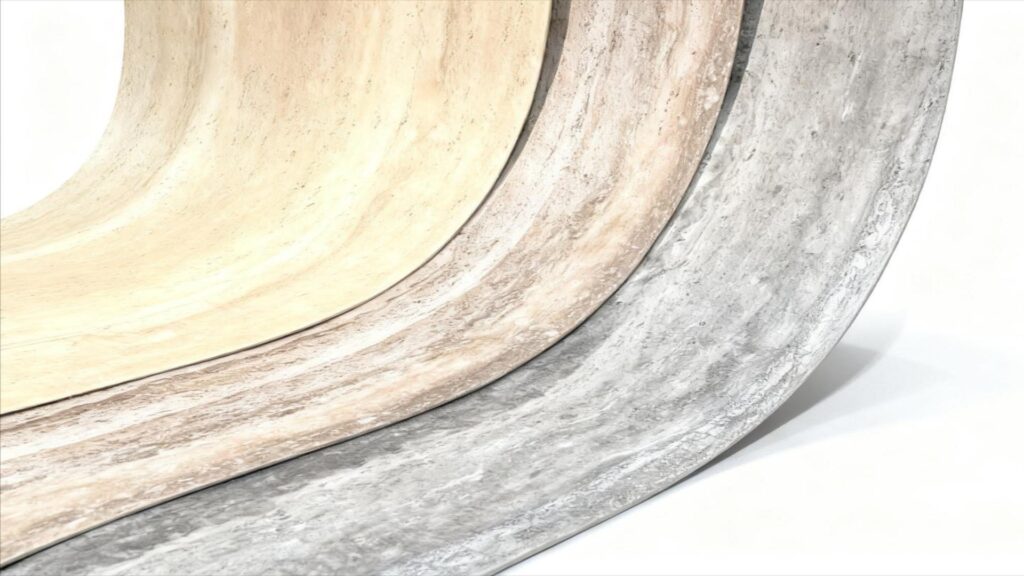
The emergence of flexible stone veneer represents a paradigm shift in this dynamic. This innovative material maintains the authentic appearance of natural stone while introducing unprecedented design flexibility that transcends traditional limitations:
- Curved surface applications that gracefully wrap around columns, archways and organic shapes
- Seamless corner transitions that eliminate visible joints and awkward mitre cuts
- Complex geometric features achieving stone aesthetics on forms previously impossible with natural stone
These capabilities translate into practical solutions for common design challenges. The material’s ability to conform to radius walls while maintaining genuine stone appearance opens new possibilities for creating flowing, continuous spaces. Design teams report achieving architectural features that previously required expensive custom fabrication or synthetic alternatives.
Structural implications present equally compelling advantages, particularly in retrofit and renovation scenarios. Traditional stone’s substantial weight – frequently exceeding 40kg per square meter – triggers a chain reaction of structural considerations:
- Elimination of structural reinforcement requirements in building facade upgrades
- Preservation of existing building integrity during comprehensive aesthetic transformations
- Expansion of design possibilities for structures with limited load-bearing capacity
Documented case studies consistently demonstrate 25-40% reductions in structural-related expenses when utilizing flexible stone veneer compared to traditional stone cladding systems. This weight advantage proves particularly valuable in high-rise applications and historic building renovations where structural modifications are either cost-prohibitive or physically impossible.
The material’s cross-functional versatility introduces operational efficiencies throughout project execution. Rather than managing multiple material specifications for different applications, project teams can deploy flexible stone veneer across diverse contexts:
- Exterior cladding systems demonstrating weather resistance and dimensional stability
- Interior architectural features bringing natural stone aesthetics into occupied spaces
- Custom design elements from statement walls to integrated furniture components
- Building envelope upgrades that transform appearances without structural modifications
This unified material strategy simplifies procurement logistics, minimizes inventory complexity, and ensures consistent aesthetic outcomes across all project phases. The operational benefits manifest through reduced coordination overhead, accelerated installation timelines, and predictable performance regardless of application context.
The most transformative aspect emerges when evaluating how these design freedoms impact project economics. The capability to execute sophisticated designs without proportional cost escalation represents a fundamental recalibration of value assessment. Projects that would be economically prohibitive using traditional stone become financially viable through flexible stone veneer applications.
This convergence of aesthetic versatility, structural efficiency, and application adaptability positions flexible stone veneer beyond conventional categorization as merely a finish material. Instead, it functions as an enabling technology that expands architectural possibilities while containing costs – a combination that resonates deeply in today’s construction landscape where design ambition must align with practical constraints.
Cost Evaluation Smart Investment vs Hidden Expenses
Total cost analysis reveals the comprehensive value proposition. While initial material costs represent one component, the true financial picture includes multiple factors often overlooked in traditional comparisons. Shipping expenses, storage requirements, labor costs, installation timelines, and risk factors all contribute to the final project economics.
Long-term value assessment demonstrates consistent advantages. Projects utilizing flexible stone veneer typically show 25-40% reductions in structural-related expenses, 30-50% savings in installation labor, and 60-70% reductions in shipping costs. These compounded savings frequently offset any initial price differences, often making flexible stone veneer the more economical choice over the complete project lifecycle.
Return on investment calculations must account for these operational efficiencies. The combination of faster project completion, reduced labor requirements, and minimized ancillary expenses creates a compelling financial case that extends beyond simple material pricing. Documentation from completed projects consistently shows stronger overall financial performance when factoring in these often-hidden cost factors.
Making the Strategic Choice
The evidence clearly demonstrates that material selection involves far more than aesthetic preference. The choice between traditional stone and flexible stone veneer represents a fundamental business decision with implications across logistics, installation, design, and overall project economics. The comprehensive advantages position flexible stone veneer as not just an alternative material, but a superior approach to modern construction challenges.