
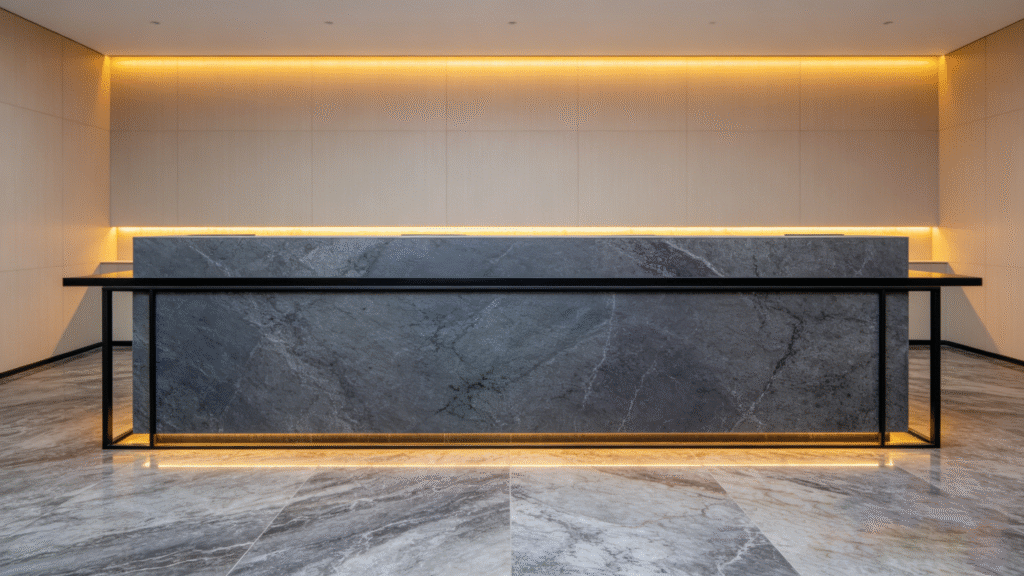
Flexible stone panels promise the look of natural stone without the weight, thickness, and installation friction that slow down real projects. But once the design is approved, the commercial questions arrive fast. What exactly is being quoted, why do prices vary so widely, and which details prevent costly rework after the container lands. This article breaks the topic into the parts that actually move risk and margin: product definition, comparable quoting, true cost drivers, realistic MOQ rules, and the QC and packaging decisions that protect the shipment. It also shows what to ask for upfront, so samples, mass production, and claims are handled with fewer surprises. Use it to turn a nice price into a defensible purchase decision and a supplier relationship that scales.
Flexible Stone Panels Value for Wholesale

Flexible Stone Panels are thin, lightweight stone-surface panels designed to deliver a natural-stone look with easier handling and faster installation than traditional stone. In wholesale and project supply, the value is practical: fewer handling constraints, lower labor pressure on site, and fewer schedule surprises on renovations where access is tight and walls are rarely perfect.
They are commonly selected for areas where rigid materials become slow or expensive to fit, such as curved columns, wrapped corners, soffits, reception counters, and retrofit feature walls. For importers and distributors, the product’s commercial value usually comes down to two things: stable appearance consistency that reduces complaints, and predictable installation behavior that reduces contractor pushback.
Before placing a real order, most professional buyers want clear, usable details rather than marketing language. That typically includes the panel structure, thickness range, sheet size options and cutting tolerance, weight per square meter, recommended bending use cases, surface finish and protective coating options, adhesive compatibility by substrate, basic cleaning guidance, and packaging method with real photos.
Wholesale Pricing How Quotes Compare
A wholesale quote is only comparable when the product definition is locked. Many “cheap” prices come from silent differences in structure, finish, packaging, or trade terms, so the unit number alone is not enough to make a buying decision.
Pricing is commonly quoted per square meter, per sheet, or per carton. The unit affects how easily you can compare suppliers and run SKUs in a warehouse. Trade terms also change the real cost: EXW shifts most logistics responsibilities to the buyer, FOB includes delivery to the export port, CIF includes ocean freight to the destination port, and DDP is delivered to door but varies heavily by customs and local delivery conditions.
A quote that supports purchasing approval should state the panel series and finish code, sheet size and thickness, MOQ definition (per color, per size, per series, per carton or pallet), packaging and pallet requirements, lead time (sample and mass production), payment terms, inspection options, and a clear claim policy with time window, evidence requirements, and resolution method (replacement, credit, or partial compensation). Without these, two offers are not quoting the same thing.
Key Drivers of Panel Cost

Surface finish and visual consistency are major cost drivers. Deeper textures, tighter color control, and added protective top coatings require stricter process control and sometimes reduce yield. In many distribution channels, paying slightly more for stability reduces returns and avoids the expensive “batch looks different on the wall” disputes.
Sheet size, thickness, and reinforcement also move cost. Larger sheets can look better on drawings but increase packaging difficulty and corner damage risk, especially in LCL shipments that see multiple handling points. Reinforced backing can improve stability and handling feel, but it adds material cost and freight weight, so the best structure depends on application and distribution method.
Quantity tiers affect cost through production efficiency. Trial orders tend to carry higher overhead per unit, while repeat production with stable SKUs improves batching, cutting, and packing efficiency and usually gives more stable pricing. OEM customization adds real costs as well, including development and approvals, custom cutting formats, carton artwork setup, printing minimums, barcode labeling, inserts, and pallet labels. OEM often raises MOQ, but it can protect margin by differentiating your offer.
MOQ and Smart Mix Strategies
MOQ is not one universal number. For flexible stone products, MOQ is often defined per color, per series, per size, per carton or pallet format, or by a container plan. This is mainly driven by batch consistency requirements and the realities of cutting and packing setup.
Mixing colors and sizes is often possible when SKUs share compatible production flow and packaging footprints. Mixing becomes risky when too many small SKUs increase packing complexity, raise picking mistakes, and reduce pallet stability, which increases corner compression damage during transit. That risk is higher with LCL because the cargo is handled more times.
A practical wholesale approach is to build a core range first and expand after validation. Start with several fast-moving SKUs in meaningful quantities for stable cost and replenishment, then add a controlled design range for catalog completeness. Use the first shipment to verify real lighting appearance, installer feedback in your market, and packaging performance through your logistics channel before scaling volumes.
Landed Cost Standards and QC

Wholesale margin is often lost after the goods leave the factory. The typical causes are breakage rate, slow claim resolution, documentation delays, and installation incompatibility. Packaging is the most common hidden cost center, and it is measurable. Strong corner and edge protection, cartons with adequate compression strength, stable palletization, moisture control for sea routes, and clear labeling for warehouse operations can materially reduce damage and after-sales disputes.
For compliance and specification work, credible performance claims should be tied to recognized standards and traceable documentation. Buyers commonly reference ASTM standards for the United States and EN standards for Europe. Fire and reaction-to-fire requirements are often discussed under systems such as EN 13501-1 in the EU or test methods such as ASTM E84 in the US, depending on the destination market and the customer’s spec. What matters in practice is whether the report is current, traceable, and based on the same product structure being supplied.
QC works best when it is written and agreed before production. Define defect acceptance criteria, confirm how batch consistency is controlled, decide inspection method (factory QC, buyer inspection, or third-party), and set a claim procedure that is realistic: what evidence is needed, the time window, and how compensation is handled. Clear rules protect both sides and make repeat orders smoother.
Manufacturer Fit and Fast Quoting
Direct manufacturer cooperation fits buyers who need repeatability and control: importers building a long-term supply chain, distributors running a SKU catalog, contractors supplying multiple sites, and brands that need OEM packaging and consistent replenishment. These buyers benefit most from stable batches, clear QC, durable packaging standards, and predictable lead times.
If you need very small quantities shipped immediately across many random designs, stock-based channels may be faster than production planning. Manufacturing is usually the best fit when there is a plan for repeat orders and aligned quality expectations.
To get a fast, accurate quote that you can actually compare and approve internally, send a complete request: destination city and nearest seaport, trade term (EXW, FOB, CIF, or DDP), SKU list with series and color codes plus quantity per SKU, sheet size and thickness, application (interior or exterior, wet area or not, traffic level), substrate type, packaging preference (carton-only or carton plus pallet), OEM needs (logo, carton artwork, barcodes, inserts, pallet labels), target ship date and expected reorder frequency, and any required test reports for your market. With this information, the supplier can quote in a way that supports real purchasing decisions, not just a rough number.
Flexible stone panels only become a strong product line when the supply chain is predictable. Procurement teams typically care less about a headline price and more about whether the supplier can deliver the same look, structure, and install behavior across batches with packaging that survives the chosen shipping mode. This article shows how to lock the product definition first so quotes are comparable, then evaluate the real cost drivers that affect yield and freight such as finish control, sheet size, reinforcement, and OEM packaging. It clarifies how MOQ is actually set by color, size, series, or packing format and how smart mixing can build a sellable range without creating LCL damage and picking errors. It also treats landed cost as a system including trade terms, documentation, standards evidence, and a written QC plan with acceptance criteria, inspection options, and a clear claim process. The result is a purchasing approach that reduces returns, speeds approvals, and supports repeatable replenishment.