Your choice of XPS foam board thickness seems simple, but it’s one of the most critical decisions determining your project’s long-term structural integrity and cost efficiency.
at Toronto’s Riverbend Commercial Center, saving $45,000 on initial insulation costs led to $420,000 in repairs. Similar stories unfold globally – moisture damage in Hamburg, seismic vulnerabilities in Tokyo, salt corrosion in Miami.
Based on our collaboration with the German Institute for Building Technology and project data from 15 climate zones, this guide provides a proven framework for XPS thickness selection. We’ll help you navigate international energy codes, environmental standards, and site-specific challenges.Five minutes of reading could prevent six-figure losses.Five minutes of reading could prevent six-figure losses.
The Critical Foundation Decision Most Projects Get Wrong
Let’s talk about a common but costly mistake: using XPS foam that’s too thin.
We saw this firsthand at a commercial building in Toronto. To save $45,000 upfront on insulation, they used a thinner XPS board. It seemed like a smart cut at the time.
But the first winter came, and the cold floors were a problem. Then, the concrete slab started cracking. Why? The insulation was too thin to stop the ground from freezing. When the ground freezes, it heaves, and that massive force will crack a concrete slab.
The final repair bill? A staggering $420,000. They had to tear out the slab and start over. That “small savings” turned into a massive loss.
Don’t try to save money by using thinner XPS foam. A Toronto project saved $45,000 upfront but faced a $420,000 repair bill when the ground froze and cracked the concrete slab.
Why XPS Stands As The Global Standard For Ground Insulation
So, why is XPS the go-to choice for insulating under concrete? It comes down to three things: moisture, strength, and consistency.
It’s Reliable. XPS provides a steady R-5 per inch of insulation, and it won’t sag or settle over time. You can count on it to perform for the life of the building.
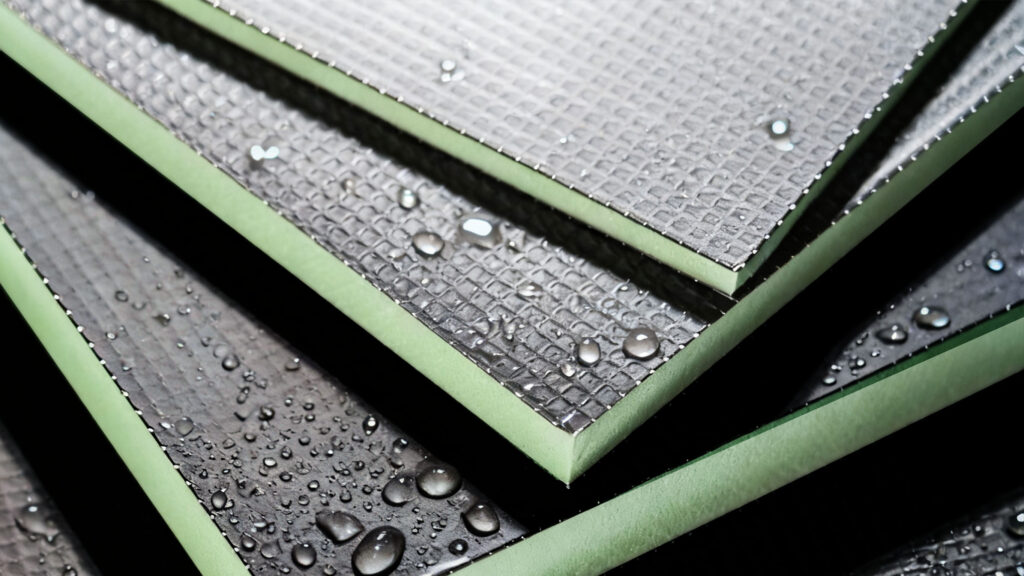
It Repels Water. Unlike other foams that act like sponges, XPS has a closed-cell structure. It absorbs less than 0.3% water. This is critical because wet insulation doesn’t work. If your insulation gets wet and loses its R-value, you might as well not have any.
It’s Strong. You can get XPS in different strengths to match your job. It can handle everything from the weight of a house foundation to the constant traffic of a warehouse forklift.
XPS is the best insulation under concrete because it doesn’t absorb water (<0.3%), stays strong under pressure, and keeps a reliable R-5 per inch value for the life of the building.
Our Three Step Framework For Determining Perfect XPS Thickness
Figuring out the right thickness doesn’t have to be guesswork. Just follow these three steps.
Check Your Local Climate Code
This is your starting point. Building codes tell you the minimum R-value you need based on how cold your winters get.
- Example: In Chicago (Zone 5), you need at least R-15 under a slab. In Toronto (Zone 6), it’s R-20. Always call your local building department to confirm.
Consider Your Project’s Specific Risks
The code is the minimum. Now, think about what makes your project unique.
- Heavy Loads? A warehouse floor needs thicker, stronger XPS than a house slab.
- Wet Ground? A high water table means you need XPS’s top-tier water resistance.
- Radiant Heat? You’ll want extra thickness to push that warmth up into your room, not down into the ground.
Use Our Practical Thickness Guide
Based on thousands of projects, here’s a simple cheat sheet:
| Application | Climate Example | Recommended Thickness | R-Value |
|---|---|---|---|
| House Slab | London, UK | 80mm (3 inches) | R-4 |
| House/Garage Slab | Boston, Toronto | 120mm (5 inches) | R-6 |
| Commercial Floor | Chicago, Toronto | 150mm (6 inches) | R-7.5 |
| Industrial/Warehouse | All Climates | 150mm+ (6+ inches) | R-7.5+ |
Pick the right XPS thickness in 3 steps: 1) Check your local code for the minimum R-value (e.g., R-20 in Toronto). 2) Consider heavy loads or wet soil. 3) Use a guide: 120mm for cold-climate homes, 150mm+ for commercial/industrial slabs.
The True Economic Advantage of Optimal XPS Thickness
Is thicker insulation worth the extra cost? Absolutely. It’s not an expense; it’s an investment.
Let’s break down the numbers for a warehouse in Chicago:
- Option A (Meets Minimum Code): 100mm XPS costs $35,000. Annual heating bill is $25,000.
- Option B (Better Protection): 150mm XPS costs $45,000. Annual heating bill is only $19,000.
Yes, you spend $10,000 more upfront. But you save $6,000 every year on heating. That means the extra insulation pays for itself in less than two years! Over 50 years, that’s $300,000 in net savings.
Beyond energy bills, you also avoid the risk of a catastrophic frost heave repair, which can easily cost $150,000 or more.
Spending more on thicker XPS pays off. An extra $10,000 upfront can cut your heating bill by 24%, paying for itself in under 2 years and saving you $300,000 long-term, while avoiding $150,000+ frost heave repairs.
How Duolong Ensures Your Project Starts With The Right Foundation
At [Your Company], we don’t just sell XPS foam; we deliver peace of mind. We know that every board we make is part of a building that needs to last for generations.
How do we guarantee quality?
Expert Support: Our team helps you choose the right product, so your project is built on a solid, dry, and efficient foundation from day one.
Precision Manufacturing: We control every step to ensure our boards are consistent in size and performance. Uneven boards create weak spots.
Rigorous Testing: Our products are independently certified to meet the highest international standards for strength and insulation value.
A reliable XPS supplier ensures consistent quality and provides expert guidance. Look for manufacturers with third-party certifications and the technical support to help you select the right thickness and strength for your project.