
For insulating concrete floors, XPS polyfoam stands as the superior choice due to its integrated performance in moisture resistance, structural strength, and long-term thermal efficiency. Its extruded, closed-cell structure absorbs less than 0.3% water by volume, safeguarding the R-value and preventing mold or degradation under slabs. With compressive strength from 250 kPa to over 500 kPa, XPS reliably supports heavy loads in residential, commercial, and industrial settings without settling. Real-world applications, from European warehouses to coastal buildings, confirm that XPS-insulated floors achieve significantly lower heating costs and remain free from moisture-related damage decades after installation. When evaluated against total cost of ownership, XPS delivers unmatched durability and energy savings, making it the definitive insulation for ensuring dry, stable, and efficient concrete floors.
For building professionals, project managers, and global traders, these scenarios translate into tangible losses: skyrocketing energy bills, compromised structural integrity, and dissatisfied end-clients. In the demanding environments where you operate—characterized by freezing temperatures, high humidity, salt-laden air, and even seismic activity—the ground is more than a passive base; it is an active agent of heat loss and moisture intrusion. A concrete slab poured directly onto the earth acts as a massive thermal bridge, draining warmth in winter and a sponge, wicking moisture year-round.
The solution, however, is neither complex nor speculative. It lies in the strategic integration of a high-performance insulation layer within the floor assembly. This single decision transforms the slab from a liability into a controlled, efficient, and durable element of the building envelope.
- Who needs this? This is essential reading for anyone involved in specifying, purchasing, or installing building materials for residential, commercial, or industrial projects—from construction managers and architects to global material suppliers.
- When is it critical? It is non-negotiable in new builds and critical in renovations, particularly in regions experiencing temperature extremes, high water tables, or significant rainfall.
- Where does it apply? Directly beneath concrete slabs on grade, in basements, for under-floor heating systems, and in warehouses, cold storage facilities, and homes built in challenging climates.
- Why can’t you ignore it? It directly prevents up to 30% of a building’s heat loss, stops ground-source moisture from damaging finishes and structures, and enhances the overall acoustic comfort of a space.
- How is it achieved? By selecting a rigid insulation board with the right combination of thermal resistance, moisture impermeability, and structural strength to perform for the lifetime of the building.
Investing in proper concrete floor insulation is a fundamental step toward energy efficiency, durable construction, and occupant well-being. Among the available options, XPS polyfoam consistently stands out as a premier solution, not merely for its insulation properties but for its multifunctional ability to block moisture and bear loads, delivering long-term cost savings and property protection.
What Is XPS Polyfoam
At its core, XPS is a product of precision engineering. The term stands for Extruded Polystyrene. Unlike its cousin EPS (Expanded Polystyrene), which is created by steaming tiny beads until they expand and stick together, XPS is manufactured through a continuous extrusion process. In simple terms, the polystyrene resin is mixed with additives and a blowing agent, then melted and forced through a die. This process creates a material with a uniform, closed-cell structure.
Imagine a solid block of Swiss cheese, but where every single hole is perfectly sealed shut. That’s the microstructure of XPS. These millions of tightly packed, closed air cells are the source of its remarkable capabilities. The trapped air provides excellent thermal resistance, while the sealed walls make it extremely difficult for water liquid or vapor to penetrate.
This dense, homogeneous structure also gives XPS its notable rigidity and strength. You can think of the difference between EPS and XPS like this: EPS is like a loaf of bread, with visible air pockets that can absorb water if compromised. XPS is more like a solid plastic block—it’s inherently resistant to water and mechanically tough. This is why you’ll find XPS specified for demanding applications like insulating below-grade foundations, beneath concrete slabs, and in inverted roofs, where exposure to moisture and constant pressure is a given.
XPS polyfoam is a high-performance rigid insulation defined by its extruded, closed-cell structure. This unique composition grants it three key attributes: high thermal resistance (R-value), exceptional resistance to water absorption, and superior compressive strength, making it the definitive choice for insulating concrete floors against heat, moisture, and structural stress.
Why XPS Is the Superior Choice for Concrete Floors
The market offers several insulation options, but a detailed, side-by-side comparison reveals why XPS is the technical leader for ground-breaking applications. Let’s break down the critical performance factors.
The Head to Head Comparison
We’ve analyzed the most common ground-floor insulation materials based on the core concerns we hear from our global clients.
| Feature | XPS Polyfoam | EPS (Expanded Polystyrene) | Mineral Wool | Spray Polyurethane Foam (SPF) |
| Thermal Resistance (R-value/inch) | High (avg. R-5) | Medium (avg. R-3.6 to 4.4) | Medium (avg. R-3.0 to 3.7) | High (avg. R-6) |
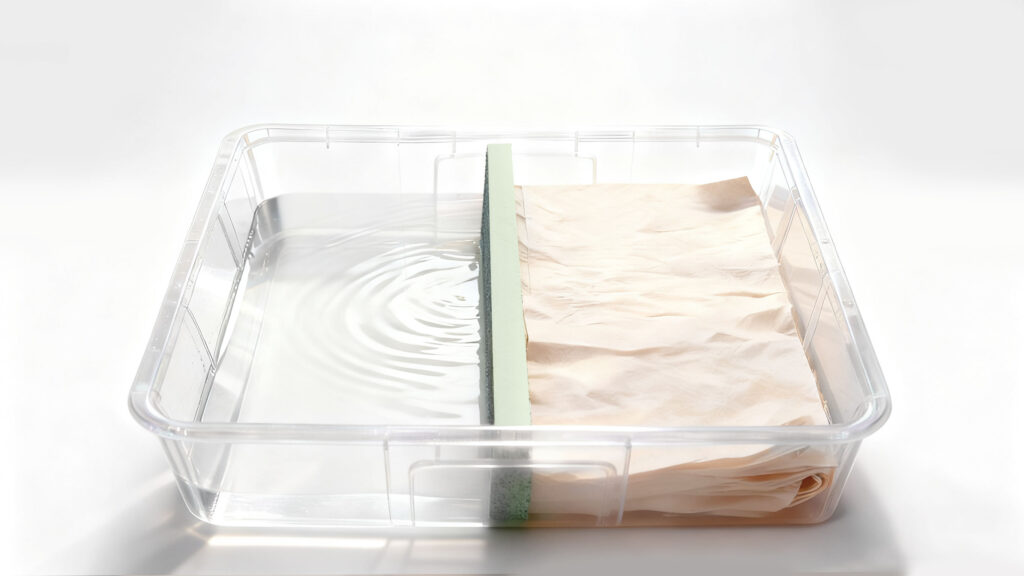
| Moisture Resistance | Excellent (<0.3% water absorption by volume per ASTM C272) | Good, but degrades (2-4% absorption) | Poor (Loses most R-value when wet) | Excellent (Closed-cell) |
| Compressive Strength | Very High (250 to 500+ kPa per CS(10%) test EN 12089) | Medium (70 to 175 kPa) | Low (Not for slab support) | High (Varies with density) |
| Longevity in Ground | 50+ years (Stable R-value even when wet) | Can compress and lose R-value if saturated | Not suitable for below-slab use | Excellent, but costly for this application |
| Installation Factors | Lightweight, easy to cut and handle. Simple, dry process. | Lightweight, can be messy with beads. Simple, dry process. | Requires full PPE; fibres can be irritating. | Requires professional applicators, curing time. |
| Cost Efficiency | Higher initial cost, but proven long-term value and performance. | Lower initial cost, but higher risk of long-term performance issues. | Moderate cost, but unsuitable for this application. | Highest initial cost, often over-specified for floors. |
Breaking Down the Data with Authority
The table tells a clear story, but the authority comes from the standards and data behind it.
Winning the War on Moisture
This is XPS’s decisive advantage. Independent testing per the ASTM C272 standard shows that XPS typically exhibits water absorption of less than 0.3% by volume. In practical terms, this means that even when buried in damp soil or subjected to a hydrostatic pressure event, an XPS board will absorb negligible amounts of water. This is critical because when insulation gets wet, its thermal performance plummets. A study by the Oak Ridge National Laboratory in the US confirmed that XPS maintained over 90% of its R-value after long-term exposure to moisture, while other materials can see a reduction of 50% or more. For a coastal project or a building with a high water table, this isn’t just a feature; it’s a form of risk mitigation.
The Strength to Support Your Project
The compressive strength of XPS, tested per standards like EN 12089, often ranges from 250 kPa to over 500 kPa. To put that in perspective, 250 kPa can support a load of over 25 metric tons per square meter. This is why XPS is specified for industrial warehouse floors, airport aprons, and roadways. It won’t compact or settle under the weight of the concrete slab and the building above it, ensuring a level, stable floor for decades. In seismic zones, this dimensional stability is equally important—it helps maintain the integrity of the sub-floor system without shifting or failing during ground movement.
Consistent Thermal Performance
The stable, closed-cell structure of XPS provides a consistent and reliable R-value of around 5 per inch. You don’t need to use a thicker product to compensate for potential performance loss over time. This predictability allows engineers and architects to make accurate energy modelling calculations, confident that the insulation in the design will be the insulation performing in the building.
When the analysis moves beyond upfront cost to consider lifetime performance, XPS polyfoam is the unambiguous leader. Its proven resistance to moisture, coupled with its high compressive strength and stable R-value, delivers unparalleled reliability and cost-effectiveness for concrete floor insulation, particularly in the high-risk, high-moisture environments faced by our global clientele.
How to Select and Install XPS Polyfoam
Specifying the right XPS product and ensuring its correct installation is the final, crucial step to unlocking its full potential. A superior product installed poorly will not deliver the promised results.
- Thickness is R-Value: The required thickness is a direct function of your local climate and building code. In cold climates like Canada, Northern Europe, or the northern US, common practice dictates 75mm to 100mm of XPS to achieve sufficient R-values (R-15 to R-20). In more temperate or warmer zones, 50mm may be adequate. Always consult and comply with local building regulations, which provide the minimum legal requirements.
- Strength for the Load: Don’t underspecify the compressive strength.
- Look for the Marks of Quality: Insist on products that carry independent certification.
A Professional Step by Step Installation Guide
Sub-base Preparation: This is the foundation of your foundation. The sub-grade must be properly compacted, level, and free of sharp protrusions, rocks, or debris. A poorly prepared base can lead to settlement and cracking in the slab above.
Vapor Barrier Placement: In most applications, especially in areas with any moisture risk, a polyethylene vapor barrier (typically 0.15 – 0.2mm thick) should be laid over the prepared sub-base. This provides a second line of defense against ground moisture vapor.
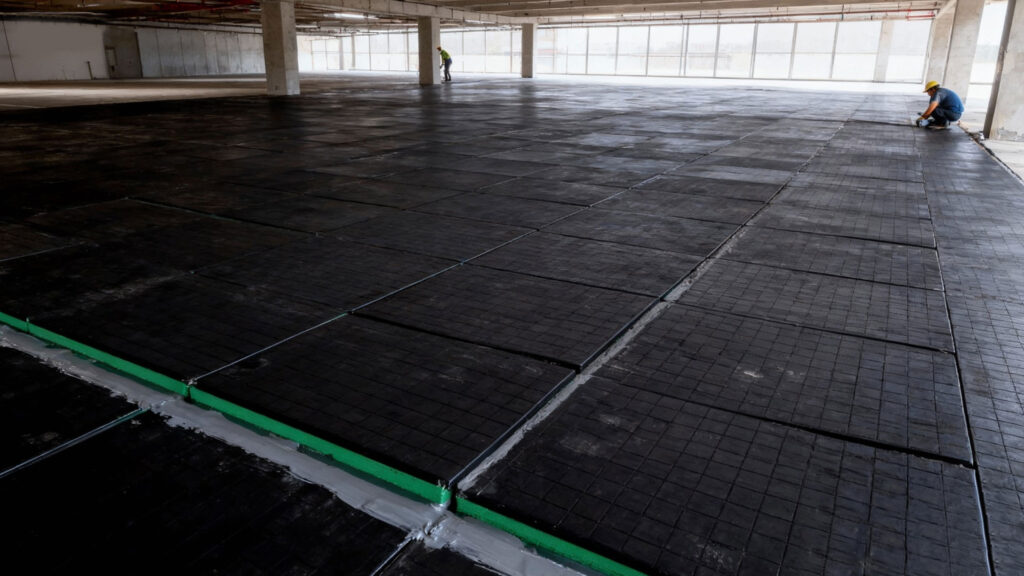
Laying XPS Boards: Place the XPS boards tightly together on the vapor barrier. Stagger the joints in a brick-like pattern to avoid continuous lines of weakness. This greatly enhances the stability of the insulation layer.
Sealing the Joints: For the best performance, seal the tongue and groove or butt joints with a manufacturer-recommended tape. This creates a continuous insulation layer that minimizes thermal bridging and acts as a secondary barrier to moisture vapor.
Pouring the Slab: Install a layer of polyethylene over the XPS as a slip membrane and to protect the insulation from the concrete mix. Then, pour the reinforced concrete slab directly on top. The steel reinforcement should be positioned correctly within the slab, not sitting on the insulation.
Localized Insight: In seismic zones, the focus should be on ensuring the concrete slab itself is adequately reinforced to act as a rigid diaphragm. The XPS layer, with its high compressive strength, provides a stable and uniform base for this diaphragm to perform effectively during seismic events.
Maximizing the return on your insulation investment hinges on correct selection and meticulous installation. Choosing the right thickness and compressive strength for the local climate and load demands, followed by precise preparation, placement, and joint-sealing, ensures the XPS layer will perform as engineered for the life of the structure.
XPS in Action Evidence and Case Studies
A prominent European logistics company was constructing a new distribution center in a region known for its cold, damp climate. The design specified a 100mm layer of 300 kPa XPS beneath the entire warehouse slab. After the first full winter of operation, their facility management team conducted an energy audit. The finding: heating energy consumption was 28% lower than in a comparable, uninsulated facility they operated elsewhere. The project manager noted the absence of the “cold floor effect,” which significantly improved working conditions and eliminated condensation on the slab surface.
Regarding moisture, the long-term performance of XPS is backed by decades of observation. The National Research Council of Canada has published studies on below-grade insulation performance, noting the critical importance of moisture resistance for maintained R-value. Their findings align with the ISO 16536 standard, which assesses the long-term thermal resistance of insulation products. XPS, due to its closed-cell structure, consistently demonstrates the ability to retain over 95% of its documented R-value even after prolonged contact with moisture, a claim that fibrous or bead-based insulations cannot make.
These aren’t isolated examples. They are demonstrations of a predictable material behavior that engineers and architects rely upon to de-risk projects in challenging environments.
The empirical evidence is clear. From quantified energy savings in industrial buildings to validated long-term performance data from independent research bodies, XPS polyfoam proves its reliability and effectiveness in real-world conditions. This track record provides builders, traders, and property owners with the confidence that they are specifying a solution that will perform as promised, protecting their investment for generations.
Core Value Summary The Wise Long Term Investment
In the world of construction, where budgets are tight and timelines tighter, it’s tempting to focus solely on the initial price tag. However, the most successful projects are those that are viewed through the lens of Total Cost of Ownership. This is the perspective that reveals the true value of XPS polyfoam for concrete floor insulation. Your choice here is not just about buying a material ; it’s about making a strategic investment in the future of the building.
More Than Warmth Its Energy Security
When you choose XPS, you are installing a permanent thermal barrier. This isn’t just about comfort; it’s about operational cost control. By drastically reducing heat loss through the slab, you are locking in lower energy bills for the life of the structure. In an era of volatile energy prices, this is a direct form of financial predictability and energy resilience for the building owner.
More Than Dryness Its Asset Protection
Concrete is durable, but it is not impervious to the damaging effects of moisture. By creating an impermeable shield with XPS, you are actively protecting the concrete slab from waterborne contaminants, freeze-thaw cycles in cold climates, and the potential for moisture-related damage to any finished floor coverings. This proactive measure safeguards the single most significant element of the building’s structure, directly preserving its long-term value and eliminating future remediation costs.
More Than Strength Its Spatial Stability
The high compressive strength of XPS is more than a number on a data sheet. It is the guarantee of a stable, level, and reliable base. It ensures that the floors in a warehouse will not rut or settle under the weight of forklifts and storage racks. It provides the solid foundation a family home needs for decades of service. This is about the fundamental integrity of the built space.

When you specify XPS, you are selecting more than insulation. You are integrating a multi-functional component that delivers lasting energy efficiency, structural asset protection, and foundational stability. It is one of the most prudent and impactful decisions you can make for the longevity and economy of any construction project.
For builders, investors, and specifiers operating in demanding global markets, the choice of XPS polyfoam is a clear and calculated one. Its documented all-around excellence in thermal performance, moisture management, and structural strength translates directly into predictable long-term performance and a superior return on investment, establishing it as the most intelligent and economical choice for insulating concrete floors.