
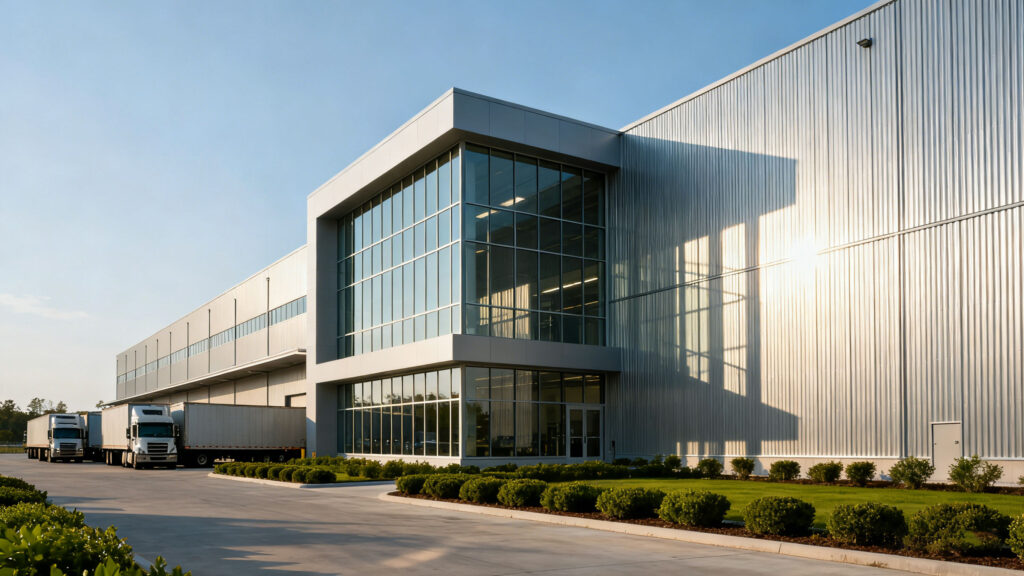
The Truth About Heavy-Duty Ground Insulation: Why XPS Outlasts Everything Else
Let me tell you about a conversation I had last month that stuck with me. A contractor from Toronto called me, frustration evident in his voice. His client’s warehouse floor was showing cracks after just two winters. The heating bills were running 40% over projections, and worse – they were starting to see moisture issues in the storage area.
“We followed all the specifications,” he kept repeating. But when we dug into the project details, the problem became clear. They’d used a budget insulation material that simply couldn’t handle the combined weight of storage racks and the constant freeze-thaw cycles.
This isn’t an unusual story. In fact, it’s why I’m writing this guide today.
The 5 Hidden Costs of Getting Ground Insulation Wrong
Most people choose insulation based on one number: the price per panel. I understand that mentality – I’m practical with my own money too. But what if that initial savings is actually the most expensive choice you can make?
Here’s what really happens when insulation fails:
- The Energy Drain Think of compromised insulation like running your air conditioning with the windows open. The Department of Energy estimates that building envelope failures account for up to 30% of energy costs in commercial structures. That’s not just an extra hundred dollars – for a large warehouse, we’re talking thousands per month literally disappearing into the ground.
- The Repair Nightmare I visited a project in Minnesota where they had to replace failed insulation under a finished warehouse floor. The project required saw-cutting the concrete, excavation, new material, and re-pouring. The final bill? $128,000 for what should have been a one-time installation.
- Business Interruption That Minnesota repair took three weeks. The business couldn’t receive shipments. Employees were redirected. The hidden costs of downtime often exceed the actual repair costs.
- The Mold Problem The EPA clearly states that damp insulation creates perfect conditions for mold growth. I’ve seen projects where entire inventory stocks were ruined because moisture traveled through compromised insulation into storage areas.
- Early Replacement Quality insulation should last the life of the building. I still see installations from the 1970s performing perfectly. But inferior materials often need replacement in 10-15 years – meaning you’re paying for the same job twice.
The pattern we’ve observed across hundreds of projects? These “hidden costs” typically exceed the initial “savings” within 5-7 years.
XPS vs EPS
I get this question all the time: “Aren’t all foam boards basically the same?”
Let me show you why they’re not.
We recently compiled data from independent laboratory tests (ASTM C578 standards) and here’s what we found:
| Performance Metric | High-Strength XPS | Standard EPS |
| Compressive Strength | 300-700+kPa | 70-150kPa |
| Water Absorption | <0.3% by volume | 2-4% by volume |
| R-Value Retention (50 yr) | Maintains >90% | Can drop to 60% |
| Initial Material Cost | Higher | Lower |
| True Lifetime Cost | Lower | Higher |
| Installation | Cuts cleanly, doesn’t crumble | Light but fragile |
| Environmental Progress | New low-GWP blowing agents | Pentane blowing agents |
You know, if you’re wondering what all that lab data really means for your project, let me break it down for you. High-strength XPS can take years of forklifts driving over it without permanently compacting. In wet conditions, it won’t break down or lose its insulating power, and fifty years from now, it will perform just like it did on day one. Now, is it the cheapest upfront? No, standard EPS wins on initial price. But when you factor in the energy savings and near-zero repair costs over decades, XPS actually ends up costing you a lot less in the long run. Sure, both are easy to install, but XPS stands up to the rough handling of a real job site much better. The important thing is that both industries are making progress on sustainability — we’re all working to provide high-performance, efficient solutions for the future. It really comes down to this: for long-term performance you can trust, the choice is clear.
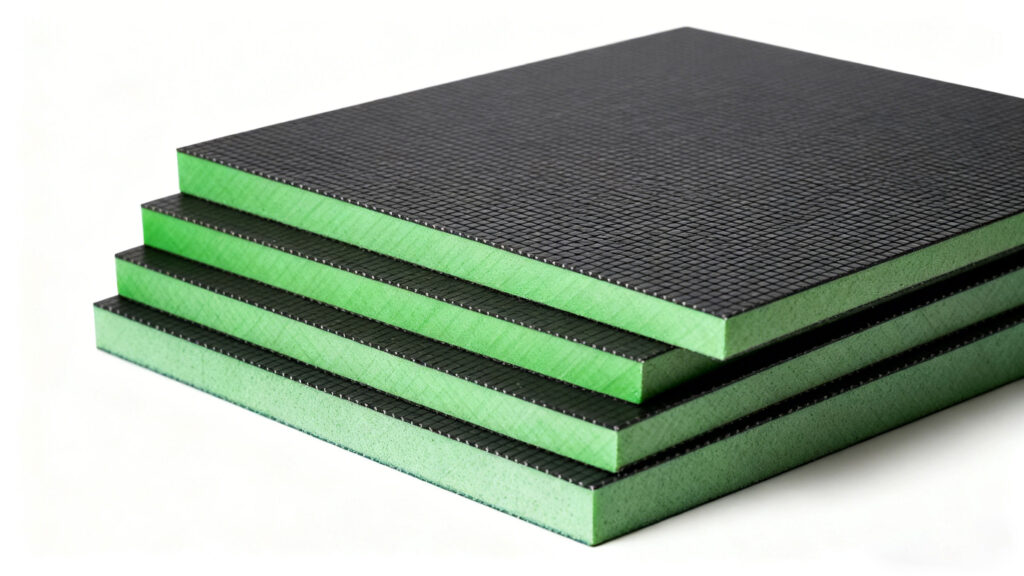
The conclusion from this data is clear: for any application where moisture or heavy loads are factors, XPS isn’t a luxury – it’s necessary.
3 Projects Where XPS Isn’t Optional
Through decades of working with engineers and architects, we’ve identified three scenarios where compromising on insulation quality guarantees problems:
Scenario 1: The Dynamic Load Environment
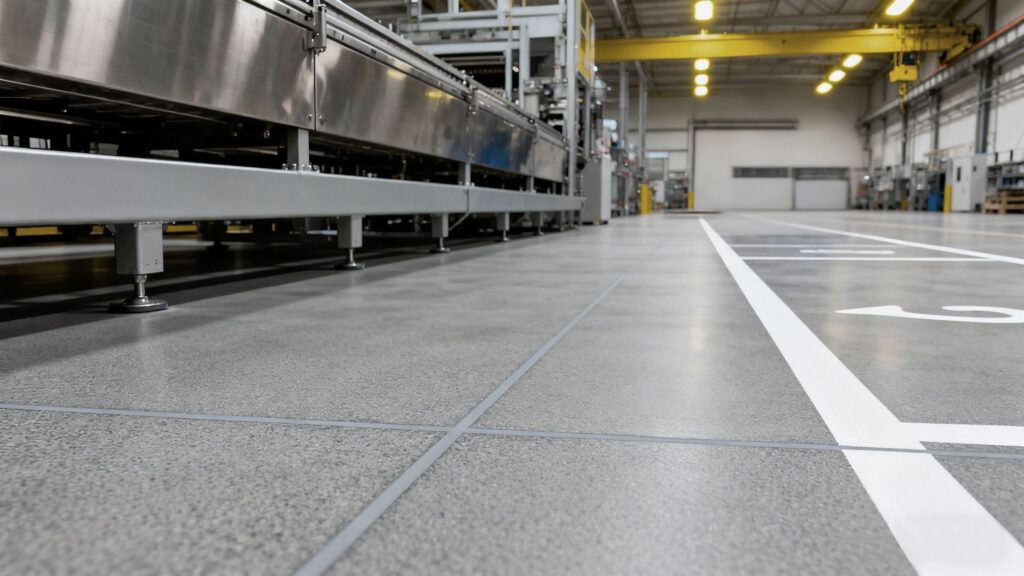
Picture a busy distribution center. Forklifts weighing several tons constantly move across the same areas. Pallet racks exert tremendous point loads. Ordinary insulation gradually compresses, leading to uneven settlement and cracks.
For these applications, we recommend XPS with compressive strength of 500kPa or higher. The molecular structure of extruded polystyrene creates a matrix that distributes weight evenly, preventing the slow compaction that plagues other materials.
Scenario 2: The Permanent Moisture Challenge
Many of our clients in coastal regions or areas with high water tables initially balk at XPS pricing. Then we show them what happens to alternative materials after prolonged ground contact.
The closed-cell structure of XPS isn’t just “water resistant” – it’s virtually impermeable. Unlike materials that absorb moisture over time, XPS maintains its dry R-value indefinitely. This is why building codes in places like Florida and the Pacific Northwest specifically mandate XPS for below-grade applications.
Let’s be honest: for heavy loads and wet sites, you need insulation that lasts. High-strength XPS foam handles the pressure, won’t absorb water, and delivers a lower lifetime cost.
Scenario 3: The Zero-Tolerance Project
Some clients simply can’t afford failures. Whether it’s a pharmaceutical clean room, a high-end data center, or simply a homeowner who wants peace of mind – the calculus changes when failure isn’t an option.
For these projects, XPS provides something priceless: certainty. The knowledge that your insulation won’t be the reason for future problems is worth the premium.
Beyond the Headlines
I have this conversation weekly, so let’s address the common concerns directly:
All XPS uses environmentally damaging blowing agents
Reality: The industry has moved dramatically toward fourth-generation blowing agents with global warming potentials 80% lower than previous formulations. Major manufacturers have largely transitioned to these improved technologies.
XPS can’t be recycled
Reality: While challenges exist, the recycling infrastructure for XPS is rapidly developing. Mechanical recycling processes can grind production scrap and clean post-consumer material for reuse in new products. Chemical recycling methods can break the polymer back to its original components. Our own recycling rates have improved 50% in three years through better collection and processing.
Manufacturing XPS is too energy-intensive
Reality: Let’s examine the complete picture.
A Life Cycle Assessment (LCA) study found that over a 50-year service life, the energy saved by XPS insulation exceeds the energy required for its production by 20-40 times. The most sustainable product isn’t necessarily the one with the lowest manufacturing footprint – it’s the one that delivers the greatest long-term efficiency.
Calculating What Really Matters: The True Cost of Ownership
Let me share how one of our clients in Chicago analyzed their options
Option A – High-Strength XPS:
Initial material cost: $12,000
20-year energy cost: $6,000 (thanks to stable thermal performance)
Repair costs: $0
Total 20-year cost: $18,000
Option B – Alternative Material:
Initial material cost: $8,000 (“saving” $4,000 initially)
20-year energy cost: $15,000 (due to performance degradation)
Year 10 replacement: $10,000
Total 20-year cost: $33,000
The math speaks for itself. The XPS solution saved them $15,000 over two decades while delivering superior performance.
While other insulations cost less upfront, high-strength XPS foam saves you long-term. It bears heavy loads, resists moisture permanently, and avoids costly future repairs.
This mirrors what we’ve seen across the industry. The initial price difference becomes irrelevant when you consider the complete financial picture.
The Bottom Line
After thirty years in this industry, I’ve learned that the cheapest initial cost often becomes the most expensive long-term decision.
Ground insulation is unique – once installed, it’s virtually impossible to replace without catastrophic expense. The choice you make during construction becomes a permanent part of your building’s performance profile.
Quality XPS isn’t an expense – it’s insurance. Insurance against rising energy costs, against unexpected repairs, against business interruptions, and against the frustration of watching your investment deteriorate prematurely.
If you’re planning a project, I encourage you to look beyond the price per panel. Consider what that insulation needs to accomplish over the next fifty years. Ask manufacturers for their independent test data. Request life cycle cost analyses. Make them prove their claims.
And if you’d like to see samples or discuss your specific application, we’re here to help. Even if you don’t choose our products, we’re committed to helping you make an informed decision – because getting this right matters to all of us in the building industry.
Here’s to building things that last.