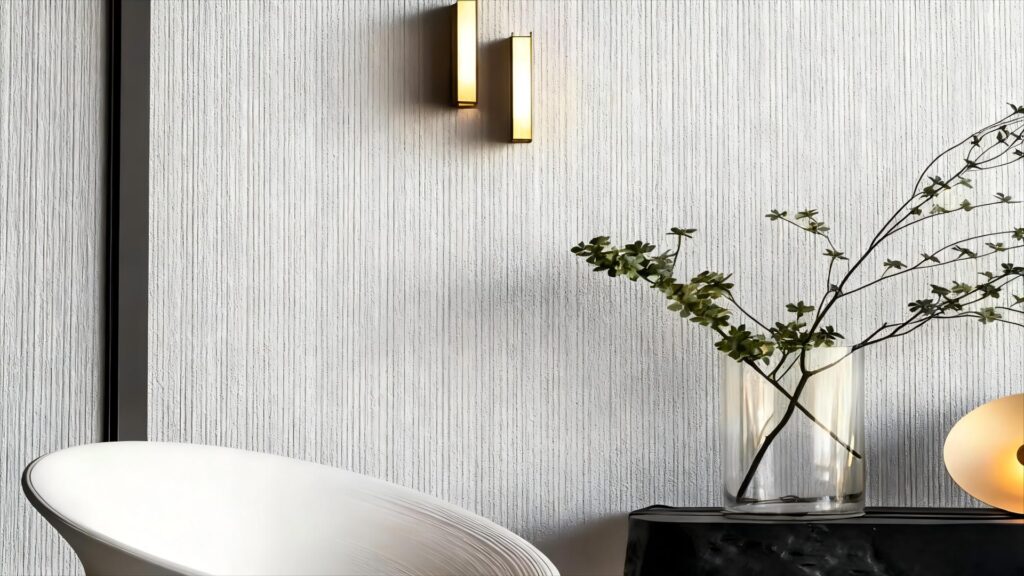
What separates a truly transformative commercial space from a merely beautiful one? Often, it’s the materials that define the experience—not just for a moment, but for years to come. For decades, the pursuit of luxury has been synonymous with heavy, traditional stone, a choice that inevitably introduces a cascade of structural compromises, scheduling uncertainties, and hidden long-term costs. But what if the very definition of luxury is shifting? A new generation of architectural solutions is reimagining what’s possible, merging the timeless, authentic appeal of natural stone with the intelligence of modern material science. This exploration isn’t about a simple alternative; it’s about understanding a fundamental upgrade that addresses the core challenges of weight, design freedom, and lifecycle value. The following insights reveal how this evolution is not only changing surfaces but also redefining the economics and possibilities of high-end commercial interiors.
The Hidden Costs of Traditional Luxury Materials
Beneath the impressive appearance of classic marble or granite surfaces lies a complex web of logistical and financial considerations that often remain unaccounted for in initial planning. While the visual appeal is undeniable, the physical reality of working with full-thickness stone introduces multiple challenges that extend far beyond the initial material cost.
The fundamental issue begins with mass. Standard stone cladding typically weighs between 28-35 kg per square meter. When applied across substantial surface areas, this creates a cumulative load that demands serious structural consideration. In many cases, building frameworks require additional reinforcement—through structural steel supports or concrete strengthening—just to accommodate the weight of the stone itself. These necessary modifications represent significant upfront costs that typically emerge only during detailed project planning, often adding weeks to project timelines and substantial unplanned expenses before installation even commences.
The installation process itself presents another layer of complexity. Working with heavy stone slabs requires specialized equipment for lifting and positioning, along with skilled labor to execute the precise placement. The traditional method involves wet mortars and meticulous leveling, creating a labor-intensive process that’s highly susceptible to weather delays and scheduling challenges. What might appear as a straightforward installation in project timelines often expands into extended construction periods, creating ripple effects across project completion dates.
Material limitations further compound these challenges. The inherent rigidity of natural stone severely restricts design possibilities, making curved surfaces and seamless transitions economically prohibitive and technically demanding. The long-term maintenance requirements also represent an ongoing investment that’s frequently underestimated. Natural stone’s porous nature demands regular sealing to maintain appearance and prevent staining, while the repair of damaged sections often involves costly color-matching and potential operational disruptions, particularly in continuously operating environments.
This comprehensive view reveals how traditional materials carry burdens that extend well beyond their initial purchase price, affecting structural engineering, project scheduling, design flexibility, and long-term maintenance budgets.
How Flexible Stone Embodies Modern Luxury
Modern luxury isn’t about showcasing excess; it’s about achieving perfection through intelligent design and seamless performance. This is where Flexible Stone shifts the entire paradigm. It delivers the timeless appeal of natural stone while solving the inherent problems of its predecessor.
Aesthetic Freedom: The Beauty Without Boundaries
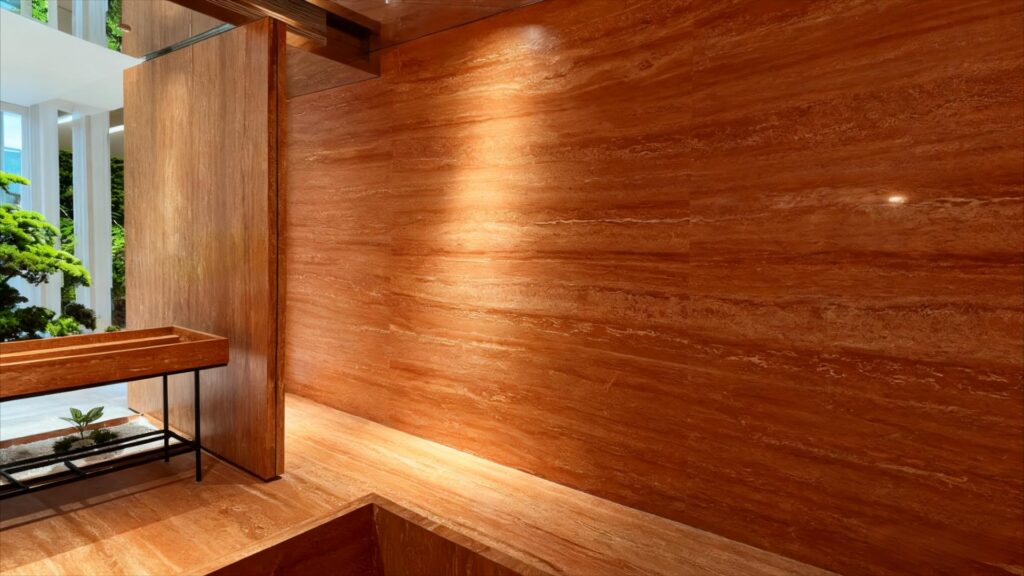
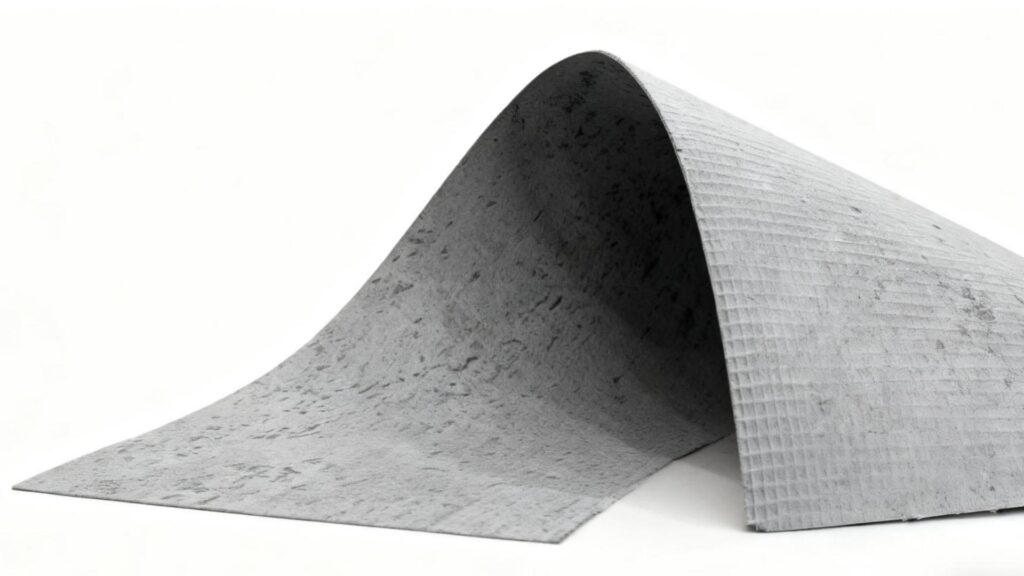
Flexible Stone starts with a real, 2.5-3mm layer of natural stone veneer, backed with advanced composite materials. This is not an imitation; it is the genuine article, but liberated. Because it is pliable, it can be seamlessly applied to curved walls, sweeping columns, and intricate ceiling features that were previously off-limits to stone. Imagine a feature wall that flows from floor to ceiling and around a corner without a single visible grout line, creating a continuous, immersive visual experience. This ability to defy traditional geometric constraints is the new hallmark of custom, high-end design.
Performance Intelligence: Engineered for Real-World Demands
This is where the engineering shines. Weighing in at only 2-4 kg per square meter, Flexible Stone reduces the load on a building’s structure by over 90% compared to traditional stone. This eliminates the need for costly structural reinforcements. But don’t let the lightness fool you. High-quality Flexible Stone possesses remarkable durability. It is resistant to impact, moisture, and temperature fluctuations, making it suitable for both interior and exterior applications. Its low maintenance requirement—typically just a simple wipe-down—translates directly into long-term operational savings for facility managers.
Economic Efficiency: The Value Beyond the Price Tag
The value of Flexible Stone is fully realized during installation. The system is designed for efficiency. Large, lightweight sheets can be installed quickly using a standardized adhesive method, significantly reducing labor time and cost. What might take a crew weeks with traditional stone can often be completed in days. This “dry” construction method is cleaner, creates less waste, and, most importantly, allows businesses to open their doors and generate revenue faster. The total cost of ownership—factoring in installation speed, reduced structural costs, and minimal maintenance—makes it an exceptionally intelligent economic choice.
The true measure of any building material lies not in laboratory specifications, but in its performance under real-world conditions. Across diverse architectural applications, Flexible Stone has demonstrated remarkable versatility, solving longstanding challenges while creating new design possibilities.
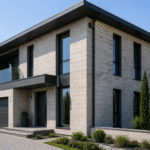
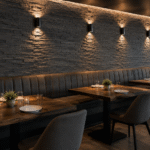
In hospitality environments, the material’s unique properties address both aesthetic and practical demands. The ability to create continuous stone surfaces without visible grout lines has proven particularly valuable in areas requiring both visual impact and stringent hygiene standards. Unlike traditional stone installations that accumulate moisture and debris in joints, these seamless applications maintain their integrity while significantly simplifying cleaning protocols. The material’s inherent flexibility also allows it to be applied to curved feature walls and columns, creating the kind of dramatic architectural statements that were previously limited by the physical constraints of solid stone.

Flexible Stone in Action Commercial Applications
The retail sector has discovered equally compelling applications. Flexible Stone provides the authentic texture and prestige of natural stone while enabling unprecedented design flexibility. We’ve documented installations where the material was precision-formed around curved display structures and integrated into custom retail fixtures—applications that would be cost-prohibitive with conventional stone. The thin profile allows for efficient shipping and faster installation timelines, crucial considerations in retail environments where project schedules directly impact revenue. The authentic stone surface consistently maintains its appearance even in high-traffic areas, demonstrating exceptional resistance to the wear that typically plagues retail spaces.
Corporate and institutional settings present another arena where Flexible Stone delivers distinctive advantages. The material brings the warmth and authenticity of natural stone to environments that must balance aesthetic appeal with practical durability. Independent testing has verified its performance in reducing sound transmission, contributing to quieter workspaces. Most notably, the surface maintains its appearance exceptionally well under conditions that would typically show wear on other materials—resisting scratches, impacts, and the constant movement of people and equipment that characterizes active workplace environments. This combination of natural aesthetics and engineered performance makes it particularly suitable for spaces that must project professionalism while standing up to rigorous daily use.
These diverse applications share a common thread: Flexible Stone consistently provides the authentic beauty of natural stone while overcoming the practical limitations that have traditionally constrained its use. From simplifying complex installations to ensuring long-term performance, the material continues to demonstrate its value across the architectural landscape.
Selecting the Partner for Your Luxury Commercial Project
Choosing Flexible Stone represents a significant advancement in building material technology, but the full benefits of this innovation can only be realized with the right manufacturing partner. The integrity of the final installation—its longevity, aesthetics, and performance—is directly tied to the expertise and reliability of the producer.
The foundation of any partnership must be a demonstrable commitment to Uncompromising Quality. This goes beyond simple assurances. A reputable manufacturer operates with a transparent quality control protocol that governs every stage, from raw stone selection to the final backing process. Batch-to-batch consistency in color and veining is critical for large-scale projects where material from multiple production runs may be used. Furthermore, legitimate quality is verified by independent, international certifications. For instance, compliance with standards like EN 1467 for natural stone ensures the material meets defined performance benchmarks for density, flexural strength, and water absorption. These documents are not merely administrative; they are a verifiable guarantee that the Flexible Stone will perform as specified in demanding commercial environments.
Equally important is a partner’s capacity for Meaningful Customization. While a diverse standard portfolio is a good starting point, true collaboration involves technical adaptability. A proficient manufacturer should be equipped to accommodate specific project requirements, which may include:
- Producing custom sheet sizes to minimize seams and material waste on-site.
- Engineering unique surface finishes, from honed matte to textured, that align with the design vision.
- Developing bespoke color blends or calibers to achieve a truly unique aesthetic.
This level of support ensures the Flexible Stone is not just a product, but a tailored component of the architectural design.
Finally, the entire value proposition depends on a Proven and Reliable Global Supply Chain. The most exquisite material is rendered useless if it fails to arrive on schedule and in flawless condition. It is essential to partner with a manufacturer that has documented experience in managing international logistics, including proper packaging, choice of shipping methods, and a thorough understanding of customs clearance procedures. The ability to provide accurate lead times and adhere to them consistently is a hallmark of a professional operation. This logistical competence protects your project timeline, mitigates risk, and ensures that the promise of Flexible Stone is delivered from the factory floor to the jobsite.
Embrace the Future of Commercial Luxury
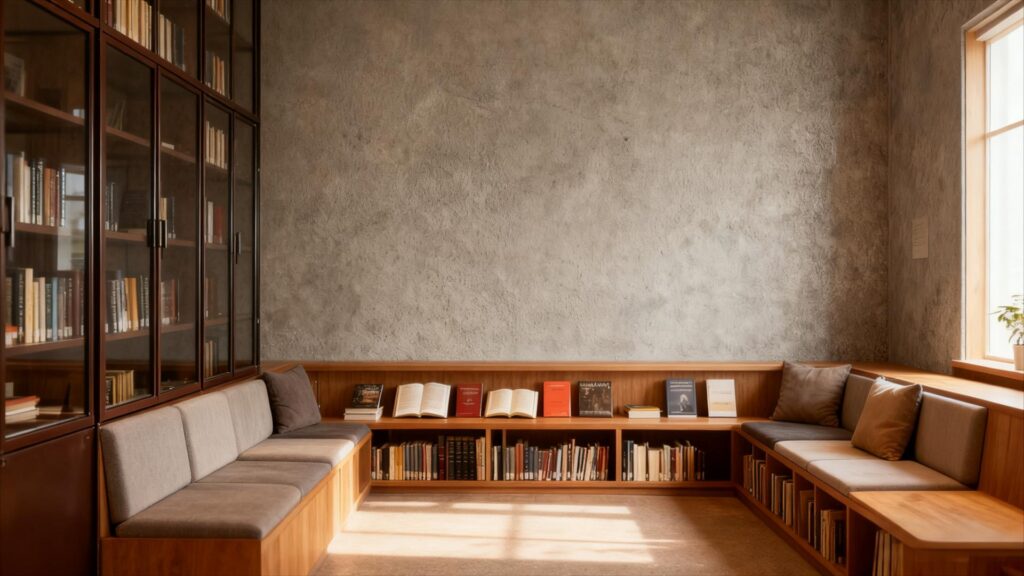
The landscape of commercial architecture is undergoing a fundamental transformation. The contemporary definition of luxury has evolved beyond mere appearance to embrace intelligent solutions that deliver authentic aesthetics alongside measurable performance and economic efficiency. This evolution is embodied in the advanced capabilities of Flexible Stone, a material that successfully bridges the gap between timeless natural beauty and the rigorous demands of modern construction.
Offering unparalleled versatility, Flexible Stone enables the creation of stunning, continuous surfaces that were previously unachievable. Its significant reduction in weight translates to simplified logistics and expanded application possibilities, while its inherent durability ensures long-term performance with minimal maintenance. The efficiency of its installation process not only accelerates project timelines but also provides a clear, compelling value proposition over the entire lifecycle of the installation.
To fully appreciate how this material can redefine the possibilities for your projects, we recommend engaging with its physical properties directly. We welcome you to evaluate its qualities through a complimentary sample kit. Experiencing the minimal weight, the authentic stone texture, and the material’s distinctive flexibility firsthand provides the most effective understanding of its potential. Taking this step allows for a practical assessment of how Flexible Stone can meet specific project requirements for durability, aesthetics, and installation efficiency, supporting informed decisions for future developments.