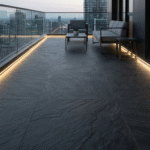

How MCM Interior Flexible Tiles Lead 2025 Interior Design Trends

Discover why MCM interior flexible tiles are defining 2025 design trends. This article explores why designers globally are choosing them—not just for their aesthetic versatility but for their unique performance. Explore their diverse applications from commercial hotels to private homes, and understand why MCM is a valuable long-term investment beyond the initial price. Read on to see how this material can transform your next project.

Table of Contents

MCM flexible tiles are leading the 2025 design trend by solving fundamental challenges in modern construction. This represents not just a material substitution, but a crucial shift toward efficient and intelligent building. Choosing MCM delivers measurable advantages: 70% lighter weight reduces logistics costs, 30% faster installation accelerates timelines, and a 10-year warranty ensures long-term reliability with low maintenance. With Duolong’s 30,000 m² automated factory and international certifications, we provide not just products, but certainty, consistency, and a competitive edge—transforming trends into your tangible project benefits.

How MCM Interior Flexible Tiles Lead 2025 Interior Design Trends

Choosing the right interior wall material for upcoming projects is more than just a design decision—it’s a balancing act between aesthetics, budget, timeline, and sustainability.At Duolong Soft Stone, we’ve worked with architects and developers across Southeast Asia and Latin America, and one question comes up again and again: How can we deliver a high-end, durable finish without the usual complications and costs?The answer lies in MCM Flexible Tiles—a material that’s redefining not just surfaces, but entire project workflows.

Why Designers Are Turning to MCM Tiles More Than Just Looks

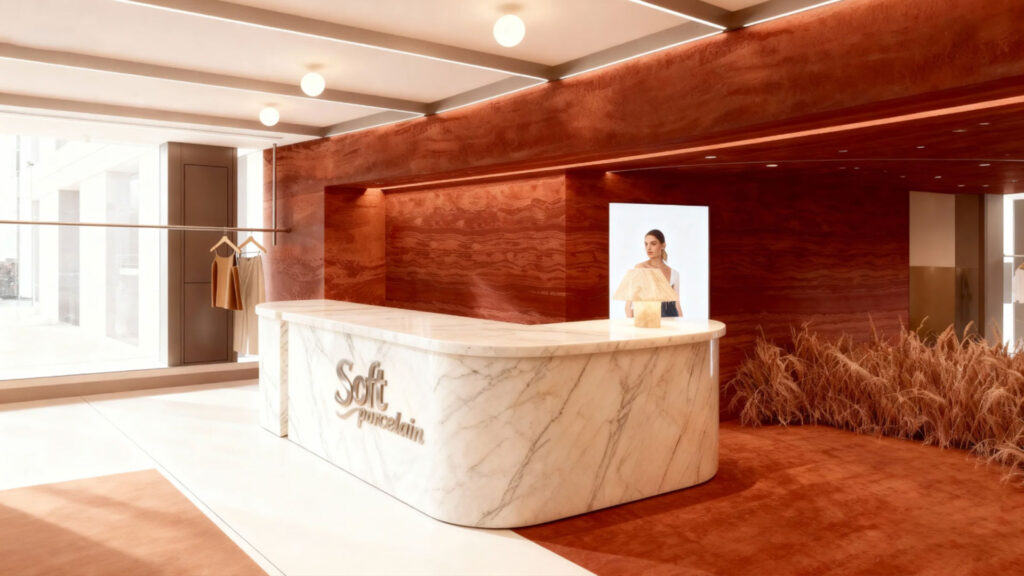
It starts with visual appeal.Our design team has created more than 50 distinct finishes—from realistic marble and wood grains to contemporary concrete and metal effects.But what truly sets MCM tiles apart is their physical flexibility.Unlike rigid ceramics, these tiles can bend to fit curved walls, arches, and columns—something we’ve seen used to stunning effect in hotel lobbies and retail spaces.

One project lead from a Singapore-based architecture firm shared:“We used Duolong’s MCM tiles on a curved feature wall that traditional tiles couldn’t handle.The consistency in color and texture across all batches eliminated the risk of visual breaks—which was crucial for the client.”

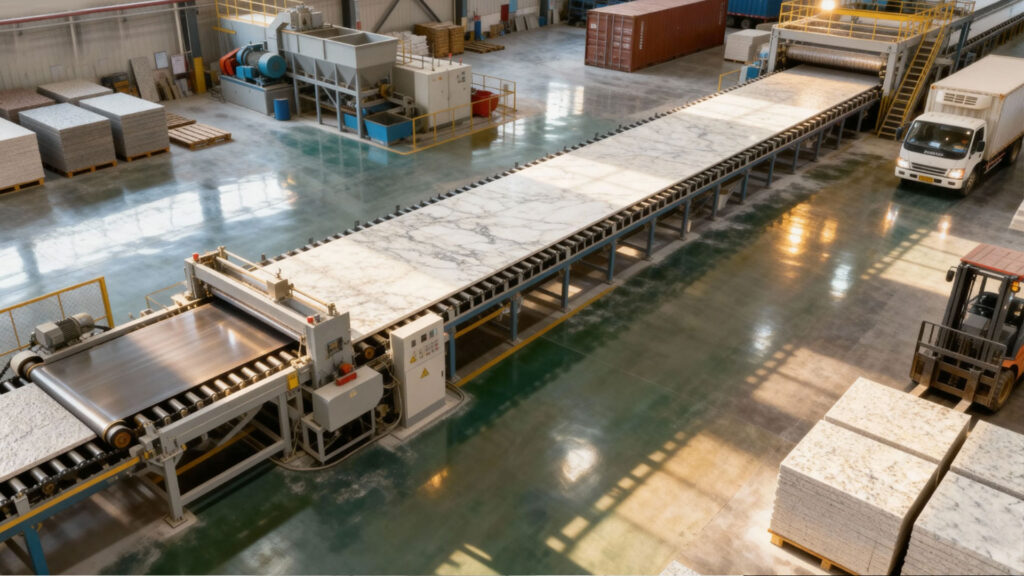
That level of consistency isn’t accidental. It’s the result of fully automated production lines that control every stage, ensuring each tile matches the next, batch after batch.

Lightweight Design, Heavyweight Savings: How MCM Cuts Costs at Every Stage.The cost benefits become obvious from the moment materials arrive on site.

Take weight, For example: A standard pallet of ceramic tiles covering 100 m² can weigh 2,000 kg or more.

The same area using Duolong MCM tiles weighs just 600 kg—a 70% reduction.

That’s not just a shipping saving—it influences everything from freight charges to on-site labor.In retrofit projects, it often means no extra structural support is needed, saving both engineering time and material costs.

Installation is also significantly faster.A three-person team can install 80–100 m² of MCM tiles per day, compared to roughly 60 m² for traditional tiles—speeding up project timelines by about 30%.In an industry where time is money, that’s a game-changer.

From Hotels to Homes Where MCM Tiles Perform

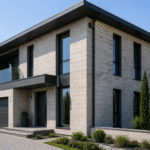
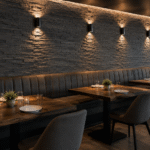
Thanks to their durability and adaptability, MCM tiles are being specified across a growing range of settings:Commercial spaces like hotels, malls, and offices benefit from their Class I fire resistance and high scratch resistance—essential for high-traffic areas.

Residential projects gain from aesthetics plus health safety: all Duolong tiles are SGS-certified for low VOC emissions, supporting better indoor air quality.

We’ve supplied tiles for everything from hospital renovations to luxury villas—each application leveraging the same core advantages: safety, durability, and design freedom.
Beyond the Price Tag MCM as a Long-Term Investment

While the upfront cost of MCM tiles is competitive with mid-range ceramics, the real value emerges over time. Their resistance to cracking, chipping, and staining translates into lower maintenance and longer service life. In fact, most of our clients report a 40–50% reduction in maintenance costs over a 10-year period compared to conventional tiles.

That’s why we back every installation with a 10-year warranty—not just as a promise, but as a commitment to durability you can count on.

Your Partner, Not Just a Supplier: The Duolong Difference

A reliable supply partner does more than deliver products—they deliver certainty. With a 30,000 m² production facility, 5 automated lines, and a monthly output capacity of 50,000 m², we’re built to handle large and complex orders without compromising on quality.

Our certifications—including ISO 9001, CE, and SGS—aren’t just badges; they’re proof of a manufacturing system designed for global standards.We also offer custom color and size options, working directly with design teams to match exact specifications.

Ideal Duolong partners are typically:

  • Large-scale developers and contractors
  • Architectural and design firms
  • Export-oriented trading companies
  • They value consistent quality, on-time delivery, and a factory partner that can scale with their growth.
  • Build Smarter for 2025 and Beyond

The shift to MCM flexible tiles isn’t just about keeping up with trends—it’s about building smarter, faster, and more sustainably.By choosing a partner like Duolong, you’re not only selecting a product;you’re investing in a solution that adds value at every stage, from shipment to installation to long-term performance.

Ready to see how MCM tiles can elevate your next project?

Contact us for samples, technical data sheets, or a consultation with our design team.
Share the Post:

Most Posts

Flexible Stone Veneer Bubbles How to Prevent

This guide turns flexible stone veneer bubbling into a problem with clear causes and clear controls. It starts with quick on-site checks to confirm what is happening, then walks through the most common triggers: moisture vapor pressure after heating, weak or dusty substrates that cause bonding failure, adhesive open-time issues that leave voids, and installation methods that trap air instead of pushing it out.
It also gives a prevention workflow that can be repeated on different jobs: wall acceptance checks before starting, practical rules for adhesive coverage and timing, a reliable rolling and pressure sequence, and post-install curing protection during the first 24–72 hours. The last part helps reduce purchasing risk by explaining what product details actually matter for performance, such as backing stability, batch consistency for large areas, and packaging that prevents moisture pickup and curling during transport. It finishes with supplier questions that separate “material sellers” from partners who can support a complete installation system.

Flexible Stone Panels Climate Selection Gui

This article gives a clear way to choose flexible stone panels based on climate, not marketing photos. It shows what typically goes wrong in different regions—edge lift and waviness in heat, freeze–thaw debonding in cold areas, and trapped moisture with mold risk in humid climates—and what decisions prevent those failures. It also lays out what should be requested before buying: product data, recommended substrates, adhesive and primer pairing, installation condition limits, and joint/edge detailing guidance for corners, terminations, and openings. That information is what turns a “stone-look sheet” into a predictable wall finish. It is especially useful for exterior facades, commercial rollouts, and multi-location projects where consistency, low claims, and repeatable installation matter more than a small difference in unit price.

Flexible Stone Veneer waterproofing tips for humid climates

This piece is meant to be practical, not theoretical. It helps you spot the failure patterns that cost the most in humid and coastal markets—blistering, hollow areas, edge lifting, seam leakage, mold staining, white haze/efflorescence, and uneven dark marks after rain—and connect each symptom to the most likely moisture route.
You will get a simple on-site troubleshooting method (“location + timing”) to separate rain intrusion from vapor drive, trapped substrate moisture, and condensation. From there, it turns the usual “do better waterproofing” advice into specific execution points: what a stable substrate looks like, why primer changes bond reliability, why spot-bonding creates hidden cavities, how to manage open time and curing protection, and which seams and terminations deserve extra attention. It also shows how to write adhesive and installation requirements into quotes, guides, and records so standards are easier to enforce and disputes are easier to avoid.

Flexible Stone Panels Los Angeles Modern Wall Upgrade

This article is meant to save time and prevent expensive surprises. It breaks down where flexible stone-style panels work well in LA (feature walls, retail/hospitality interiors, certain kitchens and corridors) and where they can go wrong if you treat them like a one-size-fits-all product (wet zones and exterior conditions). It also explains why LA quotes vary so much—access rules, wall prep, corner and cutout counts, after-hours work, staging limits, and waste/reorder planning—so you can compare bids on the same scope instead of just looking at a per‑square‑foot number.
You’ll also get a practical buying checklist: what specs should be stated clearly, what to ask about batch consistency, how to think about samples under real lighting, what “good packaging” looks like, and which installation details tend to cause callbacks (edges, penetrations, moisture, cure time). It’s written for decisions that have to hold up on site, not just on paper.

2026 Top 5 Flexible Stone Manufacturers for Commercial Projects

This guide helps turn flexible stone sourcing into a decision that can be defended on cost, schedule, and finish quality. You’ll get a practical comparison framework across five common market options, including natural stone veneer sheets and MCM-style flexible cladding, with clear notes on where each category fits: luxury, rollout standardization, fast renovation, or design-signature applications. It highlights what typically causes procurement pain in real jobs—batch mismatch, incomplete shipments, inconsistent documentation, and unclear installation methods—and shows what to request before placing an order. Use it to shortlist suppliers faster, align expectations between design and construction teams, and reduce on-site sorting and rework. If the goal is to deliver a consistent stone look across multiple locations, phases, or lighting conditions, the takeaways here help you specify the right product type and the right supplier profile from the start.

Get The Quote!