
Flexible Stone Tiles Lightweight Wall Cladding
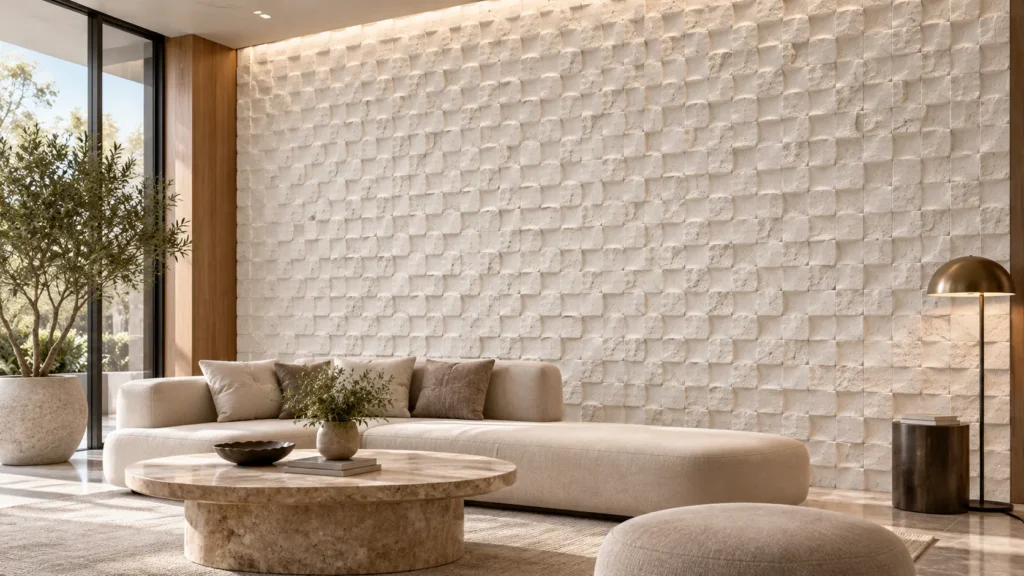
Duolong Flexible Stone Tile Production
Duolong focuses on the development and production of Flexible Stone Tiles for architectural wall decoration and renovation projects. Instead of treating flexible stone as a simple decorative sheet, we work around how the material will actually be selected, cut, matched and installed in real projects.
Our product range covers different stone-inspired surfaces, including slate, sandstone, travertine, cement texture and other natural-looking finishes. Different colors, surface depths and panel formats are available so buyers can select products according to the design style, wall size and installation conditions of each project.
During product development, we pay close attention to the balance between surface appearance and practical handling. A good flexible stone tile should not only look realistic in photos. It also needs to maintain a clear texture after cutting, fit naturally around wall edges and keep a consistent visual effect when several panels are installed together.
For larger projects, we can work from wall dimensions, reference images or project drawings to help confirm suitable formats and quantities. This is useful for contractors and project buyers who need to plan material use before installation starts.
We also maintain a broad sample range for different textures and color directions. Buyers can compare finishes before selecting a product instead of relying only on catalog images. For repeat orders, previous product information can be referenced to make later project coordination easier.
Duolong works with flexible stone as a practical building material. Our focus is on making product selection clearer, reducing unnecessary mistakes during purchasing and helping customers move more smoothly from sample confirmation to real project use.
Products
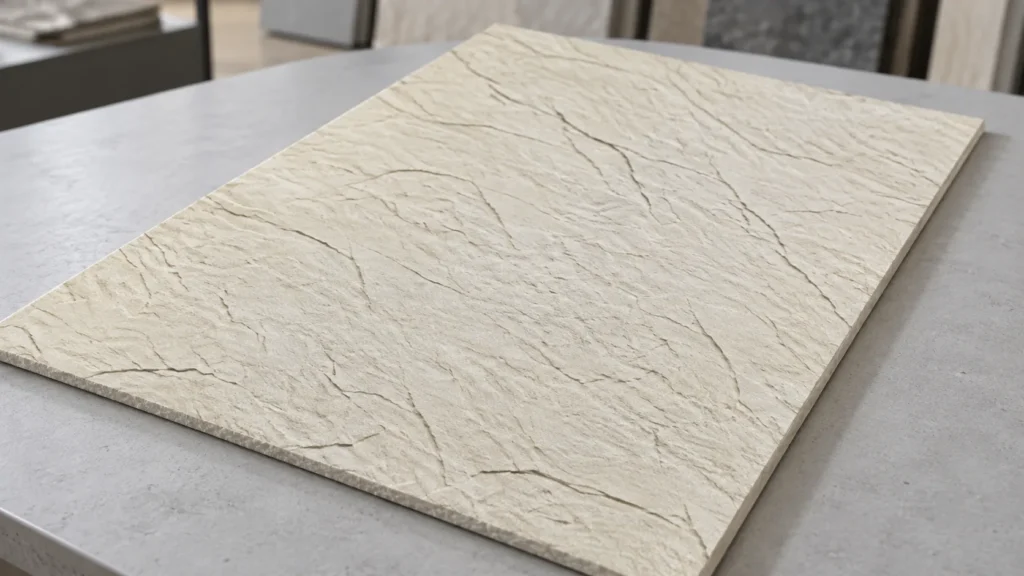
Beige Sandstone Texture Flexible Stone Tiles
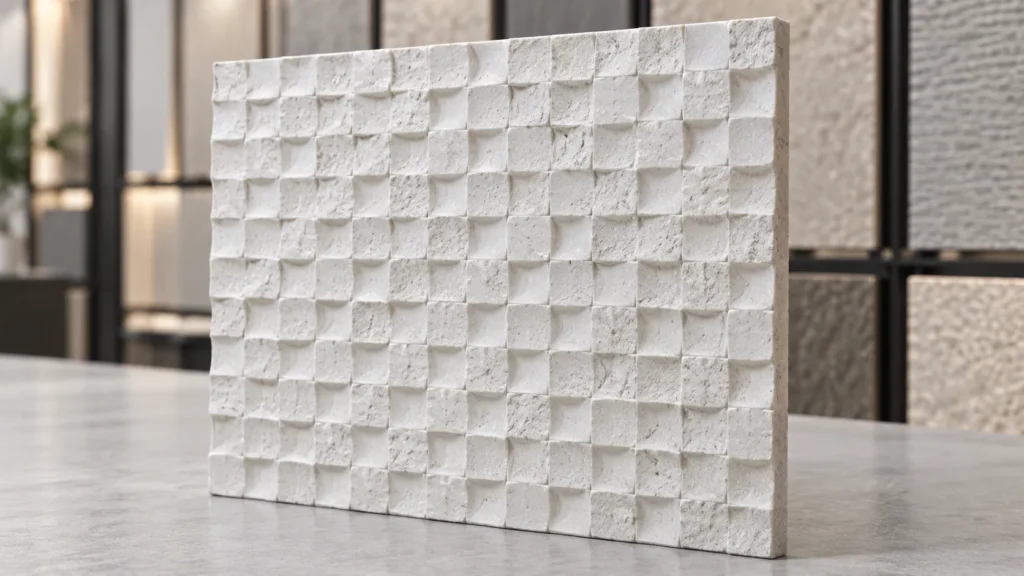
Ivory White 3D Grid Flexible Stone Tiles
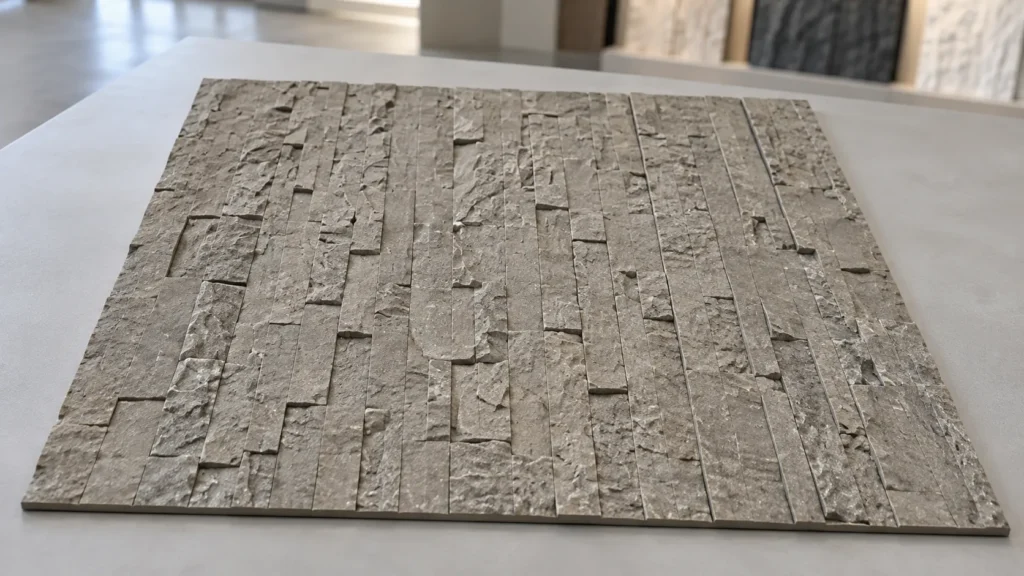
Warm Gray Stacked Stone Flexible Stone Tiles
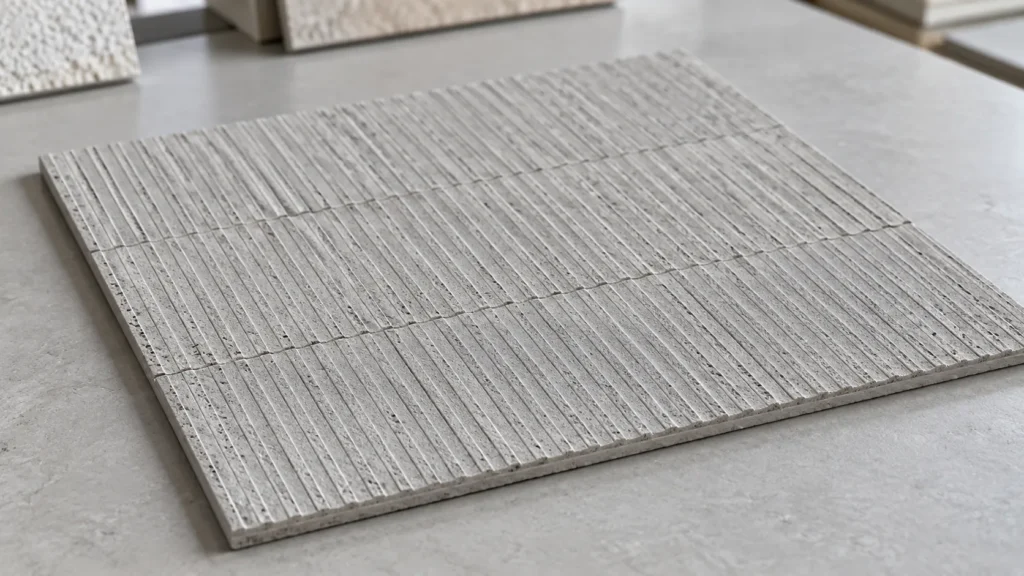
Light Gray Linear Groove Flexible Stone Tiles
Our Advantages


Application-Focused Product Development
Our flexible stone products are developed around actual installation conditions rather than appearance alone. During product selection and development, we consider cutting, edge treatment, wall corners, joint layout and the final visual effect after installation. This makes the product easier for contractors and project buyers to use in real construction.
Strong Texture Development Capability
We continue to develop different stone-inspired surfaces, including slate, sandstone, travertine, cement and other textured finishes. Instead of depending on only a few standard patterns, we provide more choices in color, surface depth and texture direction, which helps distributors build a wider product range for different customer needs.
Practical Panel Format Planning
Panel size has a direct effect on cutting waste, joint layout and installation efficiency. We can discuss suitable panel formats according to wall dimensions and project conditions, helping buyers avoid unnecessary small cuts or awkward joint positions. This is especially useful for larger wall areas and repeated installation sections.
Project Detail Review
For larger projects, we can review wall dimensions, reference images, layout drawings or basic project information before the order is confirmed. This helps identify possible issues earlier and makes it easier to match the right texture, format and quantity to the actual installation area.
why choose us

More Complete Product Range
Our flexible stone collection includes different stone textures, color directions and surface styles, giving buyers more options when preparing product lines or project selections. Instead of relying on only a few standard designs, customers can compare different finishes according to local preferences, architectural style and wall application. This makes it easier for distributors to build a more complete catalog and gives project buyers more flexibility during material selection.
Easier Product Comparison
Different flexible stone products can look similar in photos but perform differently in actual projects. We help buyers compare texture depth, color tone, panel format and final wall appearance so the decision is not based only on one catalog image. This makes the selection process clearer, especially when several similar products are being considered for the same project.
Better Order Coordination
Large building material orders usually involve more details than quantity and price. Product model, color, dimensions, order quantity and project requirements need to stay consistent from confirmation to production. We keep these details organized before production begins, helping reduce unnecessary changes and repeated confirmation during the order process.
Practical Material Recommendations
We do not simply recommend the same flexible stone for every customer. Different wall areas, architectural styles and finished effects may require different textures or formats. By understanding how the material will be used, we can help buyers narrow down the available options and avoid choosing a product that looks suitable in a sample but does not match the actual project.
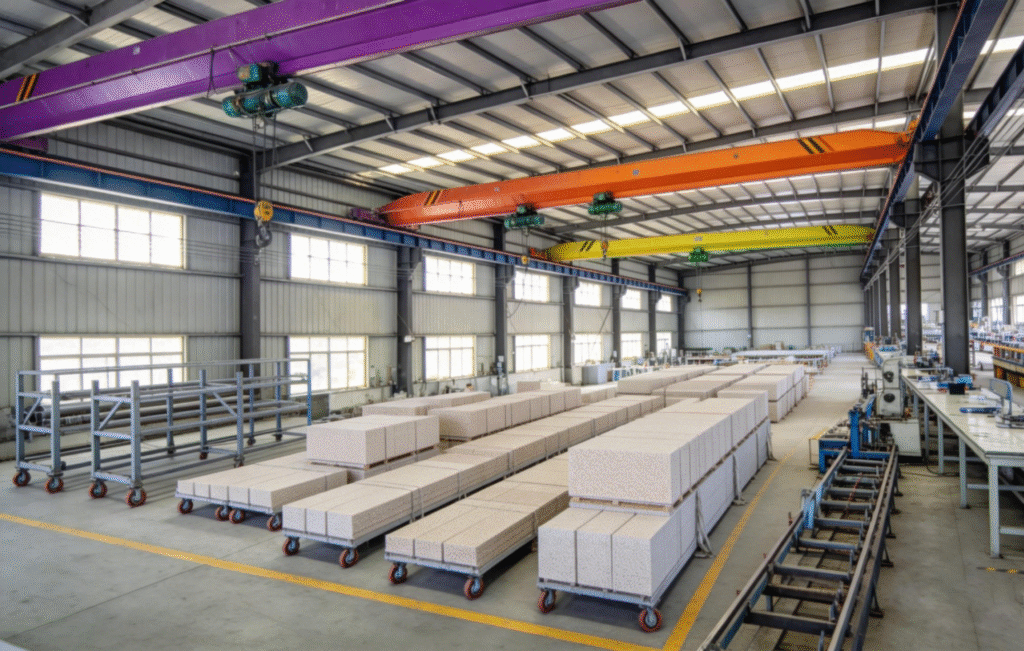
Support for Repeat Purchasing
Repeat orders are common for distributors and long-term construction projects. Previous product information can be referenced when customers return for the same series or continue an unfinished project. This saves time during later purchasing and makes it easier to keep the product selection consistent without restarting the entire confirmation process.
Clear Communication During Projects
Questions often appear after a project has already started, especially around quantity, layout, product selection or installation details. Our team keeps communication practical and focused on the actual issue instead of giving general answers. This helps contractors and buyers make faster decisions when changes happen on site.
Flexible Stone Product Focus
Flexible stone is one of the product categories we work with regularly, so our team understands the common concerns buyers have before ordering, including texture selection, panel format, installation use and project matching. This product focus allows us to provide more useful information during the purchasing process rather than treating flexible stone as just another item in a large mixed catalog
FAQ
Are Flexible Stone Tiles suitable for large wall areas?
Yes. Large wall areas can use flexible stone tiles, but panel layout, joint direction and batch matching should be planned before installation to keep the finished surface consistent.
How should Flexible Stone Tiles be stored before installation?
Keep the tiles flat, dry and protected from direct rain or excessive pressure. Avoid long-term folding or uneven stacking, especially before the material reaches normal installation temperature.
Do Flexible Stone Tiles require expansion joints?
This depends on the wall size, substrate and building movement. Existing structural or movement joints should not normally be covered without proper treatment.
Can Flexible Stone Tiles be used in humid areas?
They can be used in some humid environments, but the substrate, adhesive and edge treatment must be suitable for moisture exposure. The wall should not have unresolved water leakage before installation.
How much waste should be allowed for Flexible Stone Tiles?
Simple flat walls usually require less extra material, while projects with many corners, windows and irregular shapes need more allowance. Buyers should calculate waste according to the actual wall layout rather than using one fixed percentage.
Can different Flexible Stone Tile textures be combined on one project?
Yes. Different textures or colors can be combined to create zoning or feature areas, but the panel size, joint arrangement and overall color relationship should be confirmed before installation.
What causes uneven joints between Flexible Stone Tiles?
Common causes include inaccurate wall measurement, uneven substrates, inconsistent cutting and poor layout planning. Establishing reference lines before installation usually makes the final joints easier to control.
How should damaged Flexible Stone Tiles be replaced?
The damaged piece can normally be removed and replaced individually if the surrounding wall remains stable. Keeping several spare tiles from the original batch makes future repairs easier to match.
What should be checked after Flexible Stone Tile installation?
Check panel alignment, edges, joints, bonding areas and visible adhesive marks. Problems are easier to correct during the early stage than after the wall has fully set.
What information should buyers prepare before ordering Flexible Stone Tiles?
Prepare the wall area, preferred texture, panel size, estimated quantity and basic installation conditions. Photos or drawings are useful when the wall contains many corners, openings or special details.
Transaction Process

Inquiry and requirement confirmation
Confirm application (interior/exterior), sizes, finishes/colors, quantity, destination, and any accessory needs. Align on technical requirements such as substrate condition, climate exposure, and curved-surface needs.
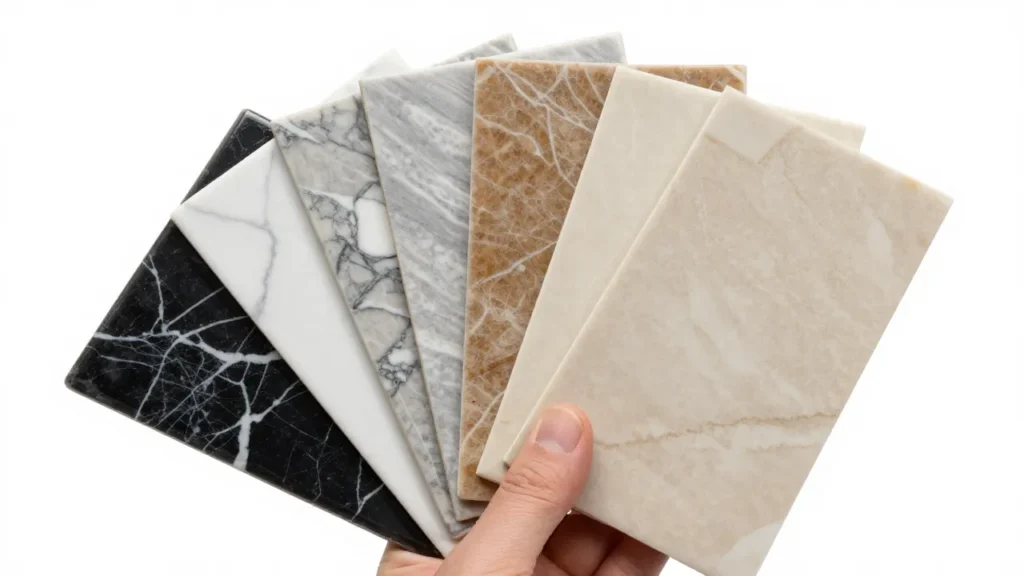
Quotation, samples, and approval
Issue a formal quotation with product options, lead time, and Incoterms. Provide samples for color/texture confirmation. Finalize specifications based on approved samples as the acceptance benchmark.

Order placement, payment, and production
Confirm the order via Proforma Invoice (PI), arrange the agreed payment, and schedule production. Maintain batch control and quality inspection during manufacturing and pre-shipment packing checks.
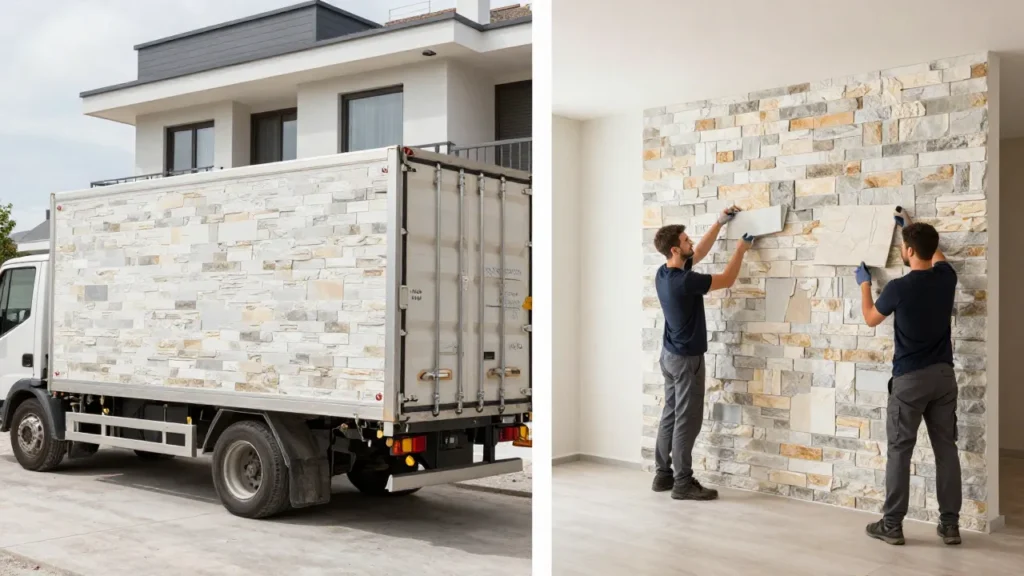
Shipment, documents, and after-sales support
Arrange shipping (FCL/LCL/air), provide export documents (invoice, packing list, B/L or AWB, and other required certificates), support customs clearance coordination, and handle receiving inspection, claims, replacements, and installation support.
Table of Contents
Flexible Stone Tiles for Commercial Wall Renovation
Commercial renovation projects often have one problem in common: the existing building was not designed around the new finish. Walls may already contain paint, plaster, old tiles, repaired areas or uneven sections, while the project schedule usually leaves little room for major structural work. This is where flexible stone tiles can become useful as a lightweight wall cladding option.
Unlike heavy stone slabs, flexible stone tiles are easier to move through finished buildings. Contractors working in hotels, offices, retail stores or restaurants often need to carry materials through elevators, narrow corridors or completed interior areas. Reducing the weight and size of individual wall pieces can make daily handling much easier.
The condition of the existing wall still matters. A lightweight material does not mean the surface can be installed directly over loose paint, damaged plaster or damp walls. Before installation begins, contractors should check whether the base is stable, clean and reasonably flat. Areas with moisture or hollow plaster should be repaired first.
One practical advantage of flexible stone tiles is the ability to cut around existing building details. Renovation walls may include sockets, door frames, columns, air-conditioning openings and irregular corners. A material that can be adjusted on site gives installers more flexibility when dealing with these areas.
The visual result also depends on planning. Stone-style surfaces can look very different when installed across a large wall compared with a small sample. Contractors should lay out several tiles before fixing them permanently, especially when the surface includes noticeable color or texture variation.
Lighting should also be considered. A warm hotel lobby can make beige and gray finishes appear softer, while bright retail lighting can make the same surface look more contrast-heavy. For this reason, samples should ideally be checked in conditions similar to the final project.
Another issue is the transition between old and new surfaces. Floor lines, ceilings, door edges and corners should be planned before installation starts. Small details around these areas often have more influence on the final appearance than the center of the wall.
For project buyers, flexible stone tiles are not simply a lighter version of stone. Their real value appears when the project requires easier handling, simpler cutting and a decorative stone finish without adding unnecessary weight to the existing wall.
A successful renovation still depends on preparation. The best results usually come from matching the material, substrate, adhesive and installation sequence before work begins rather than trying to solve problems after the tiles are already on the wall.
Flexible Stone Tiles for Exterior Wall Cladding Projects
Exterior wall materials have to deal with conditions that do not exist inside a building. Sunlight, rain, temperature changes, wind and moisture all affect the wall system over time. When flexible stone tiles are selected for exterior wall cladding, the panel itself is only one part of the decision.
The existing wall should be checked first. Loose render, old paint, cracks and water penetration need to be handled before any decorative material is installed. Covering an unstable wall with a new finish may improve the appearance temporarily, but it does not remove the original problem.
Adhesive selection is another important point. Exterior walls usually require products designed for stronger environmental exposure. The correct adhesive depends on the substrate, local climate and specific flexible stone product being used. Contractors should avoid using an interior adhesive simply because it worked on another project.
Wall edges also require attention. Window openings, parapets, corners and roof connections are common areas where water can enter. Proper finishing around these locations is more important than making the center of the wall look perfect.
Flexible stone tiles can be useful on exterior projects because of their relatively low weight. This can make installation easier on buildings where heavy stone systems would require additional structural support or lifting equipment. It can also reduce the amount of heavy material that needs to be moved around scaffolding or elevated work areas.
Color planning is especially important outdoors. Natural daylight makes differences between panels easier to see. If one large elevation is divided across different production batches, even small color changes may become noticeable. Using material from the same batch across one visible wall area can help create a more consistent result.
The surface texture should also match the scale of the building. Strong slate or rough stone textures can work well on larger façades, while very detailed patterns may look too busy when used across an entire building. Samples should be viewed from several meters away, not only held close to the eye.
Cutting waste should be included in the order quantity. Exterior walls often contain windows, corners, columns and irregular edges, which means the real material requirement is usually higher than the measured wall area.
Flexible stone tiles can simplify some parts of exterior wall cladding, but they still need to be treated as part of a complete system. Good preparation, correct adhesive, sensible layout and careful edge treatment are what determine whether the finished wall performs well after installation.
What Wholesale Buyers Should Check When Sourcing Flexible Stone Tiles
Wholesale buyers often receive several flexible stone tile quotations that look similar on paper. The same size, similar colors and similar photos can make products appear almost identical, but the differences usually become clearer once the samples are handled and installed.
The first thing to inspect is the surface. A stone texture should look natural at close range and from a distance. Repeated patterns, overly smooth areas or artificial-looking color transitions can become much more obvious when several tiles are installed together.
Thickness should also be checked across more than one sample. One piece may look acceptable, but buyers should compare several panels from the same batch to see whether the material remains reasonably consistent.
The edge is another useful indicator. Straight cutting, clean corners and an even profile make installation easier, especially when tiles are placed close together. Poor edges often create extra trimming work on site.
Flexibility should be tested realistically. A flexible stone tile does not need to behave like fabric. The material should allow practical adjustment without looking excessively soft or unstable. Buyers should be careful when samples are bent dramatically only for marketing photographs because this may not represent normal installation use.
The back of the tile also deserves attention. It affects how the material handles during cutting and bonding. A buyer should look for obvious separation, weak areas or irregular backing rather than focusing only on the decorative face.
For wholesale orders, packing should be tested as part of the product. Tiles may be moved from the factory to a port, loaded into a container, unloaded into a warehouse and transported again to a customer. Corners and surfaces need enough protection to survive these steps.
Product codes should be clear. A distributor carrying several gray, beige or slate-style products needs a way to identify each one accurately. Simple descriptions such as “gray stone” are not enough when repeat orders are placed months later.
Buyers should also ask how repeat orders are handled. Decorative materials can show small differences between production runs, so keeping product references and approved samples can make future purchasing easier.
The best way to evaluate flexible stone tiles is to treat the sample like a real product. Cut it, compare several pieces, check the backing, examine the edges and place the material under different lighting conditions.
For wholesale buyers, the lowest price is only useful if the product can be sold, installed and reordered without creating unnecessary complaints. Practical consistency is usually more valuable than a sample that simply looks attractive in a catalog.
Flexible Stone Tiles Installation Planning for Large Wall Areas
Installing flexible stone tiles across a large wall requires more planning than working with a small decorative section. Minor layout mistakes that are barely noticeable on a sample wall can become very obvious when repeated across hundreds of square meters.
The first step is accurate wall measurement. Contractors should record the total area but also note windows, doors, corners, columns and other openings. These details affect cutting requirements and can change the amount of material needed.
After measurement, the wall should be divided into practical installation sections. Starting from one corner and continuing without a layout plan can lead to narrow pieces or uneven joints when the work reaches the opposite end.
Reference lines are useful, especially on tall or wide walls. They help installers keep rows level and prevent small alignment errors from building up over several meters.
Before applying adhesive, several flexible stone tiles should be placed together on the floor or against the wall. This gives the contractor a chance to check color variation and texture direction. Panels with stronger patterns can then be distributed more naturally across the wall.
The substrate needs to be checked carefully. Flexible stone follows the surface beneath it more closely than thick stone cladding. Large bumps, depressions or damaged sections can remain visible after installation if they are not corrected first.
Adhesive coverage should be consistent. Applying too little can create weak areas, while excessive adhesive can make alignment more difficult and increase cleanup work around edges.
Cutting should also be planned. Instead of making every piece individually during installation, contractors can identify repeated dimensions around windows or wall ends and prepare several pieces together. This can improve speed and reduce errors.
Corners are another area where decisions should be made in advance. Depending on the project, flexible stone tiles may be wrapped around a suitable radius, cut at the corner or finished with another edge detail. The same approach should be used consistently across the project.
Once installation begins, completed sections should be checked regularly. Waiting until the entire wall is finished before noticing alignment or color issues can create unnecessary rework.
For large wall areas, installation speed comes from preparation rather than rushing. A clear layout, prepared substrate and organized cutting process usually save more time than trying to install panels as quickly as possible.
Flexible stone tiles are relatively easy to handle, but good planning is what turns that advantage into a clean finished wall.
Flexible Stone Tiles Compared with Traditional Wall Materials
Choosing wall cladding usually involves more than comparing appearance. Weight, installation, substrate condition, transportation and future maintenance can all influence which material makes the most sense for a project.
Traditional natural stone provides a solid and familiar finish, but it is heavy and often requires more demanding installation methods. Large slabs may need stronger support, lifting equipment and experienced stone installers.
Flexible stone tiles approach the same visual direction differently. They use a thinner and lighter format, making them easier to handle on many wall projects. This can be useful in renovation work where adding a heavy finish to an existing wall is not ideal.
Ceramic tiles are another common option. They are widely available and familiar to contractors, but their rigid structure can make cutting around irregular architectural details more time-consuming. Flexible stone can offer more freedom around certain corners and shaped surfaces.
Paint and decorative coatings are easier to apply but do not provide the same physical texture. For projects that want visible stone character rather than a flat colored wall, flexible stone tiles can create a stronger surface effect.
WPC wall panels are also used in decorative projects, especially where linear or wood-style finishes are preferred. Their visual language is different from stone surfaces, so the choice usually depends on the design direction rather than one product being universally better.
Weight is one of the clearest differences. Flexible stone tiles are easier to carry and move around a project compared with heavy stone. This can reduce handling difficulty, especially on upper floors or in buildings with limited access.
However, lightweight does not mean maintenance-free or suitable for every wall. The substrate still needs to be stable, and the correct adhesive must be selected for the environment.
Durability should also be considered according to the actual application. A decorative wall inside a hotel has different requirements from a high-impact area or an exposed exterior façade.
Cost comparison should include more than the purchase price. Transportation, labor, cutting, installation tools and structural requirements can all change the total project cost.
For contractors and project buyers, the useful question is not whether flexible stone tiles are “better” than traditional materials. The real question is whether their weight, texture, installation method and finished appearance fit the specific project better.
That comparison leads to a more realistic purchasing decision than choosing material based only on catalog photos or square-meter price.
Flexible Stone Tiles in Hot and Humid Building Projects
Hot and humid climates create different challenges for wall materials. High temperatures, frequent rainfall, moisture and strong sunlight can affect not only the decorative surface but also the wall beneath it and the adhesive used during installation.
Flexible stone tiles can be used in many warm-climate projects, but proper preparation becomes especially important in these environments.
The wall should be checked for moisture before installation. If water is entering through cracks, roof edges or poorly sealed openings, covering the area with new cladding will not solve the problem. The source of the moisture should be repaired first.
Drying time also matters. In humid weather, walls and adhesives may take longer to reach the correct condition for installation. Contractors should avoid rushing the process simply to meet a daily installation target.
Exterior walls exposed to direct sunlight can become much hotter than the surrounding air. This means the adhesive and wall system need to tolerate repeated temperature changes during the day.
Light and dark flexible stone colors can also behave differently visually in strong sunlight. Dark surfaces create a heavier appearance and may show dust or water marks more clearly, while light finishes can make large façades look brighter.
Rainfall affects edge details as well. Window openings, parapets and horizontal joints should be designed so water does not remain trapped behind the decorative surface.
For tropical projects, storage at the jobsite is another practical issue. Flexible stone tiles should be kept in a dry covered area rather than left exposed to rain or direct outdoor conditions before installation.
Contractors should also consider ventilation and wall condition on interior projects. Hotels, restaurants and commercial spaces in humid regions may have air-conditioned interiors but still experience moisture near entrances or exterior walls.
Sample testing is useful when the project environment is unusual. A small installation section can show how the material, substrate and adhesive work together before the full wall is completed.
The lightweight nature of flexible stone tiles can be helpful in these markets because material is easier to move across large sites without heavy lifting equipment. However, the installation system still needs to match the climate.
In hot and humid projects, long-term performance comes from understanding water, heat and the existing wall—not from relying on the decorative panel alone.
Flexible Stone Tiles for Hotel, Retail and Office Interiors
Commercial interiors need wall materials that work visually but also fit the construction schedule. Hotels, shops and offices often renovate within limited time periods, and the installation team may need to work around finished floors, furniture, lighting and other trades.
Flexible stone tiles can be useful in these environments because they create a textured stone appearance without requiring the same handling process as heavy stone slabs.
In hotel lobbies, the wall finish is often viewed from several distances. Guests may see the surface from across the room and then pass close to it. This means both the overall color and the small texture details matter.
Retail stores have a different requirement. The wall may need to support the brand design without becoming the main visual focus. More controlled stone textures can work better behind displays, counters or product areas.
Office interiors often use flexible stone tiles on reception walls, meeting areas or feature sections. In these spaces, neutral gray, beige and cement-style finishes are common because they are easier to combine with glass, wood and metal.
Lighting should always be tested. Directional lights can make deep textures appear stronger, while diffuse ceiling light can flatten the same surface. A sample that looks subtle in daylight may look much more dramatic under spotlights.
Installation access is another reason these materials are considered. Large stone slabs can be difficult to move through finished corridors or elevators. Smaller lightweight tiles are easier to distribute to different areas of the building.
Noise and dust are also concerns in renovation work. While wall preparation and cutting are still required, flexible stone tiles can reduce some of the heavy processes associated with traditional stone installation.
Project designers should decide how the material will end at ceilings, floors, corners and door frames. These transition areas often determine whether the finished wall looks deliberate or unfinished.
For commercial projects with future maintenance needs, keeping spare material from the original order can also be useful. A damaged section may be easier to replace if matching pieces are already available.
Flexible stone tiles work best in commercial interiors when the material is selected as part of the full design rather than added at the end as decoration.
The wall condition, lighting, furniture and viewing distance all affect how the finished surface will look once the project is open and in daily use.
Calculating the Real Project Cost of Flexible Stone Tiles
The price per square meter is usually the first number buyers ask for when comparing flexible stone tiles, but it is only one part of the total project cost.
Transportation is one area that can make a noticeable difference. Wall materials with lower weight are generally easier to handle during shipping, unloading and site movement. The exact saving depends on order size, packing method and destination, but buyers should look at delivered cost rather than factory price alone.
Labor is another factor. Flexible stone tiles can usually be cut and moved with less heavy equipment than natural stone. On large projects, the amount of time workers spend lifting, positioning and adjusting materials can affect the final budget.
Wall preparation should not be ignored. If the existing surface needs leveling, repair or moisture treatment, that work should be included before comparing installation costs.
Waste is also part of the calculation. A simple rectangular wall may use most of the ordered material efficiently. A façade with many windows, corners and irregular shapes will require more cutting and therefore more extra material.
Ordering too little can create another cost. A small replacement shipment may have a higher freight cost per square meter, and a later production batch may also show slight differences in color.
Tools and equipment should be considered as well. Heavy stone may require lifting equipment, specialized cutting tools or stronger structural support. Flexible stone tiles generally involve a simpler handling process, although the exact method depends on the project.
Storage can affect cost on large sites. Materials that take up less space and are easier to move may be simpler to organize during phased construction.
Rework is one of the most overlooked expenses. Incorrect wall preparation, poor layout or unsuitable adhesive can lead to panels being removed and installed again. Good preparation at the beginning is usually cheaper than correcting finished work.
For wholesale buyers, damaged material during transportation should also be included in the calculation. Proper packing may increase the initial cost slightly but reduce losses later.
The most useful way to compare flexible stone tiles with other wall cladding is to calculate the complete process: purchase, freight, handling, preparation, installation, waste and future repair.
A lower square-meter price does not always mean a cheaper finished wall. For project buyers, the real number that matters is the cost of getting the material from the factory to a completed, usable surface.