
Flexible Stone Office Feature Wall Panels
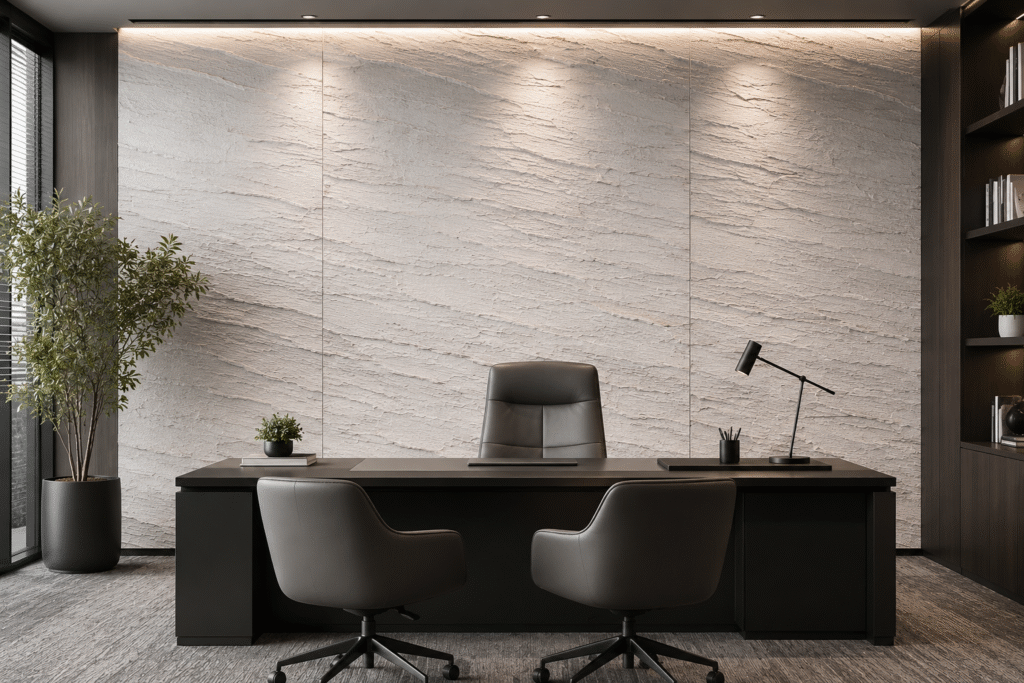
Your Trusted Partner for Flexible Stone Wall Panels
Duolong is a China-based manufacturer specializing in the production of flexible stone wall panels for global building material markets. We are committed to providing consistent manufacturing quality, stable production capacity, and reliable supply solutions for distributors, importers, contractors, and project buyers.
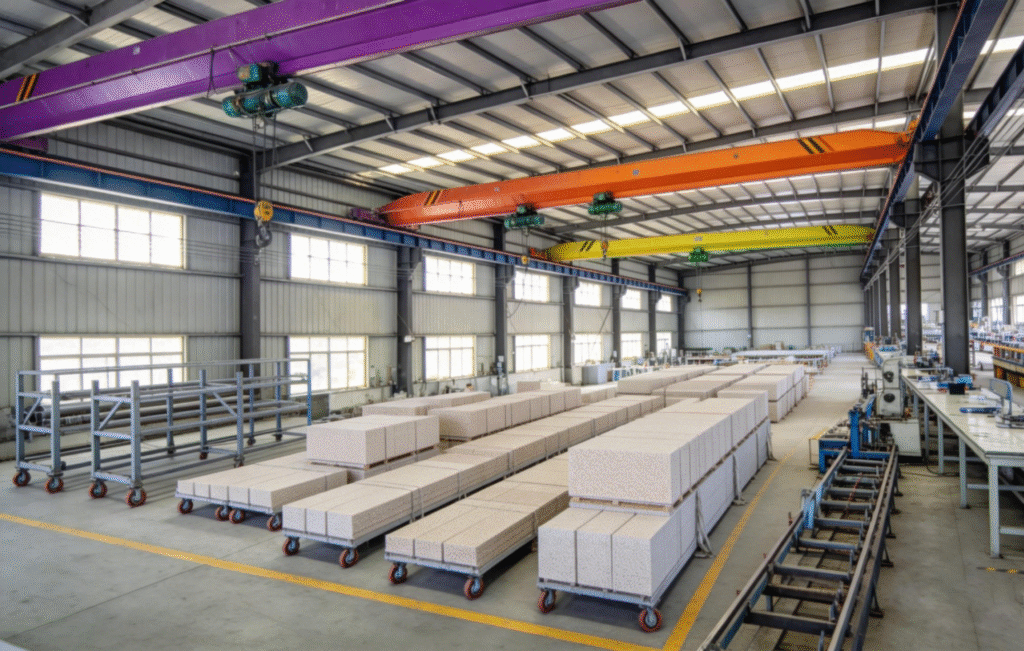
Our production follows standardized manufacturing processes and strict quality control procedures to maintain consistency in texture, color, dimensions, and overall product quality. Every batch is inspected throughout production to ensure stable performance and reliable delivery standards.
With efficient production management and export experience, Duolong supports both small and large-volume orders while maintaining dependable lead times and product consistency. Lightweight products also help improve container loading efficiency and reduce international transportation costs, creating greater value throughout the supply chain.
We continue to invest in manufacturing technology, production management, and quality assurance to provide customers with dependable products and long-term supply support. From production planning to packaging and shipment, every step is managed with a focus on quality, efficiency, and consistency, helping customers build a stable and competitive supply network.
Products
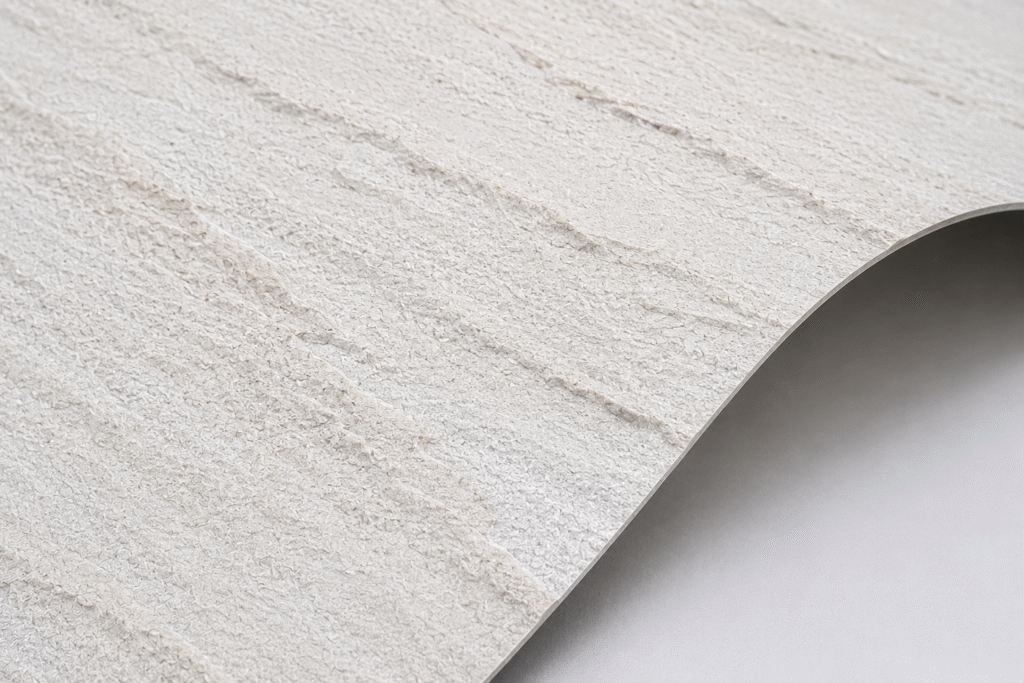
Ivory Limestone Flexible Stone Panel
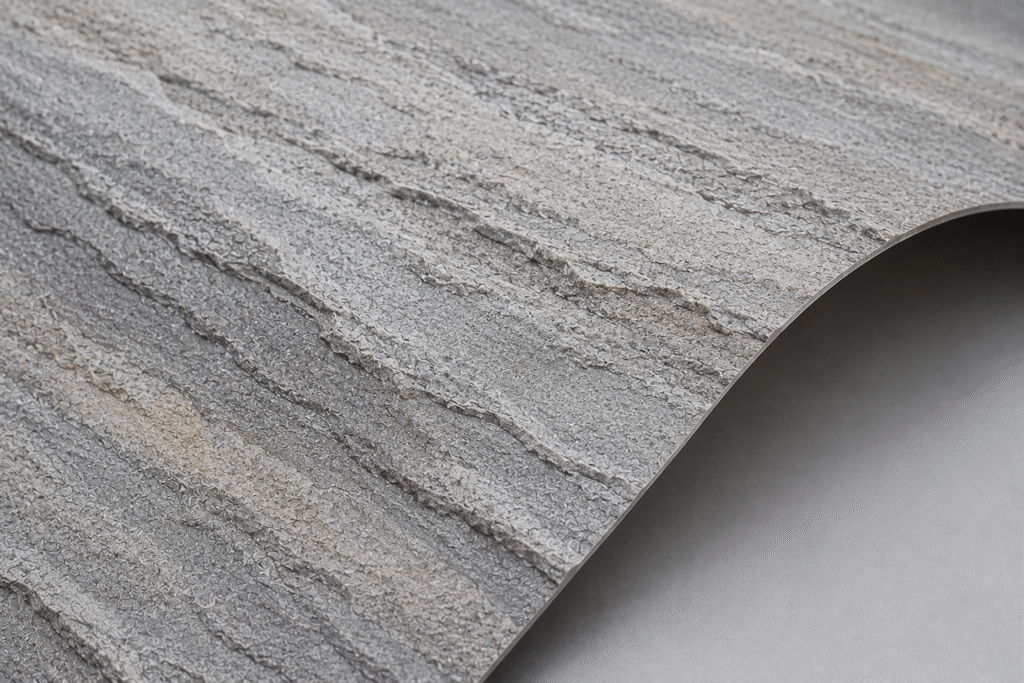
Silver Slate Flexible Stone Panel
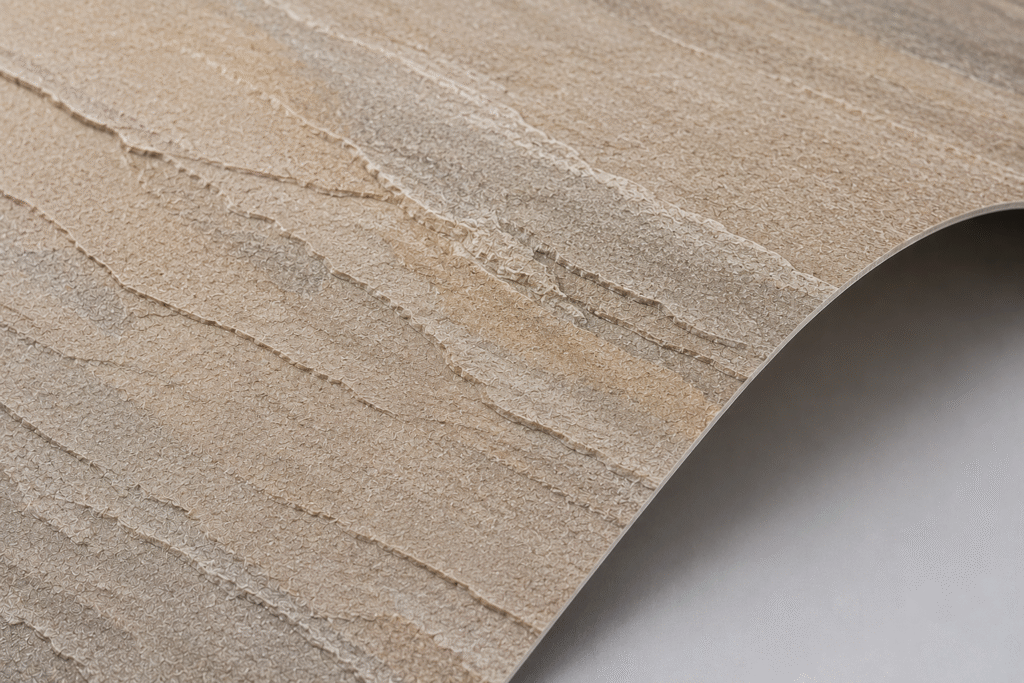
Desert Sandstone Flexible Stone Panel
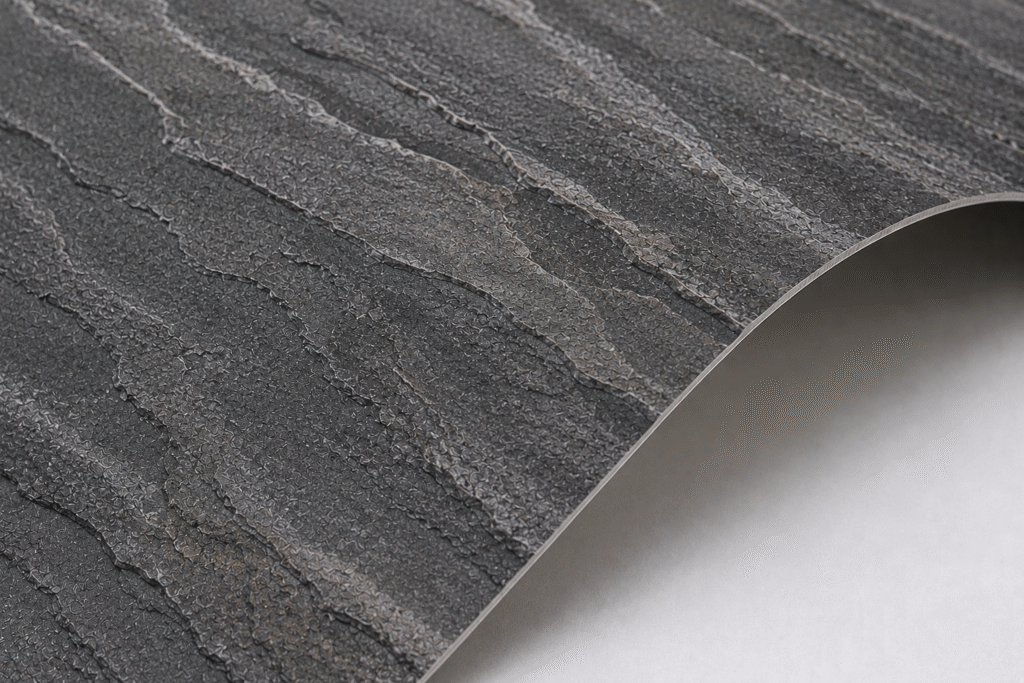
Graphite Basalt Flexible Stone Panel
Our Advantages

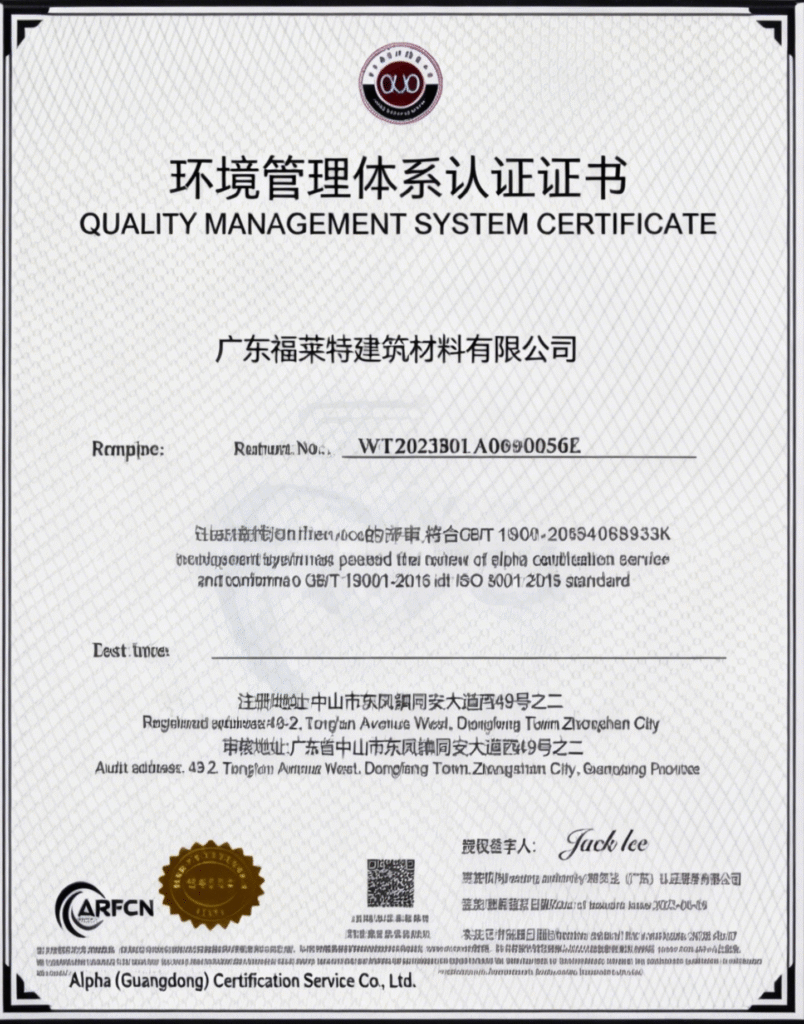
Consistent Manufacturing Quality
Every flexible stone wall panel is produced through standardized manufacturing processes designed to maintain consistency from one production batch to the next. Strict quality inspections are carried out throughout production to verify texture, color, dimensions, and overall product appearance. By maintaining stable manufacturing standards, Duolong helps customers reduce quality variations, improve purchasing confidence, and provide reliable products that support long-term business growth and repeat orders.
Stable Production Capacity
Duolong maintains organized production planning and efficient manufacturing management to support both routine purchasing requirements and large-volume orders. Our production system is designed to deliver consistent output while maintaining dependable lead times throughout the year. This stable manufacturing capability allows distributors, importers, and project buyers to better manage inventory, coordinate procurement schedules, and reduce supply chain uncertainty during ongoing business operations.
Lower Shipping Costs
Flexible stone wall panels are lightweight, allowing more products to be loaded into each shipping container compared with many traditional wall materials. Higher container loading efficiency helps reduce transportation costs and improve overall logistics performance. Lower freight expenses create better purchasing value for international buyers while supporting more competitive pricing, improved inventory planning, and greater profitability throughout the supply chain.
Reliable Export Support
Duolong has extensive experience supplying international customers with flexible stone wall panels through well-managed export operations. Every order is supported with secure packaging, organized production scheduling, and careful shipment coordination to help ensure reliable delivery. Our focus on stable supply, consistent communication, and dependable order management allows customers to source products with confidence and build long-term business relationships based on reliability and efficiency.
why choose us
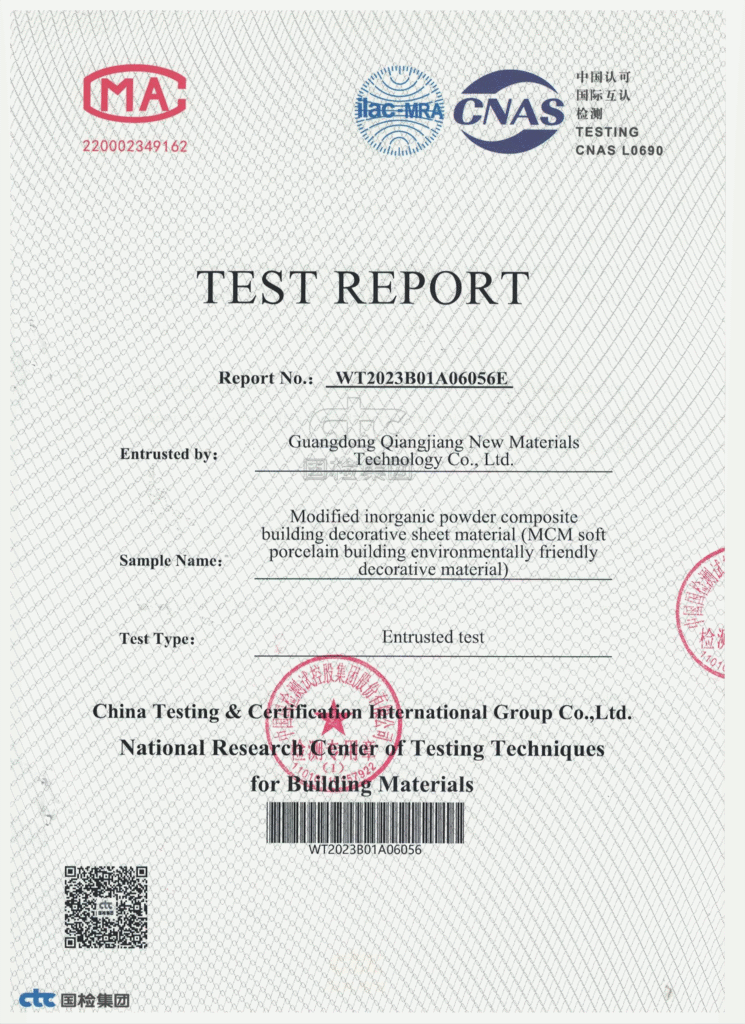
Flexible Purchasing Solutions
Every business has different purchasing requirements. Whether customers are testing a new market or preparing for long-term distribution, we provide flexible ordering solutions that support different purchasing plans. This allows buyers to expand their product range more efficiently while reducing inventory pressure and improving overall procurement flexibility.
Wide Selection of Surface Designs
Duolong offers a diverse collection of flexible stone wall panel designs with various textures, colors, and surface finishes. Our continuously updated product range helps distributors and importers meet changing market demand while giving architects and project buyers more design options for different customer preferences.
Better Cost Performance
Flexible stone wall panels provide the appearance of natural stone while reducing transportation, handling, and installation expenses. This combination helps customers improve overall project value and create more competitive product offerings without relying on heavier traditional wall materials.
Faster Project Progress
Lightweight materials are easier to transport, carry, and install, helping reduce construction time and improve work efficiency. Faster installation can shorten project schedules, reduce labor requirements, and help contractors and developers complete projects within planned delivery timelines.
Responsive Communication
We believe efficient communication is an important part of every successful cooperation. Our team responds to product inquiries, quotation requests, and order updates promptly, helping customers receive the information they need and make purchasing decisions more efficiently.
Focus on Long-Term Cooperation
Rather than simply supplying products, we aim to build stable business relationships with our partners. By maintaining consistent service, reliable communication, and dependable support throughout the cooperation process, we help customers develop a more secure and sustainable supply partnership.
Continuous Product Development
Market demand continues to evolve, and we regularly expand our product collection with new textures, colors, and design styles. This helps our partners introduce fresh products to their markets, respond to changing customer preferences, and strengthen their competitiveness without frequently changing suppliers.
FAQ
How can I choose a reliable flexible stone wall panel manufacturer?
When selecting a manufacturer, buyers should look beyond price. Production capacity, quality control, export experience, delivery reliability, and communication efficiency all play an important role. A manufacturer with standardized production processes and stable supply can help reduce purchasing risks and support long-term cooperation.
Will the color and texture remain consistent in repeat orders?
Consistency is a key concern for distributors and project buyers. Professional manufacturers use standardized production procedures and quality inspections to keep color, texture, and dimensions as consistent as possible between production batches. This helps maintain a uniform appearance across ongoing projects and future orders.
How are flexible stone wall panels packed for international shipping?
Flexible stone wall panels are typically packed with protective materials and reinforced export packaging to reduce the risk of damage during transportation. Proper packaging helps protect the surface finish, maintain product quality, and ensure the panels arrive in good condition after long-distance sea freight.
Can I request samples before placing a bulk order?
Yes. Most buyers request samples before confirming a production order. Samples allow customers to evaluate the surface texture, color, flexibility, and workmanship before making larger purchasing decisions. This also helps reduce procurement risks and ensures the selected product meets market expectations.
How long does production usually take?
Production time depends on product specifications, order quantity, and the factory’s manufacturing schedule. Standard products are generally completed faster than customized designs. Confirming the production schedule before placing an order helps buyers plan inventory, shipping, and project timelines more effectively.
How can flexible stone wall panels help reduce overall project costs?
Their lightweight structure reduces transportation expenses, simplifies handling, and improves installation efficiency. Lower freight costs and faster installation help contractors and project buyers control budgets while improving construction efficiency compared with many traditional wall materials.
What should I prepare before importing flexible stone wall panels?
Before placing an order, buyers should confirm product specifications, quantities, packaging requirements, delivery schedules, and shipping arrangements. Requesting samples and discussing technical details in advance helps avoid misunderstandings and supports a smoother purchasing process from production to delivery.
Are flexible stone wall panels suitable for long-term supply projects?
Yes. Buyers working on continuous distribution or large commercial projects often require stable supply over an extended period. Choosing a manufacturer with organized production planning and consistent manufacturing standards helps ensure reliable product availability and supports future repeat orders.
What factors should I compare before choosing a supplier?
In addition to pricing, buyers should compare product consistency, manufacturing capability, delivery performance, export experience, packaging quality, and customer support. A reliable supplier provides stable products and dependable service, helping reduce procurement risks and improve long-term purchasing efficiency.
Why do many importers source flexible stone wall panels directly from China?
China offers a well-established manufacturing supply chain, efficient production capacity, and extensive export experience. Working directly with a manufacturer allows buyers to communicate product requirements more efficiently, maintain better control over quality and production schedules, and establish a stable long-term supply relationship.
Transaction Process

Inquiry and requirement confirmation
Confirm application (interior/exterior), sizes, finishes/colors, quantity, destination, and any accessory needs. Align on technical requirements such as substrate condition, climate exposure, and curved-surface needs.
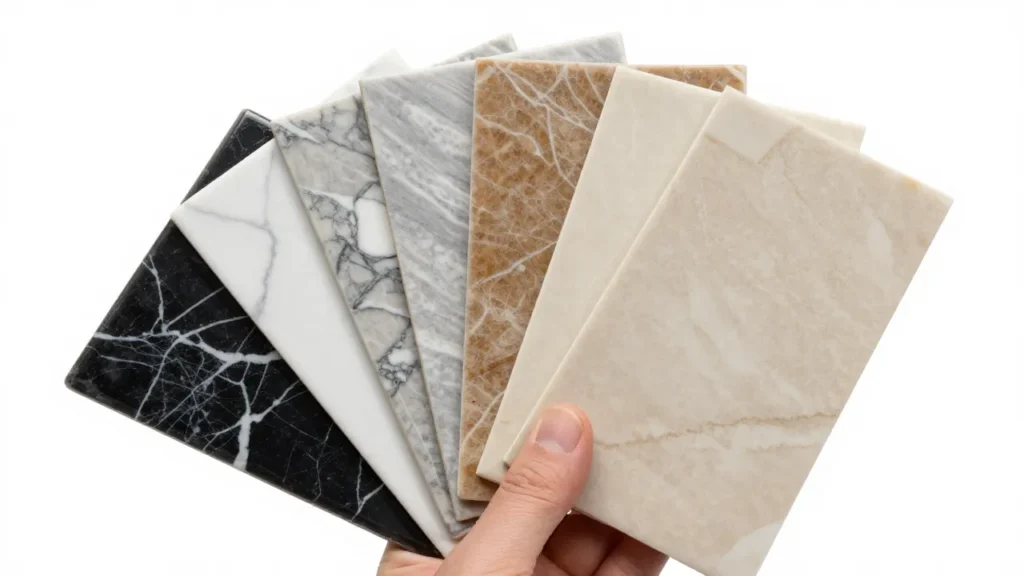
Quotation, samples, and approval
Issue a formal quotation with product options, lead time, and Incoterms. Provide samples for color/texture confirmation. Finalize specifications based on approved samples as the acceptance benchmark.

Order placement, payment, and production
Confirm the order via Proforma Invoice (PI), arrange the agreed payment, and schedule production. Maintain batch control and quality inspection during manufacturing and pre-shipment packing checks.
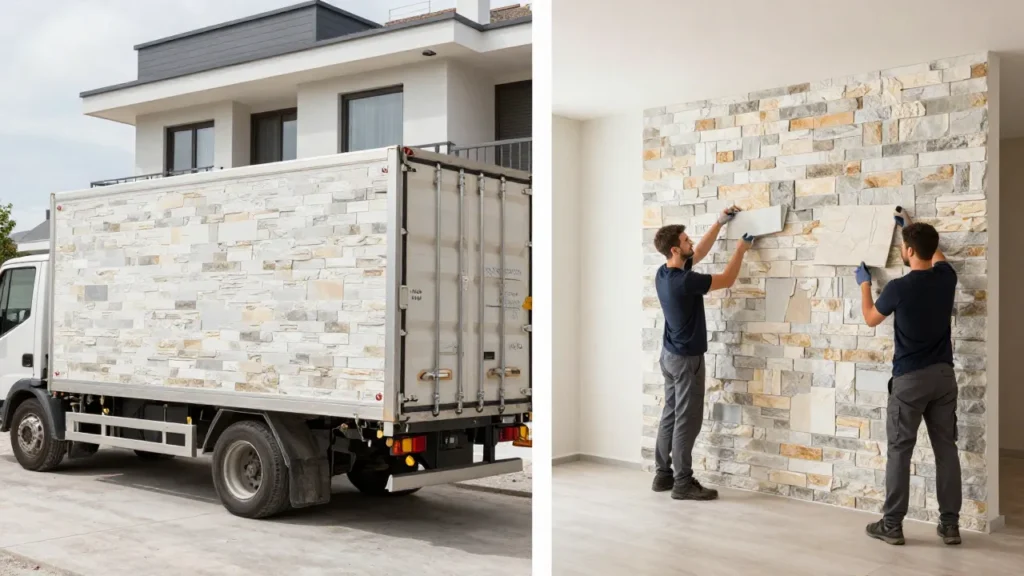
Shipment, documents, and after-sales support
Arrange shipping (FCL/LCL/air), provide export documents (invoice, packing list, B/L or AWB, and other required certificates), support customs clearance coordination, and handle receiving inspection, claims, replacements, and installation support.
Table of Contents
Why Office Renovation Projects Choose Flexible Stone Wall Panels
Office renovation projects are usually limited by time rather than budget. Most tenants expect construction to finish before employees return, leaving contractors with little room for delays. Because of this, material selection has become just as important as design. A wall finish that slows installation can affect every stage that follows.
Traditional stone remains a premium choice for office interiors, but it also creates practical challenges. Heavy materials take longer to move through office buildings, especially where elevators, loading areas, and working hours are restricted. Installation often requires more manpower, increasing labor costs and making it harder to keep the project on schedule.
Contractors now pay more attention to materials that improve workflow instead of adding complexity. Lightweight wall systems have become a practical alternative because they reduce handling time while still delivering a high-end finish. On large office projects, saving even a small amount of installation time on each wall can make a noticeable difference to the overall construction schedule.
Architects have also changed the way they evaluate decorative materials. Appearance is still important, but it is no longer the only factor. Materials that are easier to install, transport, and maintain are more likely to be specified because they help reduce construction risks without changing the original design concept.
For project buyers, logistics is another consideration. Heavy wall materials increase freight costs and limit the amount that can be loaded into each container. Lightweight materials improve shipping efficiency and simplify on-site handling after delivery. These advantages become more valuable when supplying multiple commercial projects each year.
Flexible stone wall panels fit this shift in the market. They provide the visual character of natural stone while making transportation, installation, and project coordination more efficient. Instead of solving only a design problem, they help solve construction and procurement challenges at the same time.
Office renovation has become a balance between design quality and project efficiency. Buyers, contractors, and architects are no longer looking only for attractive finishes. They are looking for materials that help projects move faster, reduce unnecessary costs, and support reliable long-term performance.
Flexible Stone vs Traditional Stone Which Material Delivers Better Project Value
The price of a wall material is easy to compare. The real cost of using that material is much harder to see before construction begins. Experienced contractors rarely make decisions based only on the purchase price because transportation, installation, labor, and project delays often have a greater impact on the final budget.
Natural stone has always been valued for its appearance and durability. It creates a premium finish that many commercial projects still prefer. However, its weight affects almost every stage of a project. Loading, transportation, lifting, installation, and waste disposal all require additional time and labor, especially on large developments.
Flexible stone approaches the same design goal differently. Rather than relying on heavy material, it offers a similar visual effect while reducing many of the practical challenges found on construction sites. The difference is not simply about weight. It is about improving efficiency throughout the project.
Importers also see the difference during shipping. A lighter product allows more material to fit into a container, reducing freight costs and improving inventory planning. For distributors importing multiple shipments every year, these savings become part of their long-term purchasing strategy rather than a one-time advantage.
Installation is another area where project costs continue to rise. Heavy materials usually require larger installation teams and more handling before work even begins. Lightweight panels reduce physical effort and help installers complete more work during the same period, making project schedules easier to control.
Architects are increasingly balancing appearance with practicality. Materials are selected not only because they look good but because they simplify construction and reduce long-term maintenance concerns. This broader evaluation has changed how many commercial projects compare decorative wall systems.
There is no single material that suits every project. The better choice depends on construction conditions, project priorities, and long-term operating costs. Buyers who evaluate the complete construction process instead of focusing only on the product price often make decisions that deliver better value over the life of the building.
How Contractors Reduce Office Renovation Time with Lightweight Wall Panels
Contractors rarely lose time because of the installation itself. Most delays begin before the first panel is fixed to the wall. Materials arrive late, moving heavy products through the building takes longer than expected, or different trades end up waiting for one another. These small delays often add several extra days to a commercial renovation.
Office projects are especially sensitive to construction schedules. Many renovations are completed while other parts of the building remain occupied, leaving limited working hours and restricted access. Every delivery, every material movement, and every installation step has to fit within a carefully planned schedule.
Heavy wall materials often create unnecessary pressure on site. More workers are needed to unload products, transport them between floors, and position them before installation. When materials must pass through service elevators or narrow corridors, productivity drops quickly. These are practical issues that rarely appear in design drawings but are discussed on almost every construction site.
Lightweight wall panels simplify much of this work. Installers spend less time moving materials and more time completing finished walls. Faster handling also makes it easier to coordinate with electricians, ceiling installers, painters, and flooring teams, reducing interruptions between different stages of construction.
Waste management is another factor contractors consider. Materials that require extensive cutting usually create more offcuts and increase cleanup time. Lightweight panels are generally easier to process on site, helping reduce unnecessary material waste while improving installation efficiency around corners, columns, and other detailed areas.
Safety also influences material selection. Repeatedly lifting heavy products increases physical strain and creates additional handling risks. Reducing material weight improves working conditions for installation crews and allows work to continue more efficiently throughout the project.
Clients often judge a project by the finished appearance, but contractors remember how smoothly the work progressed. Materials that reduce handling, simplify installation, and improve site coordination make a noticeable difference to both project schedules and labor efficiency. That is one reason lightweight decorative wall systems continue to gain attention in modern office renovation projects.
Common Mistakes Buyers Make When Choosing Flexible Stone Suppliers
Most purchasing problems do not begin after delivery. They begin much earlier, when buyers compare suppliers using only quotations. A lower price may look attractive, but it rarely reflects the full picture of manufacturing capability, quality control, or long-term supply reliability.
One common mistake is assuming that every manufacturer produces the same quality. Samples may appear similar at first glance, but differences in raw materials, production methods, and quality inspection often become clear after larger orders are delivered. Product consistency is much more important than the appearance of a single sample.
Another issue is overlooking production capacity. A supplier may complete a trial order without difficulty but struggle when larger quantities are required. Delayed production affects shipping schedules, inventory planning, and project delivery, creating unnecessary pressure for distributors and contractors.
Many buyers also underestimate the importance of export experience. International orders involve packaging, container loading, shipping documents, and communication with freight partners. Manufacturers familiar with export procedures are usually better prepared to avoid delays and reduce transportation risks.
Communication is another factor that is often ignored during supplier selection. Fast and accurate responses make it easier to confirm specifications, production schedules, packaging requirements, and shipment arrangements. Clear communication becomes even more valuable when projects operate under tight deadlines.
Repeat orders deserve careful consideration as well. Commercial projects often require additional quantities months later. Manufacturers with standardized production processes are better positioned to maintain consistent color, texture, and dimensions across different production batches, helping customers avoid visible differences after installation.
Successful sourcing is rarely based on finding the cheapest supplier. It depends on choosing a manufacturing partner capable of delivering stable quality, reliable production, efficient communication, and dependable long-term supply. Buyers who evaluate the entire supply process usually experience fewer problems and build stronger business relationships over time.
Best Wall Materials for Tropical Commercial Buildings
Choosing wall materials for tropical commercial projects is rarely about appearance alone. In markets such as Malaysia, Indonesia, Vietnam, and the Philippines, buildings face high humidity, heavy rainfall, strong sunlight, and year-round temperature changes. These conditions expose the weaknesses of many traditional finishing materials much faster than projects in cooler climates.
Contractors working in tropical regions usually pay close attention to long-term performance instead of short-term visual results. A wall system that looks impressive on the day of completion may require frequent repairs if it cannot adapt to changing weather conditions. Loose finishes, surface cracking, and ongoing maintenance are common concerns for commercial property owners.
Weight is another practical issue. Heavy materials increase transportation costs and place additional demands on installation teams. On multi-story commercial buildings, moving heavy products through the site often requires more labor and equipment, extending construction schedules and increasing overall project costs.
Modern lightweight wall systems are becoming a practical option because they address several of these challenges at the same time. Easier handling improves installation efficiency, while lower weight helps reduce transportation costs for both domestic and international projects. For importers supplying tropical markets, improved container loading efficiency is an added advantage.
Architects are also placing greater emphasis on maintenance. Commercial buildings are expected to maintain a clean appearance with minimal disruption to daily operations. Materials that require less maintenance help reduce operating costs throughout the building’s service life, making them more attractive to developers and property managers.
Another factor often overlooked is project scheduling. Tropical regions frequently experience sudden rainfall, making construction planning more difficult. Materials that can be installed efficiently help contractors take better advantage of available working time and reduce delays caused by changing weather conditions.
The best wall material is not necessarily the most expensive or the heaviest. It is the material that balances appearance, installation efficiency, transportation, maintenance, and long-term performance. As commercial construction continues to focus on practical value, lightweight decorative wall systems are becoming an increasingly common choice for projects across tropical regions.
What Architects Look for When Selecting Office Feature Wall Materials
A feature wall is often the first element people notice when they enter an office, but architects rarely begin by thinking about texture or color. Their first concern is whether a material can achieve the intended design without creating unnecessary challenges during construction. Appearance matters, but practical performance matters just as much.
Office renovation projects usually involve tight schedules and limited working space. Materials that are difficult to transport or install can affect the progress of several other trades. Because of this, architects increasingly consider installation efficiency during the design stage rather than leaving those decisions entirely to contractors.
Material consistency is another priority. Reception areas, meeting rooms, and public spaces often require large continuous wall surfaces where even small differences in texture or color become noticeable. Manufacturers capable of maintaining stable production quality are generally preferred for commercial projects that demand a uniform appearance.
Weight also influences design decisions. Heavy decorative materials may require additional structural consideration, especially in renovation projects where the existing building has certain limitations. Lightweight wall systems provide greater flexibility while reducing handling difficulties during construction.
Architects also evaluate how a material performs over time. Commercial office interiors experience daily traffic and frequent cleaning, so surface durability and maintenance requirements become part of the specification process. Building owners generally prefer materials that continue to perform well without increasing maintenance costs.
Communication with manufacturers is equally important. During project development, architects often request samples, technical information, and production details before finalizing specifications. Manufacturers that provide clear documentation and reliable technical support help simplify decision-making and reduce uncertainty throughout the project.
Successful office design depends on much more than visual impact. The best materials combine aesthetics, construction efficiency, manufacturing consistency, and long-term reliability. As office projects continue to focus on efficiency and value, architects are selecting materials that support both creative design and practical project delivery.
How Flexible Stone Helps Lower International Shipping Costs
Freight costs have become one of the biggest variables in the building materials business. Ocean freight rates may rise and fall throughout the year, but one factor never changes: heavier products cost more to move. For importers purchasing full containers, the weight and loading efficiency of a material can have a direct impact on overall procurement costs.
Many buyers compare suppliers based on unit price without calculating the total landed cost. In reality, shipping, handling, storage, and unloading often account for a significant portion of the final investment. A product with a slightly lower factory price can become more expensive if it occupies more container space or requires additional handling during transportation.
This is one reason lightweight wall materials have gained attention in international markets. Reducing product weight allows buyers to make better use of container capacity while simplifying loading and unloading at both the factory and the destination warehouse. For distributors importing several containers each year, these efficiencies gradually become part of their competitive advantage.
Container planning is another area where experienced importers pay close attention. Every shipment is carefully arranged to maximize usable space while protecting products during long-distance transportation. Materials that are easier to stack and organize help improve loading efficiency and reduce unnecessary freight costs without changing the order quantity.
The benefits continue after the shipment arrives. Lighter materials are easier to unload, transport within the warehouse, and prepare for local delivery. Less manual handling saves time for warehouse staff and reduces the risk of product damage during repeated movement. These improvements may appear small individually, but together they create measurable operational savings.
Reliable packaging is equally important. International shipments often pass through several handling stages before reaching the customer. Strong export packaging protects the product during loading, sea transportation, customs inspection, and local distribution. Good packaging is not simply about preventing damage—it also helps maintain customer confidence when products arrive in good condition.
For long-term importers, shipping efficiency is more than a logistics issue. It affects inventory planning, purchasing strategy, warehouse operations, and overall profitability. Choosing a wall material that improves transportation efficiency can provide lasting value long after the container leaves the factory.
Choosing Flexible Stone for Large Commercial Interior Projects
Large commercial projects rarely succeed because a single material performs well. They succeed because every material works together within the project’s schedule, budget, and construction plan. For developers, contractors, and procurement teams, selecting wall materials is as much an operational decision as it is a design decision.
Commercial interiors often involve thousands of square meters of decorative wall finishes. Small differences in installation speed or material handling can become significant when applied across an entire office building, hotel, shopping center, or public facility. What saves a few minutes on one wall may save several days across the complete project.
Consistency is one of the first requirements. Commercial developments are frequently completed in phases, and additional materials may be required months after the initial delivery. Buyers therefore look for manufacturers capable of maintaining stable color, texture, and dimensions across different production batches. Product consistency reduces installation problems and helps maintain a uniform appearance throughout the project.
Construction efficiency is equally important. Wall materials that require complicated installation methods increase labor requirements and place greater pressure on project schedules. Lightweight decorative panels are easier to transport around the construction site and generally require less effort during installation, allowing contractors to maintain steady progress.
Procurement teams also evaluate supply reliability. Delayed deliveries can interrupt construction schedules and affect multiple subcontractors working on the same project. Manufacturers with organized production planning and dependable lead times help reduce these risks and make project coordination more predictable.
From the owner’s perspective, maintenance cannot be ignored. Commercial buildings are expected to remain presentable for many years while minimizing operational disruption. Materials that are easy to maintain and continue to perform well over time contribute to lower long-term operating costs and improve the overall value of the investment.
Successful commercial projects are built on careful planning rather than last-minute decisions. Choosing a wall material should involve more than comparing product samples. Manufacturing capability, supply stability, installation efficiency, logistics, and long-term performance all influence the final outcome. Buyers who evaluate these factors together are more likely to achieve projects that are completed on schedule, operate efficiently, and continue to perform well long after construction has finished.