
Flexible Stone Wall Panels Manufacturer
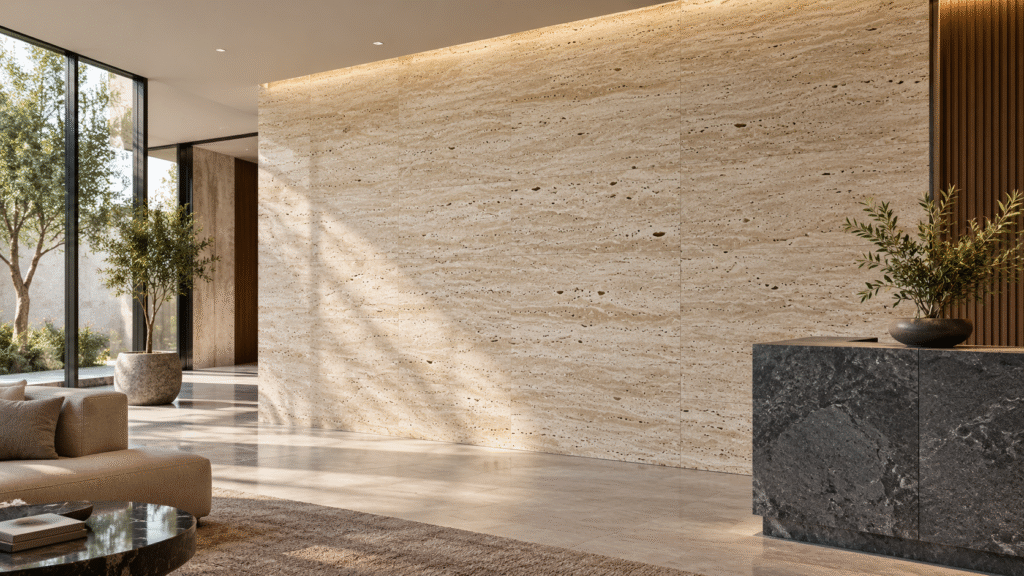
Inside Duolong Flexible Stone Production
Duolong is a building materials manufacturer in China specializing in Flexible Stone wall panels for international markets. We manufacture lightweight decorative wall materials with a focus on stable production, consistent surface appearance and practical support throughout the purchasing process.
Flexible Stone combines the natural appearance of traditional stone, brick or textured wall finishes with a much lighter and thinner structure. Compared with conventional stone and ceramic materials, it is easier to handle, transport, cut and install. Its flexibility also allows the material to adapt to more complex wall surfaces and architectural details.
At our factory, we pay close attention to surface texture, color consistency, panel dimensions, thickness and edge quality during production. Different textures, colors and panel sizes are available, allowing buyers to compare products according to their design and project requirements.
For overseas orders, we also manage packaging, pallet configuration, container loading and production scheduling. Samples can be prepared before bulk ordering so customers can check the actual texture, color and flexibility of the material.
Our goal is simple: manufacture reliable Flexible Stone products while making specification confirmation, ordering and international delivery easier for our customers.
Products
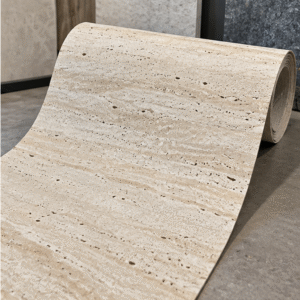
Beige Travertine Flexible Stone
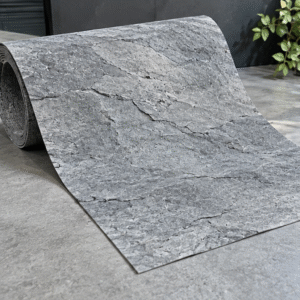
Gray Slate Flexible Stone
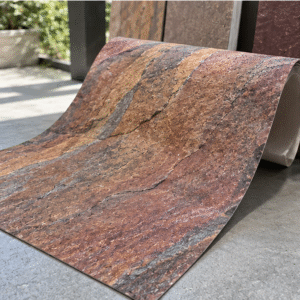
Rust Slate Flexible Stone
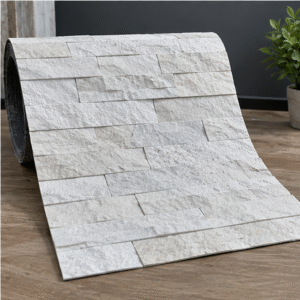
White Stacked Stone Flexible Stone
Our Advantages

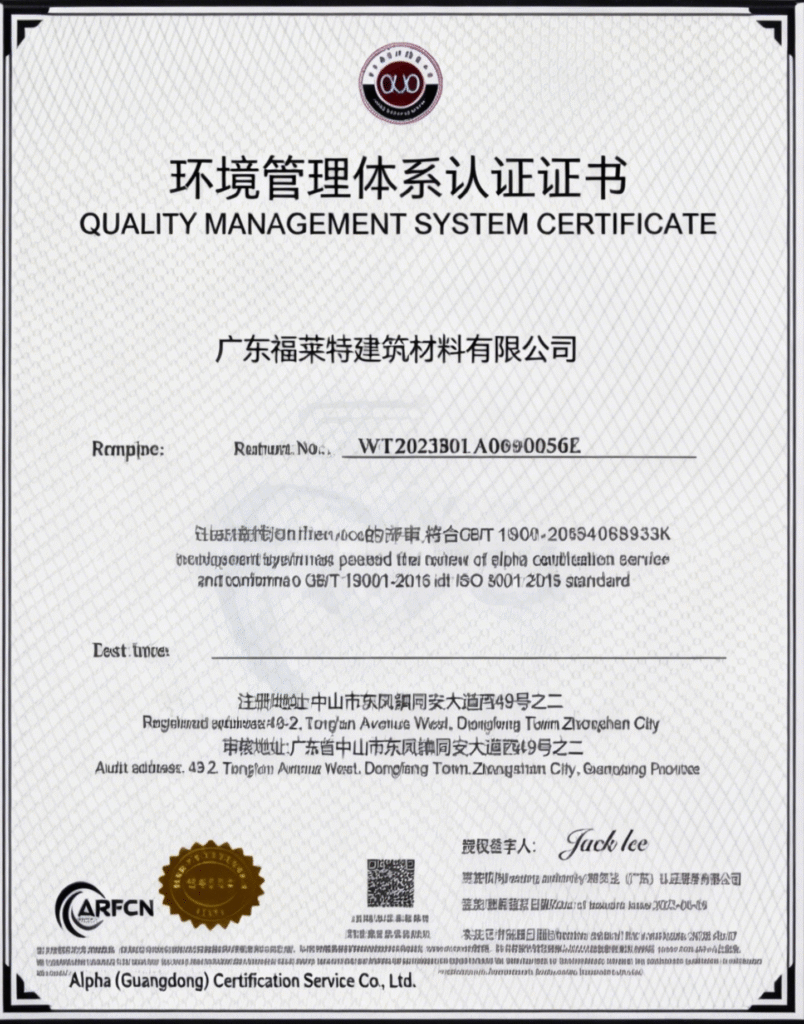
Direct Factory Production
Our Flexible Stone products are manufactured directly at our factory. This allows us to maintain better control over production specifications, surface texture, dimensions and color consistency. It also means customers can communicate directly with the manufacturing side when discussing product details or order requirements.
Lightweight Material
Flexible Stone is significantly lighter than traditional stone and many conventional wall materials. The lower weight makes the panels easier to handle during transportation and installation and can also help reduce the overall load placed on the wall structure.
Flexible and Easy to Cut
Unlike rigid stone or ceramic tiles, Flexible Stone can bend to a certain degree and can be cut using suitable installation tools. This makes working around corners, columns and curved surfaces more practical while reducing complicated on-site cutting work.
Multiple Textures and Colors
We manufacture Flexible Stone in different surface styles, including stone, brick, concrete and other architectural textures. Various colors and panel sizes are also available, giving customers more options when selecting materials for different designs and product ranges.
why choose us
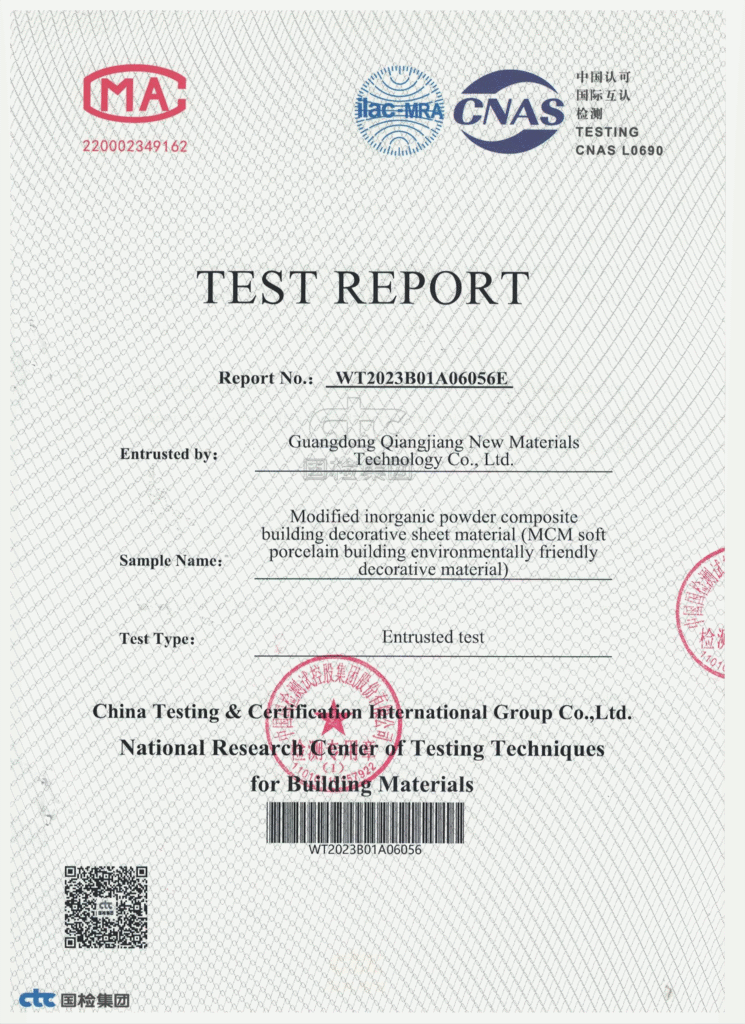
Manufacturer Direct Supply
Working directly with the manufacturer makes it easier to confirm specifications, colors, sizes, packaging and production details. Customers can discuss their requirements directly with our sales and production team instead of passing information through multiple suppliers.
Samples Available Before Bulk Order
Product samples can be arranged before a larger order is confirmed. This allows customers to check the actual surface texture, color, thickness and flexibility rather than making purchasing decisions based only on photos.
Consistent Product Specifications
For bulk and repeat orders, consistency is important. We control key production details such as panel dimensions, surface finish, color and thickness according to the confirmed product specification.
Wide Range of Surface Designs
Flexible Stone can reproduce different architectural finishes while maintaining its lightweight structure. We offer multiple collections and surface designs so customers can compare different appearances within the same product category.
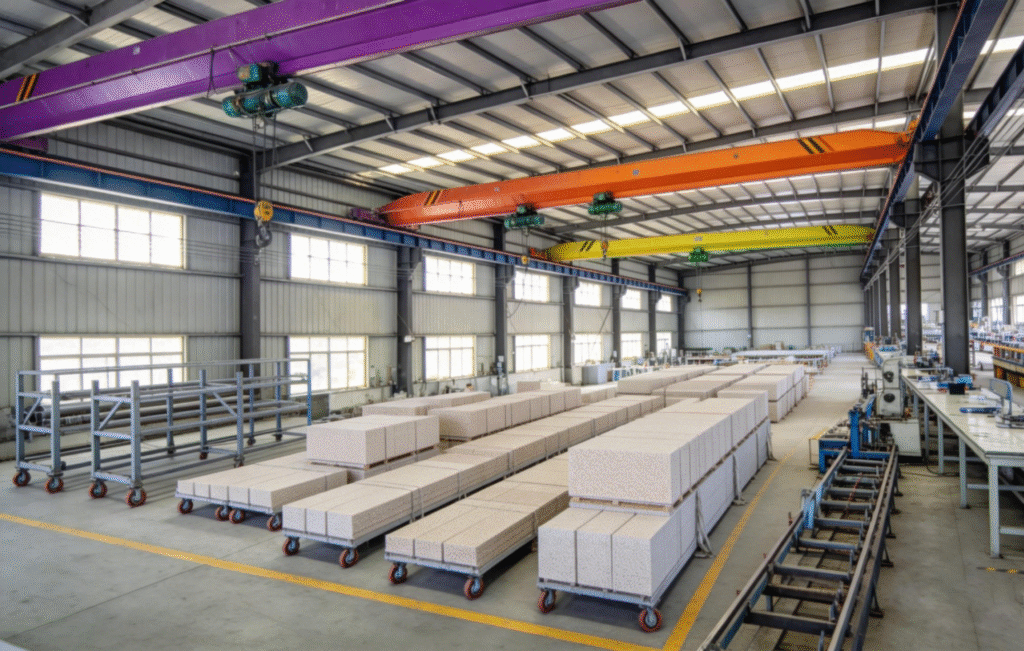
Practical Shipping Advantages
The lightweight and relatively thin structure of Flexible Stone can help improve packing efficiency compared with heavy natural stone materials. We also provide packing and loading information so customers can better plan freight and receiving arrangements.
Clear Order Communication
Before production, we confirm important details including product model, color, size, quantity and packaging. Keeping this information clear from the beginning helps reduce misunderstandings during manufacturing and shipment.
Long-Term Supply Support
For repeat orders, new colors or additional quantities, our factory can continue production based on confirmed product requirements. Customers can also request updated samples, specifications and quotations when developing new products or projects.
FAQ
Will large orders have color differences?
We control color and surface consistency during production. For large projects, ordering from the same production batch is recommended.
Can Flexible Stone be used on curved walls?
Yes. Its flexible structure allows it to follow many curved surfaces and architectural details more easily than rigid materials.
Can it be installed over an existing wall?
In many cases, yes, as long as the existing surface is clean, flat, dry and stable before installation.
Is Flexible Stone suitable for exterior walls?
Yes, but the correct product, adhesive and installation method should be selected according to local weather and project requirements.
How do you control quality during bulk production?
We check panel size, surface texture, color, edge condition and overall appearance before packing.
Can I reorder the same product later?
Yes. We can reproduce previously confirmed specifications, although slight color variation between different production batches may occur.
How should Flexible Stone be stored?
Keep it in a dry, ventilated place and protect it from rain, strong sunlight and improper stacking before installation.
Is extra material needed for installation?
We recommend ordering a small additional quantity to cover cutting, installation loss and future replacement needs.
Can damaged panels be replaced individually?
Yes. Individual panels can normally be removed and replaced without changing the entire wall surface.
What information do you need for a quotation?
Product style, size, color, quantity and destination are usually enough for us to prepare an initial quotation.
Transaction Process

Inquiry and requirement confirmation
Confirm application (interior/exterior), sizes, finishes/colors, quantity, destination, and any accessory needs. Align on technical requirements such as substrate condition, climate exposure, and curved-surface needs.
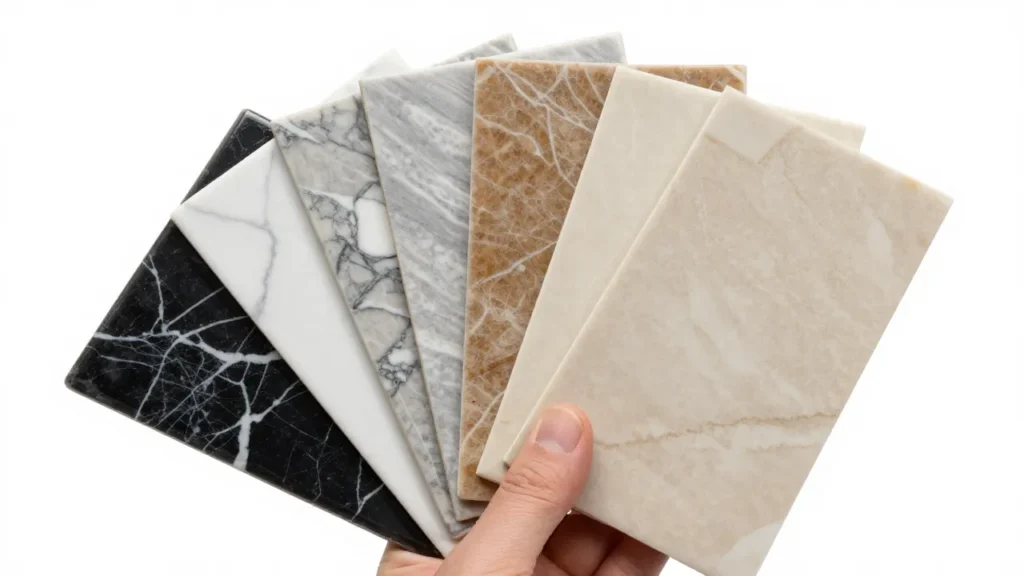
Quotation, samples, and approval
Issue a formal quotation with product options, lead time, and Incoterms. Provide samples for color/texture confirmation. Finalize specifications based on approved samples as the acceptance benchmark.

Order placement, payment, and production
Confirm the order via Proforma Invoice (PI), arrange the agreed payment, and schedule production. Maintain batch control and quality inspection during manufacturing and pre-shipment packing checks.
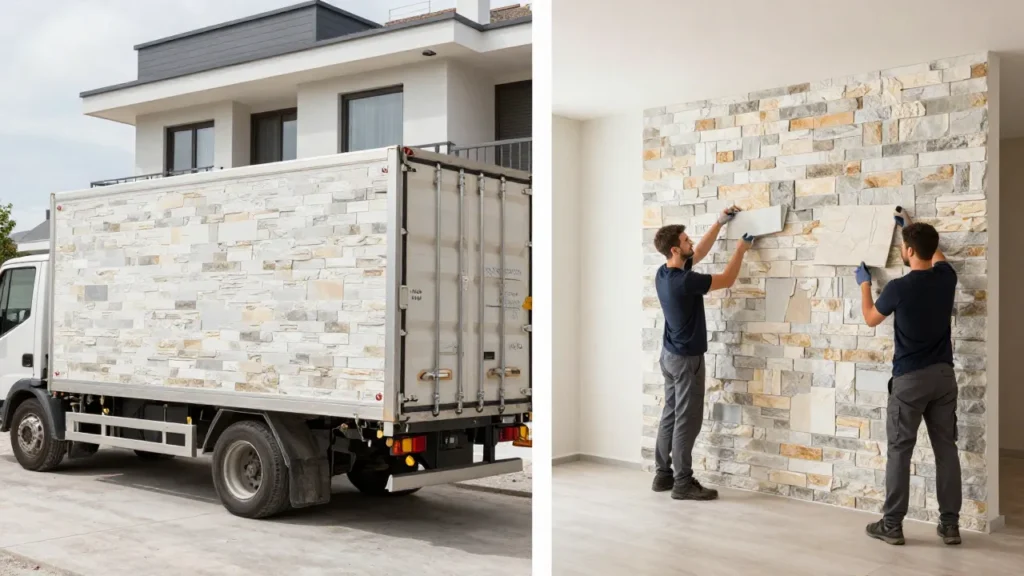
Shipment, documents, and after-sales support
Arrange shipping (FCL/LCL/air), provide export documents (invoice, packing list, B/L or AWB, and other required certificates), support customs clearance coordination, and handle receiving inspection, claims, replacements, and installation support.
Table of Contents
Why Lightweight Wall Materials Are Becoming More Important in Renovation Projects
Renovation projects often look simple at the beginning. Replace the old finish, improve the appearance and complete the work as quickly as possible. In reality, wall renovation can become complicated once demolition, material weight, site access and installation time are taken into account. This is one reason lightweight wall materials are receiving more attention in renovation projects across the U.S.
Traditional stone and thick wall panels can add considerable weight to an existing structure. In some buildings, this may require additional checks or more complicated fixing systems before installation begins. Flexible Stone provides a different option because it offers a decorative stone-like surface with a much thinner and lighter structure.
The lower weight makes a difference during transportation and site handling. Heavy materials can be difficult to move through elevators, narrow corridors or upper floors. Flexible Stone is easier for workers to carry and position, especially on renovation sites where access is limited. This can help simplify daily construction work and reduce the amount of equipment required for material handling.
Another important factor is demolition. Removing an existing wall finish can take time and create a large amount of construction waste. Where the original wall is stable, clean and properly prepared, a lightweight decorative material may help reduce unnecessary removal work. The existing substrate still needs to be checked for cracks, moisture, loose paint and uneven areas, but not every renovation requires the wall to be completely rebuilt.
Installation efficiency also affects the overall project schedule. Traditional stone often requires more effort to cut and position, especially around corners, columns and irregular wall dimensions. Flexible Stone can be trimmed more easily and adjusted during installation, making it more practical for detailed areas.
For commercial renovation, these differences can become even more important. Hotels, stores, offices and other operating spaces often need to control construction time because long closures can affect normal business. A wall material that is easier to move, cut and install can help contractors manage the schedule more efficiently.
Appearance is still important, but it should not be the only factor considered when selecting a wall finish. Buyers also need to think about transportation, labor, site access and the condition of the existing wall.
Flexible Stone does not replace every traditional wall material. Its value comes from providing another option when a project needs a balance between appearance, lightweight construction and installation efficiency. For many renovation projects, reducing unnecessary weight and complicated handling can make the entire process easier from delivery to final installation.
The Real Cost of Wall Materials Goes Beyond the Purchase Price
When buyers compare wall materials, the first number they usually look at is the price per square foot. It is an important number, but it does not show the full cost of a project. Transportation, unloading, storage, cutting, installation and material waste can all affect the final budget.
Traditional stone and heavy decorative panels can create additional costs before installation even begins. Their weight affects shipping and local transportation, especially when a large quantity is required. Once the materials arrive at the jobsite, they may also need more workers or lifting equipment to move them safely.
Flexible Stone is much lighter and thinner than conventional stone materials. This can make packing and transportation more efficient while also making the product easier to handle after delivery. Workers can move panels more easily around the site, which can be especially useful in renovation projects or buildings with limited access.
Cutting is another area where costs can increase. Stone and rigid panels often require specialized tools, and incorrect cuts can result in damaged material that cannot be reused. Corners, curved walls and irregular dimensions may also require more time and additional pieces.
Flexible Stone can usually be cut and adjusted more easily during installation. This can help installers work around detailed areas while reducing complicated cutting work. It does not eliminate the need for correct installation, but it can make certain parts of the job more manageable.
Material waste should also be considered. On a small project, a few damaged pieces may not have a major impact. On a large wall installation, however, even a small percentage of waste can become a significant cost. Better material utilization can therefore have a direct effect on the final project budget.
Project delays are another hidden expense. If materials are difficult to transport, cut or install, work can move more slowly than expected. This can affect other trades and extend the overall construction schedule. In commercial projects, delays may also affect when the space can reopen or begin operating.
For imported wall materials, the calculation should start at the factory but continue all the way to the finished wall. Product price, packing, freight, handling and installation all need to be considered together.
Flexible Stone may not always have the lowest purchase price on the first quotation. Its advantage is that the lightweight structure can simplify several parts of the process after the order is placed.
For buyers, the better comparison is not simply which product costs less per square foot. The more useful question is which material creates fewer additional costs before the project is complete.
Why Flexible Stone Makes Curved Wall Design Easier
Curved walls are becoming more common in modern architectural and interior design, but they can be difficult to finish with traditional rigid materials. Stone slabs, ceramic tiles and many decorative wall panels are designed mainly for flat surfaces. Once the wall begins to curve, installation often becomes more complicated.
Traditional materials may need to be cut into smaller pieces so they can follow the shape of the wall. This creates more joints and increases installation time. In some cases, contractors may need to use a completely different material for the curved area because the original wall finish cannot bend.
Flexible Stone provides another approach. The material can bend to a certain degree, allowing it to follow many curved surfaces more easily than rigid stone or ceramic products. This can help designers maintain the same visual finish across both flat and curved areas.
The advantage is not only about appearance. Larger flexible panels can sometimes cover curved sections with fewer cuts and fewer visible joints. This can make the finished wall look cleaner while also reducing the amount of detailed cutting required during installation.
The degree of flexibility depends on the product design, thickness and surface texture. Some Flexible Stone products can bend more easily than others, which is why testing the actual material before installation is important. A physical sample allows the installer or designer to check whether the panel can follow the required curve without affecting the surface.
Corners and columns can also benefit from a flexible material. Traditional stone often requires precise cutting or separate corner pieces. Flexible Stone can sometimes be adjusted around these details more easily, depending on the radius and product specification.
The condition of the wall remains important. Because Flexible Stone is thin, it follows the shape of the surface underneath. Uneven areas, cracks or unstable wall finishes should be repaired before installation. Proper preparation is what allows the material to sit correctly and maintain a clean appearance.
For designers, the main benefit is greater freedom when planning a space. Curved walls no longer need to be treated as a completely separate surface simply because the wall material cannot follow the shape.
This is especially useful in modern interiors where rounded partitions, curved feature walls and softer architectural lines are becoming more common.
Flexible Stone does not mean every wall can be covered without planning. The correct product, adhesive and installation method still need to be selected. However, when compared with rigid decorative materials, it gives designers and installers more options for working with curved architectural forms.
What Buyers Should Check Before Choosing a Flexible Stone Supplier
Flexible Stone products can look very similar in photos, but the difference between suppliers often becomes clear only after a bulk order is produced. For buyers sourcing from overseas, choosing a supplier should involve more than comparing price and product images.
One of the first things to check is product consistency. A single sample may look good, but a real order may involve hundreds or thousands of panels. The factory needs to control color, dimensions, surface texture and edge quality throughout the production process.
Color consistency is especially important because Flexible Stone is usually installed across a large wall area. Small differences may not be obvious when looking at one panel, but they can become noticeable once many pieces are installed next to each other. Slight variation can be normal for stone-style finishes, but large uncontrolled differences can affect the final appearance.
Panel dimensions are another detail that buyers should not ignore. Small size differences can create problems with joint alignment during installation. A reliable factory should have clear production standards and inspection procedures for dimensions and surface condition.
Packaging is also important for international orders. Flexible Stone is lighter than natural stone, but the decorative surface and edges still need protection during transportation. Good packaging helps reduce damage while the goods are being moved, loaded and unloaded.
Buyers should also ask for packing information before confirming the order. Knowing the number of panels per carton, pallet size, gross weight and container loading quantity makes it easier to estimate freight and warehouse requirements.
Communication is another useful way to judge a supplier. Product model, color, size, quantity and packaging should all be confirmed clearly before production begins. If these details remain unclear, mistakes are more likely to appear later.
Testing or project documentation should also be discussed early. Different projects may have different requirements, especially in the U.S. If fire, weathering or material test reports are required, these should be confirmed before production rather than after the goods are completed.
Repeat orders are also worth considering. A good supplier should keep clear records of previously confirmed products so future orders can follow the same specifications as closely as possible.
The best Flexible Stone supplier is not simply the factory with the lowest price or the largest catalog. Buyers need a manufacturer that can produce consistent material, protect it during shipping and communicate clearly throughout the order.
A good sample is only the beginning. The real test is whether the factory can maintain the same standard when the order moves from one panel to full production.
Why Surface Texture Matters More Than You Think When Choosing Flexible Stone
When people first compare Flexible Stone products, color usually gets most of the attention. Buyers may spend time choosing between gray, beige, white or darker stone tones, but color is only one part of what determines whether the finished wall looks natural. Surface texture often has an even greater effect on the final result.
A convincing stone finish needs depth. Natural stone is never completely flat or perfectly uniform. It contains small changes in grain, shadow, surface direction and texture. When these details are reproduced well, Flexible Stone can create a much more realistic architectural finish. When the texture is too repetitive or too shallow, the wall can look artificial even if the color is accurate.
This difference becomes more obvious after installation. One panel may look good when viewed closely, but a large wall exposes repeated patterns very quickly. If every panel has exactly the same surface appearance, the finished wall may lose the natural variation buyers expected.
For this reason, the surface should be evaluated across several panels rather than from one sample alone. Looking at multiple pieces makes it easier to understand how the texture changes from panel to panel and how the material will appear once installed across a larger area.
Lighting also affects the appearance of Flexible Stone. A textured surface creates small shadows throughout the day, which can make the wall look different under natural light, warm indoor lighting or stronger commercial lighting. Deeper textures usually create more noticeable shadow effects, while smoother surfaces produce a cleaner and quieter appearance.
The direction of the texture matters as well. Some stone patterns have a clear horizontal or vertical movement. Installers need to pay attention to panel orientation so that the finished wall looks continuous rather than random. This is especially important on large walls where incorrect positioning becomes easy to notice.
Texture also influences maintenance. Very deep surfaces may collect more dust in certain environments, while smoother finishes can be easier to wipe or clean. This does not make one texture better than another, but it is worth considering before selecting the final design.
For bulk orders, consistency between the approved sample and production material is another important point. Color can be measured and compared, but surface appearance also needs visual control during production.
A good Flexible Stone product should not only look attractive in a product photo. It should still look convincing when hundreds of panels are installed together.
When selecting Flexible Stone, buyers should look beyond the color chart. Texture, depth, pattern variation and surface direction all play a major role in determining whether the finished wall looks natural or simply decorative.
In many projects, these details are what separate an ordinary wall finish from one that immediately attracts attention.
How Flexible Stone Can Help Keep Renovation Projects Moving
Renovation schedules rarely go exactly as planned. Existing walls may need unexpected repairs, materials can arrive later than expected, and installation work often has to be coordinated with electricians, painters, flooring teams and other contractors. When a project is already working against a deadline, the wall material should not create additional complications.
Flexible Stone can help simplify several parts of the installation process because it is lighter and easier to handle than many traditional decorative wall materials.
One of the biggest differences is material movement. Heavy stone panels require more effort to unload, carry and position. On multi-story projects, moving materials from the ground floor to the installation area can consume a surprising amount of time. Flexible Stone is lighter, which makes daily handling easier and can reduce the amount of physical work needed before installation even starts.
Cutting and adjustment are another part of the schedule. Renovation walls are rarely as perfect as construction drawings suggest. Existing corners may not be square, dimensions may vary and pipes or electrical outlets may appear in unexpected locations.
Rigid materials often require more careful cutting when these problems appear. Flexible Stone can generally be adjusted more easily on site, allowing installers to respond to actual wall conditions without completely changing the installation plan.
The thinner structure can also help when working around door frames, wall transitions and existing architectural details. Instead of adding a thick new layer to the wall, installers can work with a material that creates less change to the original wall profile.
None of this removes the need for proper preparation. A weak or damaged substrate still needs to be repaired. Moisture problems must be addressed, and the correct adhesive must be used. Trying to save time by skipping wall preparation usually creates larger problems later.
The difference is that once the wall is ready, the material itself can be easier to manage.
This can be especially important when renovation work is happening in an operating property. Construction noise, dust and blocked areas can affect daily activity, so reducing unnecessary work becomes part of the project strategy.
A faster installation does not simply mean workers move more quickly. It means fewer difficult handling steps, less complicated cutting and fewer situations where work has to stop because the material cannot adapt to the actual wall.
Project buyers should therefore look beyond product appearance when comparing wall finishes. The installation process has a direct effect on labor planning, coordination and completion time.
Flexible Stone gives contractors another way to approach renovation work without depending on the same heavy materials traditionally used for decorative walls.
When schedules are tight, a material that is easier to carry, cut and adjust can make the difference between a smooth installation and a project that continues to lose time.
What Makes an International Flexible Stone Order Easier to Manage
Buying Flexible Stone from an overseas manufacturer involves more than choosing a design and asking for a price. The product needs to move through production, inspection, packing, container loading, international shipping and local delivery before it reaches the final project or warehouse.
When these steps are planned clearly from the beginning, the order becomes much easier to manage.
The first step is confirming the product specification. Product name alone is not enough. Size, thickness, color, surface texture and quantity should all be clearly recorded before production begins. If several colors or designs are included in the same order, each quantity should also be confirmed separately.
This may sound basic, but many purchasing problems begin with small details that were never written down clearly.
Packaging should be discussed at the same time. Buyers need to understand how many panels are packed together, whether pallets are used and how the material will be protected during transportation. Good packaging is not only about making the product look neat when it leaves the factory. It should also help protect the edges and decorative surface through multiple loading and unloading stages.
Container planning is another important part of the order. Flexible Stone is lightweight compared with natural stone, but product dimensions and packaging still affect how much material can be loaded. Knowing the estimated loading quantity before shipment makes it easier to plan inventory, freight cost and warehouse space.
Production timing should also be realistic. A factory needs enough time to prepare materials, manufacture the order, inspect the finished panels and complete packaging. Buyers should be cautious when a production schedule sounds unusually short for a large or complicated order.
Inspection before shipment can prevent many problems. Checking color, surface condition, dimensions, quantity and packaging before the container leaves the factory is much easier than discovering a problem after the goods arrive in the United States.
Documentation should also be prepared according to the actual order. Commercial documents, packing information and any requested product documentation should match what is being shipped.
Clear communication throughout the process is just as important as manufacturing. Buyers should be able to confirm what stage the order has reached and whether any specifications have changed.
A smooth international order does not depend on one single step. It comes from controlling many small details before they become problems.
For Flexible Stone buyers, the easiest orders are usually the ones where the factory and customer confirm specifications, packaging and shipment information early.
Good purchasing is not only about negotiating the product price. It is also about reducing uncertainty between the day the order is confirmed and the day the material arrives.
Why Flexible Stone Is Giving Designers More Freedom with Wall Finishes
Wall finishes used to be limited by the physical characteristics of the material. If a design called for natural stone, the structure needed to support the weight. If the surface was curved, rigid panels had to be cut into smaller pieces. If access was difficult, moving large slabs into the building could become a major part of the installation plan.
Flexible Stone changes some of these limitations.
The material gives designers access to stone-inspired textures without depending on the thickness and weight normally associated with traditional stone. This makes it possible to think about wall finishes earlier in the design process without immediately worrying about whether the decorative material will create excessive load or difficult handling conditions.
Another difference is scale. Large decorative surfaces can be visually strong, but they also reveal weaknesses in the material very quickly. Repetitive patterns, obvious joints and inconsistent colors become much more noticeable across a large wall.
Flexible Stone collections with varied textures and controlled production can create a more continuous architectural appearance while still keeping the wall system relatively lightweight.
The material also creates more freedom around architectural details. Modern interiors increasingly use rounded walls, columns, recessed areas and transitions between different surfaces. Rigid stone materials can make these details difficult because every change in shape requires additional cutting or special pieces.
A flexible material can follow some of these forms more naturally.
This does not mean design becomes unlimited. The bending radius, substrate condition and panel specification still need to be considered. A sample should be tested when a design includes unusual shapes or tight curves.
What changes is the number of options available during planning.
Designers can also work with a wider range of visual effects. Stone, concrete, brick and other textured appearances can be introduced without bringing the same structural weight as the original materials they imitate.
This can be useful when an interior needs visual depth without making the wall feel heavy.
Material selection should still consider how the wall will be used. Lighting, distance from the viewer, surrounding finishes and the size of the surface can all affect how the texture appears after installation.
A design that looks attractive on a small sample may look very different when repeated across an entire wall. This is why reviewing larger samples or several panels together can be helpful before final approval.
The real advantage of Flexible Stone is not simply that it bends.
Its value is that it removes some of the physical limitations that traditionally influence wall design.
When materials become lighter, thinner and easier to adapt, architects and designers can focus more on the visual result instead of constantly adjusting the design around the limitations of the wall finish.
That flexibility is what makes the material increasingly interesting for modern architectural projects.