
Flexible Stone Panel VS Porcelain Tile Performance Differences
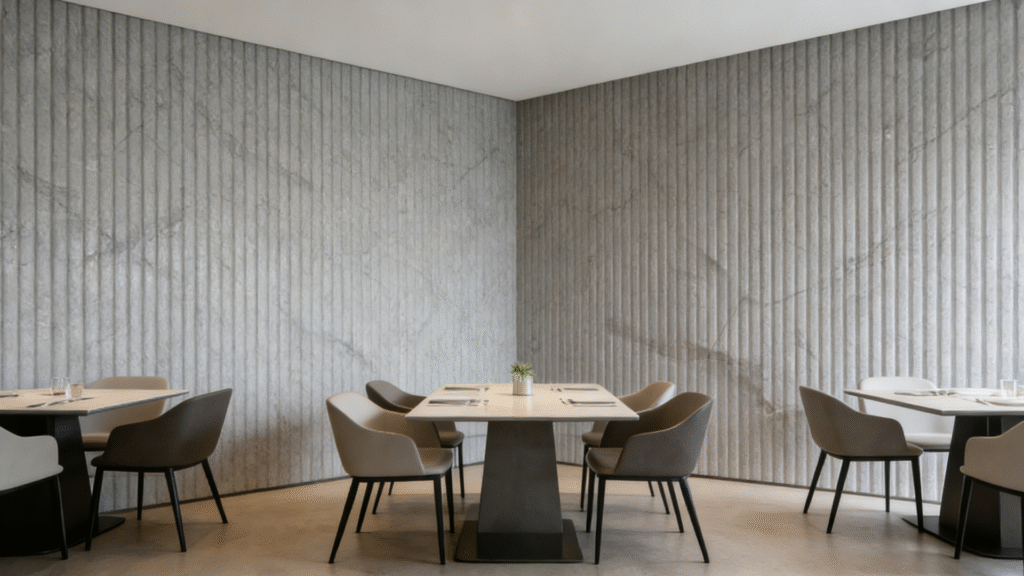
Material performance differences become clear when projects scale and supply chains face real-world pressure. Under these conditions, flexible stone panels and porcelain tiles show distinct behavior not only during installation, but throughout procurement, transport, and long-term use.
Batch consistency is critical when large volumes are sourced over time. Materials with stable visual appearance and dimensional control reduce repeated inspections, allow safer batch mixing, and simplify inventory replenishment. Coordination across multiple projects also depends on how easily materials can be allocated or adjusted when international shipping schedules fluctuate.
Handling and post-delivery performance further shape operational efficiency. Materials that tolerate transport stress and on-site processing help limit waste, control replacement costs, and keep schedules predictable. Over time, these factors influence dispute frequency, responsibility clarity, and the stability of ongoing cooperation.
Climate adaptability adds long-term value. Materials that perform consistently across different regions reduce maintenance uncertainty and support reliable repeat sourcing. Taken together, these considerations provide a practical framework for evaluating flexible stone panel and porcelain tile solutions beyond surface specifications, enabling more resilient material planning decisions.